Mumbai | Undercover Editor News Channel, January 17, 2026
Mumbai:
The Brihanmumbai Municipal Corporation (BMC), Asia’s richest civic body, is set to witness a new power dynamic as several crorepati corporators enter the House following the Maharashtra civic elections. The results not only mark a political shift in Mumbai’s governance but also highlight the growing influence of wealthy candidates across party lines in local body politics.
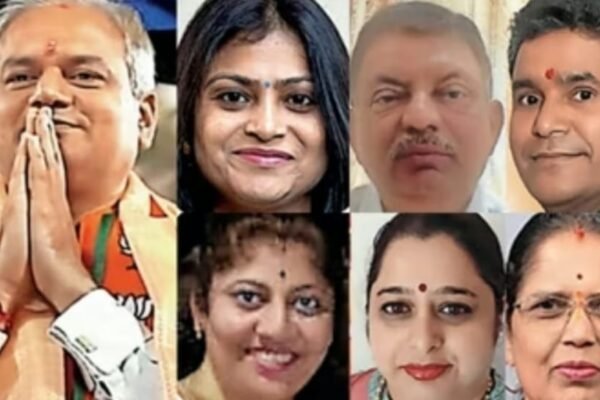
Among the richest newly elected corporators are Makarand Suresh Narvekar of the BJP, who declared assets worth ₹124 crore, followed by Harshita Ashwin Narvekar (BJP) with ₹63.6 crore. Meenal Sanjay Turde of the Shiv Sena reported assets of ₹56 crore, while Tulip Brian Miranda (Congress) declared ₹51 crore. Other high-net-worth winners include Anita Nandkumar Vaity (BJP) with ₹29 crore, Yashodhar Phanse (Shiv Sena–UBT) with ₹25.9 crore, and Bhaskar Rama Shetty (Shiv Sena) with ₹25.4 crore.
The presence of these affluent corporators is expected to play a significant role in policy discussions, budget decisions, and infrastructure planning in the coming term of the BMC.
End of Thackeray Era at the BMC
The elections have also brought an end to the Thackeray family’s nearly three-decade control over the BMC. The Mahayuti alliance, led by the BJP and Eknath Shinde-led Shiv Sena, managed to cross the majority mark in the 227-member House, though by a narrow margin.
The BJP emerged as the single largest party with 89 seats, while Shinde’s Shiv Sena won 29, giving the alliance a combined tally just above the halfway mark. This arithmetic means the BJP will depend on its ally’s support for key decisions in the civic body.
Opposition Holds Ground in Marathi Heartland
The Uddhav Thackeray–Raj Thackeray alliance secured 71 seats, with Shiv Sena (UBT) winning 65 and the MNS 6 seats. While the combine managed to retain significant influence in Mumbai’s Marathi-dominated areas, it failed to replicate this performance in nearby urban centres such as Thane and Navi Mumbai.
The Congress, contesting independently without its traditional Maha Vikas Aghadi partners, saw its tally fall to 24 seats, down from 31 in the previous election. Meanwhile, AIMIM recorded a notable rise, increasing its presence from 2 to 8 seats, particularly in minority-dominated wards.
Vote Share and Political Messaging
In terms of vote share, the BJP led with 21.6%, followed by Shiv Sena (UBT) at 13.2%, Shinde’s Shiv Sena at 5%, and Congress at 4.4%. Political analysts attribute the Mahayuti’s success to the pitch of a “triple-engine government”—with power at the Centre, state, and civic body—along with a campaign focused on development and governance efficiency.
BJP MLA and Assembly Speaker Rahul Narwekar has indicated that the next mayor will be from the BJP. However, Deputy Chief Minister Eknath Shinde struck a conciliatory note, stating, “More than power or the mayor’s post, our priority is to bring visible change to the lives of Mumbaikars.”
As Mumbai prepares for a new civic term, the combination of political realignment and the rise of wealthy corporators is expected to significantly influence the city’s administrative and developmental trajectory.