Mumbai | Undercover Editor News Channel, February 08, 2026
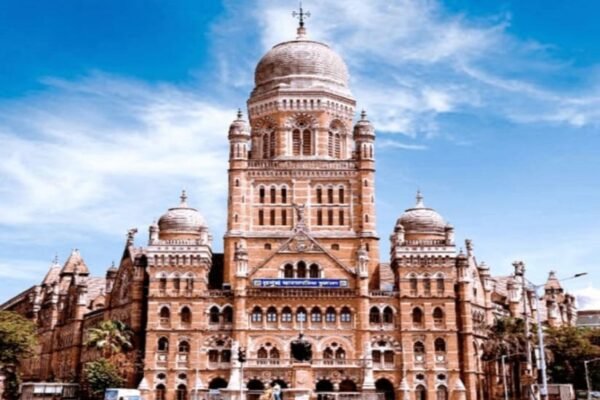
Mumbai: The role of corporators in Mumbai has undergone a remarkable transformation over the last 150 years — from an elite, colonial institution dominated by a privileged few to a fully democratic system of elected representatives serving the city’s diverse population.
The journey began on July 26, 1875, when the first elections to the then Bombay Municipal Corporation were held. Only about 1,200 citizens were eligible to vote, representing a mere fraction of the city’s population. Voting rights were restricted to tax-paying residents, effectively limiting political participation to wealthy elites. As a result, the 64 councillors elected at the time largely came from influential and affluent sections of society.
Colonial Foundations and Limited Democracy
The Municipal Corporation was formally established in 1872 under the Bombay Act. Initially, all 64 councillors were nominated by the British government or High Court judges. Later reforms allowed half of them to be elected, but suffrage remained restricted to “rate payers” who paid a minimum annual tax. In 1872, fewer than 4,000 people — just 0.6% of Mumbai’s population — were eligible to vote.
Despite the limited franchise, prominent figures such as Dadabhai Naoroji, Pherozeshah Mehta and Vishwanath Narayan Mandlik played key roles in shaping early civic governance, advocating gradual reforms and greater representation.
Post-Independence Reforms and Wider Participation
True democratisation of Mumbai’s civic body gained momentum in the decades following Independence. In 1922, voting rights were extended to tenants, significantly expanding the electorate. A major milestone came in 1952 when the system of nominated councillors was abolished, making the Corporation fully elected.
In 1931, the post of President was renamed Mayor, symbolising a shift towards democratic governance, though the position largely remained ceremonial. In 1956, Mumbai elected its first woman Mayor, Sulochana Modi, reflecting a slow but steady move toward inclusivity.
Rise of Mass Politics and the ‘Nagarsevak’
The late 1960s marked another turning point when local body elections were brought under the supervision of an election commission. Municipal councillors came to be known as Nagarsevaks, reinforcing their role as servants of the people.
The decades that followed saw growing political mobilisation, driven by labour movements, social activism and the emergence of middle-class leadership. Mumbai’s civic politics increasingly reflected the aspirations of ordinary citizens rather than elite interests. By the 1980s, multiple political parties had established a strong presence within the Brihanmumbai Municipal Corporation (BMC).
Greater Representation and Structural Changes
Further reforms strengthened democratic representation. Seats were reserved for women and marginalised communities, ensuring broader participation in civic decision-making. Attempts were also made to empower elected representatives through structural changes such as the brief introduction of the Mayor-in-Council system in 1998, although it was later withdrawn due to governance concerns.
Today, Mumbai’s corporators play a crucial role in civic administration — coordinating development works, raising public issues, serving on key committees, and acting as a bridge between citizens and the municipal administration.
A Transformed Civic Institution
From a colonial institution controlled by a small elite to a mass-based democratic body, the evolution of Mumbai’s corporators mirrors the city’s broader political and social journey. With 227 elected representatives today, the BMC stands as India’s largest and richest municipal corporation, symbolising how civic governance in Mumbai has gradually moved closer to the people it serves.