Category: Cybercrime

Contrary to popular belief, Lorem Ipsum is not simply random text. It has roots in a piece of classical Latin literature from 45 BC, making it over 2000 years old. Richard McClintock, a Latin professor

MBVV Police Crack International Cyber Fraud Racket Duping Indians of ₹200 Crore via Matrimonial Websites

MBVV Police Crack International Cyber Fraud Racket Duping Indians of ₹200 Crore via Matrimonial Websites

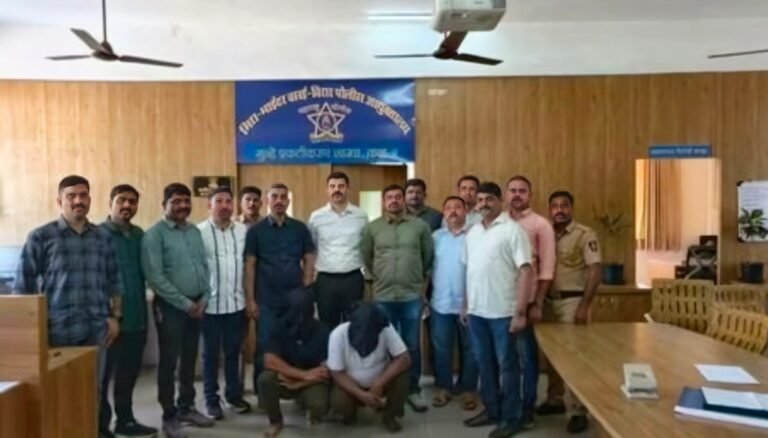
MBVV Police Crack International Cyber Fraud Racket Duping Indians of ₹200 Crore via Matrimonial Websites The accused allegedly targeted victims through matrimonial websites and social media, gaining their trust before luring them into fake forex and gold-trading schemes promising unusually high returns. Mumbai | Undercover Editor News Channel In a significant crackdown on cybercrime, the Mira-Bhayandar–Vasai-Virar (MBVV) Police have dismantled an international cyber fraud syndicate that allegedly duped citizens across India of more than ₹200 crore by exploiting matrimonial websites and social media platforms. The operation was carried out by the Crime Detection Branch (CDB), Cell-4, following confidential intelligence inputs. Acting swiftly, police raided Shivsai Residency Lodging and Boarding on the Ahmedabad Highway near Vasai, leading to the arrest of seven accused involved in the elaborate online scam. How the scam worked According to investigators, the accused first approached victims through popular matrimonial portals and social networking sites, presenting themselves as well-educated, financially successful individuals seeking relationships. Over time, they built emotional trust before introducing victims to supposedly “high-return” online forex and gold-trading investments. Victims were redirected to fake trading websites, where initial small profits were shown to create confidence. Once trust was established, the victims were persuaded to invest larger sums. Eventually, the funds were siphoned off through multiple bank accounts, leaving victims with massive financial losses—often wiping out their life savings. Interstate and international links Police revealed that the racket has links to at least 51 cybercrime cases registered across several states, including Mumbai, Navi Mumbai, Thane, Pune, Delhi, Rajasthan, Gujarat, Madhya Pradesh, Uttar Pradesh, Telangana, Karnataka, West Bengal, Goa, and Chandigarh. Investigations further indicate that the operation was being controlled from outside India, using mule bank accounts, encrypted communication platforms, and fake digital identities to evade law-enforcement agencies. Legal action and arrests The case was initially registered at Naigaon Police Station under multiple sections of the Bharatiya Nyaya Sanhita (BNS) and Sections 66(c) and 66(d) of the Information Technology Act. Given the scale and complexity of the crime, the investigation was transferred to the CDB, Cell-4, on the orders of the MBVV Police Commissioner. The arrested accused have been identified as: All accused are currently in judicial custody. Police warning to citizens Senior crime branch officials have urged citizens to remain cautious while interacting with unknown individuals online, especially those promoting investment opportunities promising unrealistically high returns. “Cybercriminals are increasingly exploiting emotional connections and digital trust. People must verify platforms and avoid transferring money based on online persuasion,” a senior officer stated. Further investigation is ongoing to identify additional suspects, trace the money trail, and coordinate with international agencies.

Mumbai Police Bust Fake International Call Centre Cheating US & Canadian Citizens; Five Arrested

Mumbai Police Bust Fake International Call Centre Cheating US & Canadian Citizens; Five Arrested

Mumbai Police Bust Fake International Call Centre Cheating US & Canadian Citizens; Five Arrested Mumbai Police bust a fake international call centre in Mulund Colony that duped US and Canadian citizens through loan scams; five arrested including mastermind Sagar Gupta. Mumbai | Undercover Editor News agency | November 12, 2025In a major breakthrough against cyber fraud, the Mumbai Police have busted a fake international call centre operating out of Mulund Colony, which was allegedly cheating citizens in the United States and Canada through fraudulent loan offers. The police have arrested five individuals, including the alleged mastermind, Sagar Gupta, and seized laptops, mobile phones, routers, and cash during the raid. According to police officials, the racket was being run under the guise of a customer service operation. The accused posed as loan officers representing reputed U.S.-based financial institutions and targeted foreign nationals through phishing calls and messages. Victims were promised quick loan approvals, but were instead duped into transferring money through gift cards and cryptocurrency wallets. “The accused were running a fake setup to cheat US and Canadian citizens by offering them quick loans. They then siphoned off the proceeds through digital channels,” said a senior police official involved in the investigation. The arrested individuals have been identified as Sagar Rajesh Gupta (27), Abhishek Suryaprakash Singh (28), Tanmay Kumar Rajneesh Dhadsing (27), Shailesh Manohar Shetty (27), and Rohan Ansari (28).A search is underway for another suspect, Prashant Rajput from Surat, Gujarat, who allegedly helped the group convert U.S. dollar gift cards into Indian rupees. During the operation, the police seized two laptops, 11 mobile phones, two Wi-Fi routers, and ₹76,000 in cash. The accused have been booked under relevant sections of the Bhartiya Nyaya Sanhita (BNS) and the Information Technology Act. Cyber Fraud on the Rise The case has once again highlighted the growing menace of cybercrime networks operating from Indian cities and targeting unsuspecting victims abroad. Police have urged citizens to remain vigilant and report any suspicious calls or digital loan offers to the National Cyber Helpline (1930). In a related case, a 60-year-old Mumbai businessman was recently duped of ₹53 lakh in an online “digital arrest” scam, where fraudsters posed as officials from the CBI, Delhi Police, and TRAI. The victim was threatened with arrest in a fake money laundering case and coerced into transferring funds under the guise of “security verification.” Authorities are now tightening digital surveillance and international cooperation to curb such transnational scams.
Cyber Fraudsters Trick Maritime Firm by Turning ‘i’ into ‘1’; Mumbai Company Loses ₹30 Lakh

Cyber Fraudsters Trick Maritime Firm by Turning ‘i’ into ‘1’; Mumbai Company Loses ₹30 Lakh

Cyber Fraudsters Trick Maritime Firm by Turning ‘i’ into ‘1’; Mumbai Company Loses ₹30 Lakh The scam began on August 19, when the Mumbai company’s finance team received a fake email from an ID resembling their US partner’s — a single altered character led to a ₹30 lakh cyber fraud. By UnderCover Editor News Agency “Revealing what matters” A shocking case of cyber deception has emerged in Mumbai, where a city-based maritime company fell prey to a sophisticated email scam and lost ₹30 lakh to fraudsters — all because of a single altered alphabet in an email address. According to the Mumbai East Region Cyber Police, the fraudsters impersonated a long-term business associate of the company — a US-based firm — by creating a nearly identical email ID. Instead of the genuine “finance3@air7seas.us”, the conmen used “finance3@a1r7seas.us”, replacing the letter “i” with the number “1”. Believing the communication to be genuine, the maritime company followed instructions from the fraudulent email and transferred payments worth ₹29 lakh to a new bank account provided by the imposters. The transactions took place over several weeks in September. It was only on October 3 that the truth surfaced — when the Mumbai company contacted their US partners, they were informed that no such payment had been received and that no bank account changes had been requested. On closer inspection, the minor but critical alteration in the email address was noticed. An FIR has since been registered at the East Region Cyber Police Station under relevant sections of the IT Act and IPC. A senior police official explained, “This is a classic ‘Man-in-the-Middle’ cyber attack. Fraudsters intercept email communications between companies, clone official IDs with minor changes, and then redirect payments to their own accounts.” The incident highlights how even seasoned corporate firms can fall victim to subtle digital fraud tactics. Cyber experts urge businesses to adopt two-step email verification for financial transactions and confirm any account changes through verified phone calls or video conferences before processing payments. The police are tracing the money trail and coordinating with banks to identify the fraudulent account holders.

Cyber Cops Warn Citizens of Fake Traffic E-Challan & SIM Hijack Frauds

Cyber Cops Warn Citizens of Fake Traffic E-Challan & SIM Hijack Frauds Mumbai: The Mumbai Cyber Crime Police have issued a strong advisory warning citizens about a new wave of online scams — from fake traffic e-challan messages on WhatsApp to SIM hijack frauds through bogus credit card offers.According to officials, cybercriminals are impersonating traffic police officers on WhatsApp, sending fake messages containing malicious links designed to trick users into downloading harmful files or revealing personal details.The advisory highlights several red flags citizens should watch for:Messages from unknown WhatsApp numbers claiming to be from traffic police.APK files with suspicious names like “Traffic Fine” or “RTO Challan”.Payment requests made through personal UPI handles.Links that don’t end with “.gov.in” or aren’t related to parivahan.gov.in.“Citizens must avoid clicking on suspicious links or downloading unknown files and should never transfer money through personal UPI handles,” the police advisory stated.In another alarming trend, cyber cops have also warned about SIM hijack frauds linked to fake credit card offers. Scammers contact victims posing as bank representatives, offering ‘lifetime free’ or ‘high-limit’ credit cards. They then collect sensitive identity details like PAN, Aadhaar, mobile number, and date of birth under the pretext of KYC verification.Once they have the information, fraudsters approach telecom providers claiming the user has lost their phone and initiate a SIM swap. With control over the victim’s mobile number, they gain access to bank OTPs, UPI verifications, and online transactions, swiftly draining funds from the victim’s account through mule accounts or digital wallets.Officials added that victims are often pressured into sharing data immediately or asked to verify details via fake bank websites or forms.The cyber police urge citizens to remain cautious and recognize early warning signs such as:Credit card offers received without any formal application.Requests for KYC verification via WhatsApp or phone calls.Sudden mobile network loss despite an active plan.Unauthorized OTPs or transactions from bank accounts.Public Advisory:If you receive such suspicious messages, do not respond or click any links. Report them immediately to the National Cyber Crime Portal (www.cybercrime.gov.in) or contact the local cyber police station.Cyber officials emphasize that awareness is the best defence against such digital frauds — urging Mumbai residents to verify all messages, stay alert, and never share personal information over insecure platforms.— Reported by UnderCover Editor News Agency CyberCrime #MumbaiNews #FakeChallan #SIMSwap #CyberAlert #UnderCoverEditor

Recent News

Undercover Editor

From BMC updates, local area developments, railway station news, and crime reports to the latest in politics, sports, Bollywood, lifestyle, travel, and education, we bring you news that’s relevant, reliable, and real-time


Undercover Editor © 2025 – Designed by iCreato