— A Ground Reality Check on Coerced Bribery and the Failures of Section 8
Undercover Editor News- Editor – Mahesh Rathod.
Mumbai | November 25, 2025
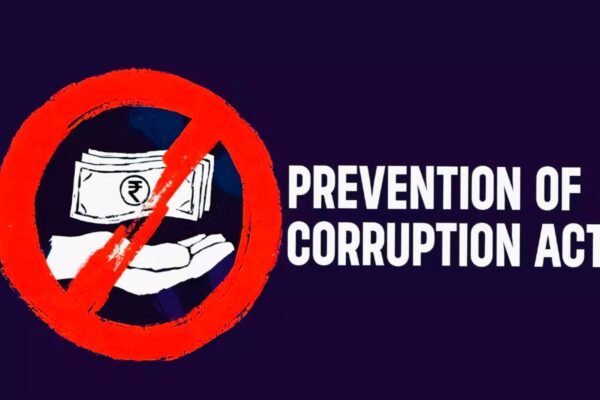
India’s 2018 amendment to the Prevention of Corruption Act (PCA) was promoted as a major reform to empower citizens and tighten the fight against graft. But one key provision — Section 8, which supposedly offers immunity to a person who pays a bribe under compulsion — has today become one of the most misunderstood, misapplied, and practically useless protections in Indian law.
As per this provision, a bribe giver is protected from prosecution only if they prove the payment was made under coercion and they report the incident to law-enforcement within seven days.
On paper, the idea seems progressive.
In reality, it sets up victims for failure, leaving them more vulnerable than before.
An Unequal Fight: Victim vs. Official
The law assumes an equal partnership between the one who takes a bribe and the one forced to give it. But anyone who has ever dealt with corruption in India knows the truth:
- The bribe taker is usually a public servant armed with bureaucratic power.
- The bribe giver is often a common citizen desperate for essential services — a property registration, hospital bed, ration card, police FIR, or pension file.
To treat these two parties as equally culpable is to pretend the system is fair.
It is not.
A citizen who pays under threat is not a collaborator — they are a victim.
Calling this “equal participation” is like blaming a robbery victim for handing over their wallet.
The Seven-Day Window: A Legal Trap, Not Protection
Perhaps the harshest flaw in Section 8 is its rigid seven-day reporting rule.
The law expects a citizen who has just been threatened or extorted to:
- gather the courage
- understand the law
- navigate bureaucracy
- travel to a police station
- and file a formal complaint
… all within a week.
For millions of Indians, especially in rural and semi-urban areas, this is impossible.
Even in cities, fear of retaliation stops victims from speaking out. Officials involved in corruption often have strong networks and influence. Reporting them may risk:
- safety
- livelihood
- future dealings with the government
Instead of providing protection, the law pushes victims to self-incriminate within an unrealistically short deadline.
Most cases simply go unreported.
What Counts as “Compulsion”? The Law Doesn’t Know Either
Section 8 uses the word “compulsion”, but never explains what it means.
Is compulsion only:
- a threat to harm someone?
Or does it include:
- “no signature unless you pay”?
- “file won’t move without chai-paani”?
- deliberate delays to force a person into paying?
Since the law provides no clarity, victims fear coming forward without solid proof.
If their complaint is rejected, they themselves can be prosecuted for bribery.
The law leaves victims guessing — and silent.
Zero Protection for Whistleblowers
For a bribe giver who reports extortion:
- No anonymity
- No witness protection
- No safeguards against harassment
Their identity becomes known to the same officials they accuse.
Many get blacklisted, denied services, or targeted with further demands.
In practice, immunity exists only on paper — not in the lives of real victims.
How Other Countries Handle Coerced Bribery
Globally, anti-corruption frameworks rarely criminalise coerced payers.
- The USA focuses on prosecuting extortionists, not victims.
- Kazakhstan exempts coerced bribe payers.
- The UK and France criminalise all bribes, but offer strong whistleblower protections.
India stands out by offering immunity with conditions so strict that almost no victim can meet them.
A Flawed Framework That Needs Urgent Reform
For Section 8 to truly support victims, India must:
🔹 1. Extend the reporting window to at least 30 days
Recognising the fear, logistical delay, and emotional distress victims face.
🔹 2. Define “compulsion” broadly and clearly
Including all forms of undue pressure — threats, delays, withholding services, and administrative manipulation.
🔹 3. Build safe, confidential reporting systems
Anonymous channels, protected digital complaints, and independent anti-corruption units.
🔹 4. Implement real witness protection
So citizens can report without fear of retaliation.
Without these reforms, Section 8 is not a shield — it is a legal trap.
Punishing the Powerless While the Powerful Walk Free
India cannot fight corruption by criminalising the victims trapped inside it.
Treating the bribe giver and bribe taker as equally guilty ignores the power imbalance at the heart of corruption. It forces citizens into an impossible race against time, turning them from complainants into accused if they miss the seven-day deadline.
The law ends up strengthening the grip of corruption instead of dismantling it.
Until India rethinks this flawed provision, the anti-corruption system will continue to do what it has always done —
punish the powerless, protect the powerful, and silence those who need help the most.