Mumbai | Undercover Editor News Channel, February 12, 2026
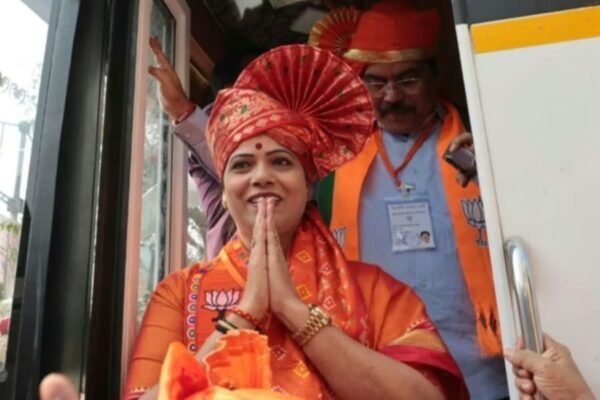
Mumbai: After newly appointed Mumbai Mayor Ritu Tawde announced a crackdown on “illegal Bangladeshi hawkers and infiltrators,” public debate has intensified over who actually has the authority to identify and deport illegal foreign nationals from the city.
While the Mayor’s remarks have drawn political attention, senior police officials clarify that deportation of illegal immigrants is strictly a law enforcement and central government function — not a civic one.
Who Has the Authority?
The identification, detention and deportation of illegal Bangladeshi nationals are handled by the Mumbai Police in coordination with the State Special Branch, the Union Ministry of Home Affairs, and the Border Security Force (BSF).
Officials underline that the Mayor or the Brihanmumbai Municipal Corporation (BMC) has no legal power to determine nationality, verify passports, or deport individuals. The civic body can only act against illegal hawking, encroachments, and violations under municipal laws.
“Nationality verification and deportation are governed by central laws and handled through established legal procedures,” a senior officer said.
Deportation Numbers See Sharp Rise
Mumbai Police data reveals that 1,061 illegal Bangladeshi nationals were deported in 2025 across 401 cases — the highest number recorded in a single year.
In comparison:
- 304 individuals were arrested in 2024, with 160 deported.
- 371 were arrested in 2023, with 60 deported.
Police attribute the spike in 2025 to directions from the Union government asking states to accelerate deportation proceedings.
How Police Identify Illegal Immigrants
The identification process typically begins during routine verification drives or based on specific intelligence inputs, particularly in areas with dense informal settlements.
In many cases, suspects do not possess valid physical documents. Officials say documents are often destroyed, leaving only digital traces on mobile phones.
Investigators examine mobile devices for:
- Frequent communication with Bangladesh country code (+880)
- Use of apps like IMO, commonly used for cross-border communication
- Contact lists and chat histories indicating family ties in Bangladesh
- Social media profiles containing personal and location details
In some cases, officers conduct video calls to individuals in Bangladesh — including family members or local representatives — to verify identity. Confirmation is made only after multiple cross-checks and verification procedures.
What Happens After Confirmation?
Once authorities establish that a person has entered India illegally or overstayed a visa, the deportation process begins.
Police officials note that criminal cases are not registered in every instance, as court proceedings can delay deportation. If the individual has not committed additional crimes, authorities complete legal documentation and initiate removal.
However, if the person is linked to other offences, separate criminal charges are filed.
The Deportation Process
After documentation is completed, detainees are transported — usually by train — to the Indo-Bangladesh border and handed over to the BSF. In large-scale operations, special flights have also been used.
In August last year, 112 illegal Bangladeshi nationals from Mumbai and nearby areas were deported together in a coordinated operation via the Assam-Bangladesh border.
What the Mayor’s Statement Means
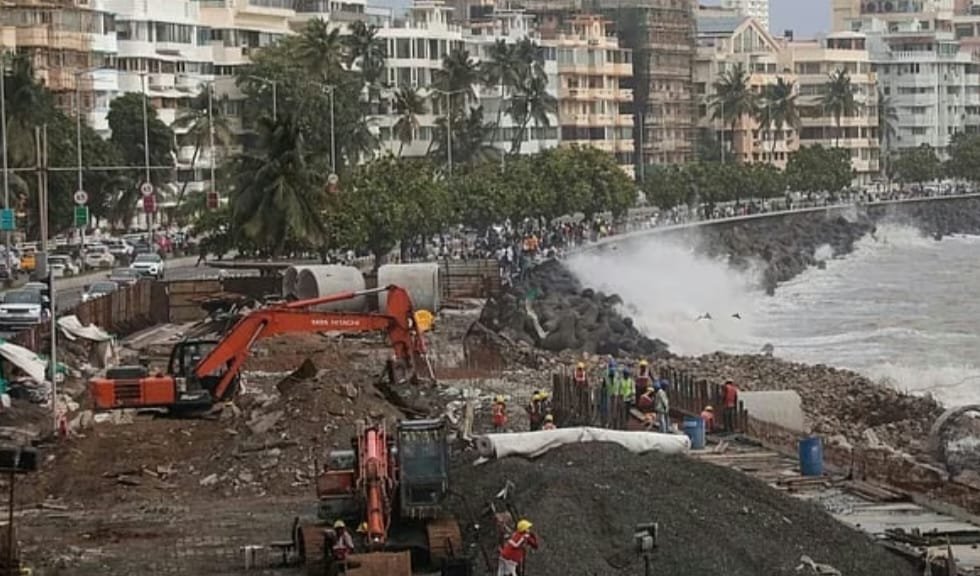
Mayor Tawde recently stated that illegal hawkers occupying footpaths were affecting pedestrian movement and civic planning. She indicated that removal of such encroachments would be a priority in discussions with the Municipal Commissioner.
Police officials interpret the remarks as a civic and political position focused on encroachment removal rather than direct intervention in deportation processes.
Authorities emphasize that deportation procedures follow a fixed legal framework and continue based on police investigations and central government directives — independent of political statements.
This issue highlights the distinction between civic governance and national security enforcement, as Mumbai navigates concerns over illegal immigration, urban encroachments, and public order within the framework of law.