Author: Mahesh Rathod

Contrary to popular belief, Lorem Ipsum is not simply random text. It has roots in a piece of classical Latin literature from 45 BC, making it over 2000 years old. Richard McClintock, a Latin professor

MBVV Police Crack International Cyber Fraud Racket Duping Indians of ₹200 Crore via Matrimonial Websites

MBVV Police Crack International Cyber Fraud Racket Duping Indians of ₹200 Crore via Matrimonial Websites

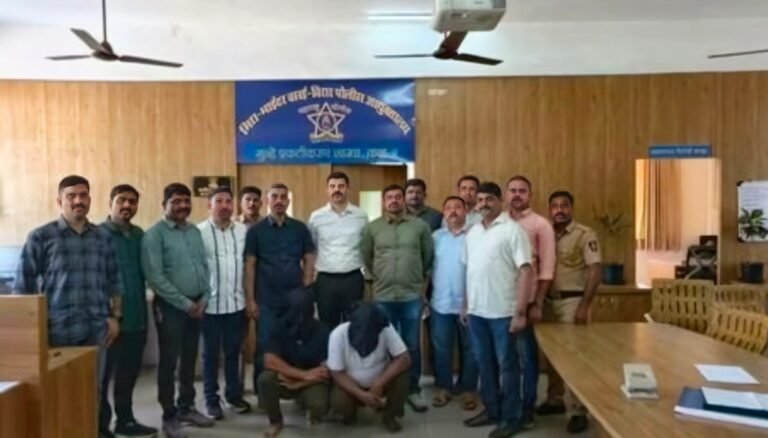
MBVV Police Crack International Cyber Fraud Racket Duping Indians of ₹200 Crore via Matrimonial Websites The accused allegedly targeted victims through matrimonial websites and social media, gaining their trust before luring them into fake forex and gold-trading schemes promising unusually high returns. Mumbai | Undercover Editor News Channel In a significant crackdown on cybercrime, the Mira-Bhayandar–Vasai-Virar (MBVV) Police have dismantled an international cyber fraud syndicate that allegedly duped citizens across India of more than ₹200 crore by exploiting matrimonial websites and social media platforms. The operation was carried out by the Crime Detection Branch (CDB), Cell-4, following confidential intelligence inputs. Acting swiftly, police raided Shivsai Residency Lodging and Boarding on the Ahmedabad Highway near Vasai, leading to the arrest of seven accused involved in the elaborate online scam. How the scam worked According to investigators, the accused first approached victims through popular matrimonial portals and social networking sites, presenting themselves as well-educated, financially successful individuals seeking relationships. Over time, they built emotional trust before introducing victims to supposedly “high-return” online forex and gold-trading investments. Victims were redirected to fake trading websites, where initial small profits were shown to create confidence. Once trust was established, the victims were persuaded to invest larger sums. Eventually, the funds were siphoned off through multiple bank accounts, leaving victims with massive financial losses—often wiping out their life savings. Interstate and international links Police revealed that the racket has links to at least 51 cybercrime cases registered across several states, including Mumbai, Navi Mumbai, Thane, Pune, Delhi, Rajasthan, Gujarat, Madhya Pradesh, Uttar Pradesh, Telangana, Karnataka, West Bengal, Goa, and Chandigarh. Investigations further indicate that the operation was being controlled from outside India, using mule bank accounts, encrypted communication platforms, and fake digital identities to evade law-enforcement agencies. Legal action and arrests The case was initially registered at Naigaon Police Station under multiple sections of the Bharatiya Nyaya Sanhita (BNS) and Sections 66(c) and 66(d) of the Information Technology Act. Given the scale and complexity of the crime, the investigation was transferred to the CDB, Cell-4, on the orders of the MBVV Police Commissioner. The arrested accused have been identified as: All accused are currently in judicial custody. Police warning to citizens Senior crime branch officials have urged citizens to remain cautious while interacting with unknown individuals online, especially those promoting investment opportunities promising unrealistically high returns. “Cybercriminals are increasingly exploiting emotional connections and digital trust. People must verify platforms and avoid transferring money based on online persuasion,” a senior officer stated. Further investigation is ongoing to identify additional suspects, trace the money trail, and coordinate with international agencies.
BMC Polls: Women Reservation Turns R South into a High-Stakes Family Battleground

BMC Polls: Women Reservation Turns R South into a High-Stakes Family Battleground

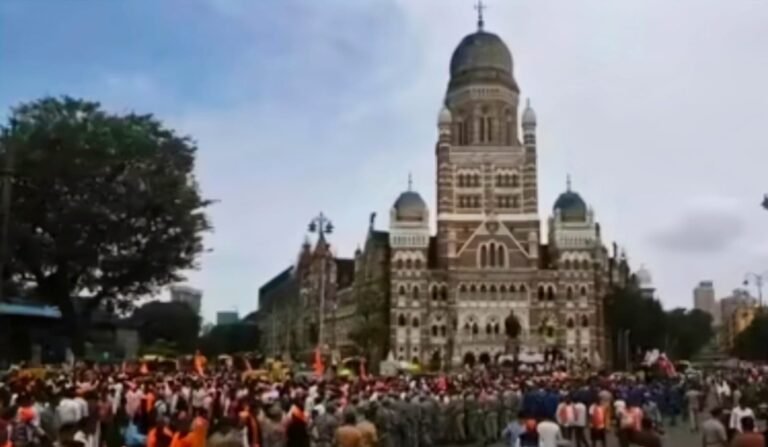
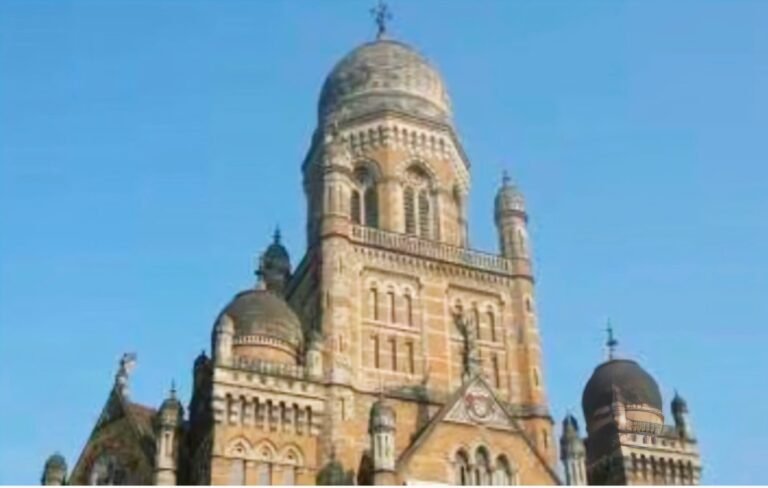
BMC Polls: Women Reservation Turns R South into a High-Stakes Family Battleground Mumbai | Undercover Editor News Channel As the Brihanmumbai Municipal Corporation (BMC) elections approach, the political heat in Mumbai’s R South administrative division is rising sharply. What was once a routine electoral contest has now transformed into a high-stakes family battle, triggered by women’s reservation and shifting political equations. The spotlight is firmly on Ward No. 28 — the only electoral ward in R South that was earlier held by the Congress but later slipped into the Shiv Sena’s hands after the sitting corporator was disqualified over discrepancies in his caste certificate. Now reserved for women candidates, the ward has become a symbolic turf war between political legacies. The Congress has fielded Ajanta Yadav, wife of former corporator Rajpati Yadav, who had won the seat in 2017 before being unseated. The ruling Eknath Shinde-led Shiv Sena has countered with Vrushali Hundare, daughter of former corporator Eknath Hundare, who had emerged victorious after Yadav’s disqualification. Both parties are now attempting to reclaim lost ground through familiar surnames and established local networks. Adding a crucial twist to the contest, the Shiv Sena (UBT) has also entered the fray in the same ward. Political observers believe this three-cornered fight could split the traditional Sena vote, potentially giving the Congress a strategic advantage. Saffron Stronghold, Shifting Strategies R South has largely remained a saffron-dominated belt over the past decade. The Shiv Sena (UBT) is hoping to retain its two existing seats by again banking on candidates from families that have historically performed well here. The BJP, meanwhile, has adopted a calculated strategy — replacing five of its ten candidates while retaining the rest or fielding their close relatives — in an effort to preserve its organisational dominance. Another keenly watched battle is unfolding in Ward No. 25, covering Thakur Village, Samta Nagar and Janupada. In 2017, BJP candidate Nisha Parulekar-Bangera narrowly lost to Shiv Sena (UBT)’s Madhuri Bhoir by fewer than 400 votes. This time, Sena (UBT) has opted for continuity by fielding Yogesh Bhoir, Madhuri Bhoir’s husband and a former corporator elected in 2012. The Mahayuti alliance has retained Parulekar as its nominee despite internal competition from BJP’s Devang Dave and Shinde Sena’s Shekhar Shere, exposing underlying friction within the alliance. Dave later announced his withdrawal, publicly stating that he was respecting the party’s decision despite disappointment among supporters. Development Woes Shape Voter Mood Beyond party politics, voters in R South are increasingly focused on everyday civic issues. Rapid real estate growth, particularly in high-rise pockets far from railway stations, has stretched infrastructure to its limits. Narrow roads, worsening traffic congestion, uneven water supply and poor last-mile connectivity dominate local conversations. Several slum clusters and rehabilitation buildings continue to struggle with basic amenities. According to local leaders, many rehab buildings lack fire compliance and occupancy certificates, raising serious safety concerns. Charkop MLA Yogesh Sagar highlighted the imbalance, pointing out that while higher FSI has been granted to new private and redevelopment projects, infrastructure upgrades have not kept pace. “Water distribution remains a chronic problem. Supply has not increased in proportion to the population,” he said. With new residential pockets emerging nearly three kilometres away from railway stations and major highways, commuting remains a daily challenge due to traffic bottlenecks and inadequate public transport. Battle Beyond Ballots As campaigning intensifies, the R South contest reflects a broader trend in Mumbai’s civic politics — where family legacies, alliance dynamics and local development failures intersect. While parties push familiar faces to capitalise on voter recall, residents appear increasingly impatient for solutions on infrastructure, mobility and basic services. In this election, voters in R South are not just choosing representatives — they are deciding whether legacy politics can still outweigh lived civic realities.
Supreme Court Denies Bail to Umar Khalid, Sharjeel Imam; Grants Bail to Five Others in Delhi Riots Conspiracy Case

Supreme Court Denies Bail to Umar Khalid, Sharjeel Imam; Grants Bail to Five Others in Delhi Riots Conspiracy Case

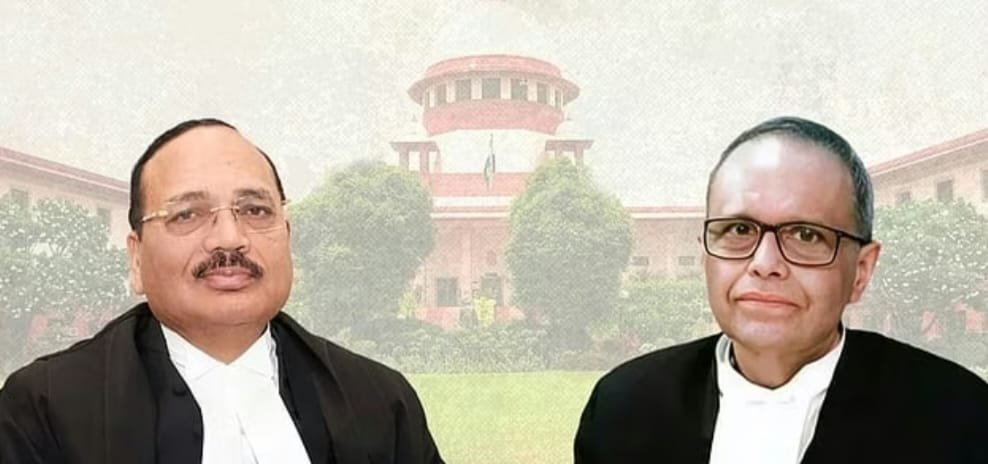
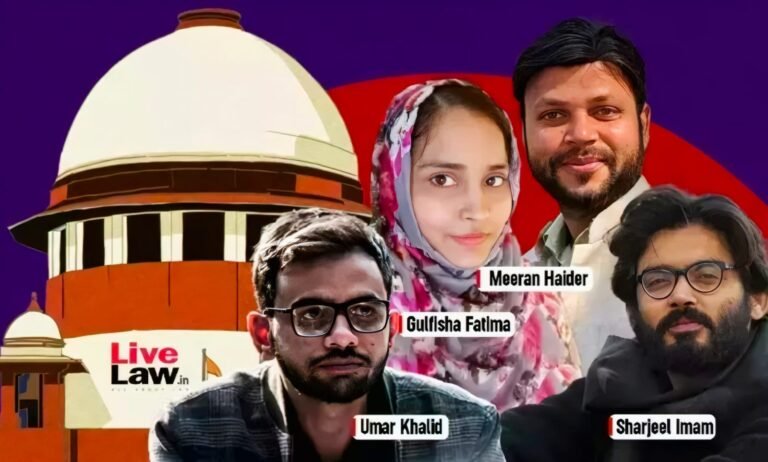
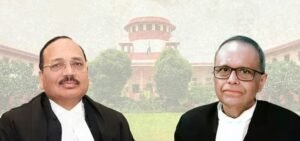
Supreme Court Denies Bail to Umar Khalid, Sharjeel Imam; Grants Bail to Five Others in Delhi Riots Conspiracy Case New Delhi | Undercover Editor News Channel The Supreme Court on Monday refused to grant bail to former student activists Umar Khalid and Sharjeel Imam in the Delhi riots “larger conspiracy” case, observing that the prosecution material establishes a prima facie case under the Unlawful Activities (Prevention) Act (UAPA), 1967. At the same time, the apex court granted bail to five other accused persons — Gulfisha Fatima, Meeran Haider, Shifa-ur-Rehman, Mohd. Saleem Khan and Shadab Ahmed, while imposing stringent conditions to ensure compliance with the law and prevent misuse of liberty. A Bench comprising Justice Aravind Kumar and Justice N.V. Anjaria delivered the verdict, making it clear that the role attributed to Umar Khalid and Sharjeel Imam places them on a qualitatively different footing from the remaining accused. Why Bail Was Denied to Khalid and Imam The Court noted that the material on record indicates a “central and formative role” played by Khalid and Imam in the alleged planning, mobilisation and strategic direction behind the 2020 Delhi riots. According to the Bench, their involvement appears to go beyond episodic or localised acts of violence. Referring to Section 43D(5) of the UAPA, the Court held that the statutory threshold for denying bail was clearly met and that their continued detention has not crossed the limits of constitutional impermissibility. However, the Court granted liberty to Khalid and Imam to renew their bail pleas after one year or after the examination of protected witnesses, whichever is earlier. Bail Granted to Five Accused With Strict Conditions While allowing bail to five other accused, the Supreme Court emphasised that trial delay alone cannot be used as a “trump card” to automatically grant bail in UAPA cases. Each accused’s role must be assessed independently. The Bench imposed 12 strict bail conditions, including: Any violation of these conditions would invite immediate cancellation of bail, the Court warned. Key Legal Observations The Court clarified that: Background of the Case The accused were arrested in connection with the 2020 Delhi riots, which broke out during protests against the Citizenship Amendment Act (CAA). The prosecution alleges that the riots were part of a larger conspiracy, attracting charges under UAPA and the Indian Penal Code. Both Umar Khalid and Sharjeel Imam have been in custody for over five years. Their bail pleas were earlier rejected by the Delhi High Court in September 2025, following which they approached the Supreme Court. Senior advocates including Kapil Sibal, Abhishek Manu Singhvi, Siddharth Dave and Salman Khurshid appeared for the accused, while Solicitor General Tushar Mehta represented the Delhi Police. Court Directs Expedited Trial Acknowledging the prolonged incarceration, the Supreme Court directed the trial court to expedite the proceedings, underlining the need for balance between national security concerns and personal liberty.
Maharashtra Civic Polls: Candidates Go Digital, WhatsApp Emerges as Key Tool for Ward-Level Outreach

Maharashtra Civic Polls: Candidates Go Digital, WhatsApp Emerges as Key Tool for Ward-Level Outreach

Maharashtra Civic Polls: Candidates Go Digital, WhatsApp Emerges as Key Tool for Ward-Level Outreach Mumbai | Jan 5, 2026 — Undercover Editor Mumbai: As Maharashtra’s civic elections approach, the traditional sounds of door-to-door campaigning and street-corner rallies are increasingly being replaced by smartphone notifications. Candidates across parties are turning to digital outreach, with WhatsApp emerging as the most powerful tool for ward-level voter engagement. While earlier elections saw heavy reliance on platforms like Facebook and Instagram, the current campaign cycle has marked a clear shift towards WhatsApp for more direct, personal, and targeted communication. Candidates are creating multiple ward-specific WhatsApp groups, each comprising 300 to 400 voters, carefully selected to include local influencers, housing society representatives, youth volunteers, and community leaders. These groups are being used not only to share campaign updates, nomination details, and rally schedules, but also to communicate development promises and receive real-time feedback from residents. Congress functionary Brian Miranda, campaigning in Kalina for his wife Tulip Miranda, who is seeking a second term, said social media — especially WhatsApp — has become essential to reaching voters efficiently. He explained that core party workers are assigned specific buildings and slum pockets to collect feedback and identify local issues. “Wherever required, we personally reach out and address voters directly,” he said. Congress MLA Amin Patel noted that ward-level WhatsApp groups already exist in his constituency to share updates on civic works and local events. “During elections, these platforms are now being actively used to strengthen outreach and support for party candidates,” he said. Former Congress corporator Javed Juneja added that while social media helps in visibility, WhatsApp enables deeper engagement. “Communication on WhatsApp is direct and personal, which makes a real difference during elections,” he said. First-time Shiv Sena (UBT) candidate Akshata Ryan Menezes, contesting from Bandra West, said physical outreach remains the foundation of campaigning. “Once door-to-door interactions are done, WhatsApp helps us continue conversations with voters and stay connected,” she said. The seat was previously won by the Congress in 2017. AAP Mumbai working president Ruben Mascrehenas described WhatsApp as the most critical communication tool in modern elections. He pointed out that younger voters have largely moved away from Facebook, while Instagram engagement remains limited to short-form content. “WhatsApp allows sustained and meaningful engagement because messages reach people directly whose numbers are already saved,” he said. Political observers believe this shift to WhatsApp mirrors traditional grassroots campaigning, enabling candidates to maintain continuous, focused, and personalised contact with voters right up to polling day. — Undercover Editor News Channel
Maharashtra Civic Polls Turn High-Voltage: 15,931 Candidates in Fray, BMC Becomes State’s Biggest Political Battlefield

Maharashtra Civic Polls Turn High-Voltage: 15,931 Candidates in Fray, BMC Becomes State’s Biggest Political Battlefield

Maharashtra Civic Polls Turn High-Voltage: 15,931 Candidates in Fray, BMC Becomes State’s Biggest Political Battlefield Mumbai | Jan 4, 2026 — Undercover Editor Mumbai: Maharashtra is heading into one of its most competitive civic elections in recent times, with 15,931 candidates contesting for 2,869 seats across 29 municipal corporations. The polls are scheduled for January 15, following widespread nomination withdrawals that significantly reshaped the political contest. As per data released by the State Election Commission (SEC), a total of 33,427 nominations were filed across the state. After scrutiny, 24,771 nominations were found valid, but 8,840 candidates later withdrew, bringing down the final number of contenders. The Brihanmumbai Municipal Corporation (BMC) remains the biggest political battlefield, with 227 seats and around 1,700 candidates competing. The scale of the contest highlights Mumbai’s central role in Maharashtra’s civic and political landscape. Other major cities such as Pune and Nashik are also witnessing intense competition. Nashik recorded the highest number of withdrawals (661), followed by Chhatrapati Sambhajinagar (552) and Solapur (532). On the other hand, Panvel reported the lowest withdrawals, with only 88 candidates opting out. Smaller municipal corporations reflect relatively lower contest volumes. Ichalkaranji, with 65 seats and 230 candidates, is among the least crowded races. Political analysts say that more than 35% of valid candidates withdrawing points to strategic adjustments, including pressure from senior party leaders, seat-sharing negotiations, and tactical alliances formed before the final deadline. Overall, the elections show an average of 5.55 candidates per seat across Maharashtra. However, Mumbai (BMC) and Chhatrapati Sambhajinagar lead in competition intensity, indicating a strong presence of independent candidates and internal party dynamics. As campaigning intensifies, the civic polls are expected to have a significant impact on urban governance and future political alignments across Maharashtra. — Undercover Editor News Channel  
‘Thackeray No Longer a Brand,’ Says CM Fadnavis; BJP Confident Ahead of Mumbai Civic Battle

‘Thackeray No Longer a Brand,’ Says CM Fadnavis; BJP Confident Ahead of Mumbai Civic Battle

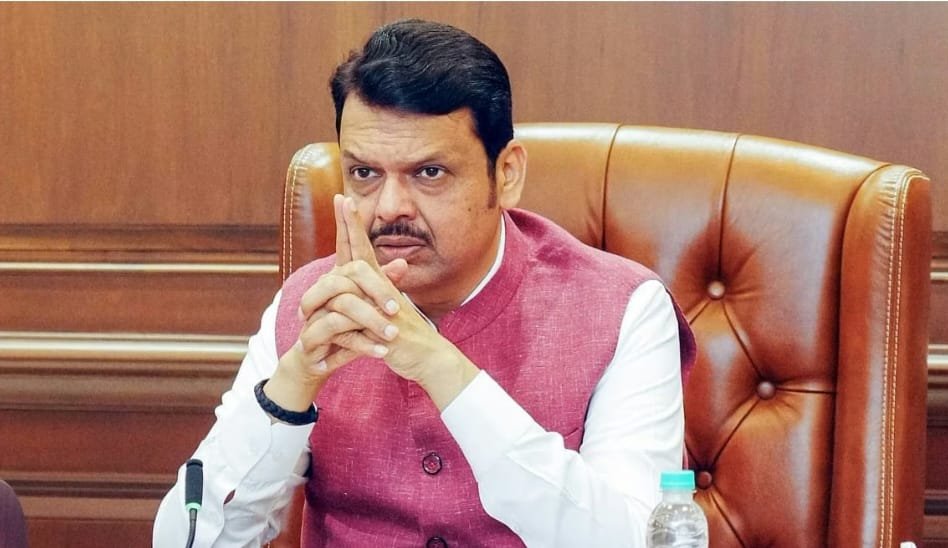
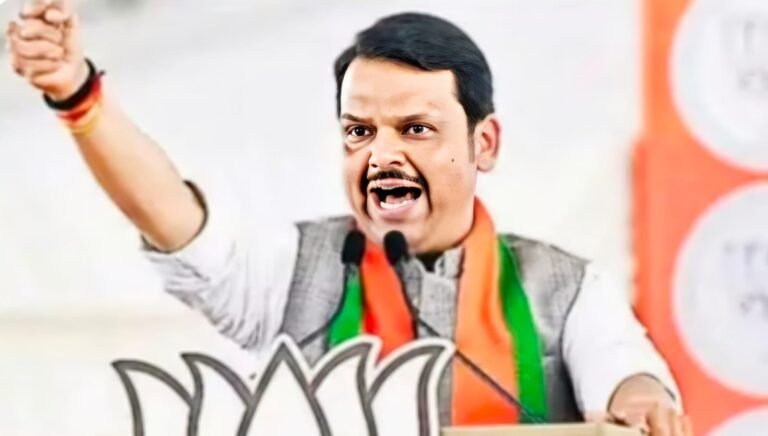
‘Thackeray No Longer a Brand,’ Says CM Fadnavis; BJP Confident Ahead of Mumbai Civic Battle Mumbai | Jan 3, 2026 — Undercover Editor Maharashtra Chief Minister Devendra Fadnavis has dismissed concerns over the coming together of Thackeray cousins Uddhav and Raj, asserting that the BJP-led Mahayuti remains confident of a decisive victory in Mumbai’s civic elections. In an interview with an online news channel, Fadnavis remarked that “Thackeray is no longer a brand,” stating that the only true Thackeray brand was that of late Balasaheb Thackeray. He claimed that the electoral influence of both Shiv Sena (UBT) and MNS has significantly weakened over time. The chief minister said that even if the cousins had united earlier, the political outcome today would not change, as their voter base has shrunk and overlaps considerably. “Neither the Marathi voter nor the non-Marathi voter is with them,” he said, adding that internal differences among their party workers further weaken their position. On the question of Mumbai’s next mayor, Fadnavis asserted that the post will go to the Mahayuti alliance, and said the mayor will be “Marathi and Hindu.” Highlighting his government’s development record, the CM credited the completion of major infrastructure projects in Mumbai and the Mumbai Metropolitan Region to his leadership, stating that while ideas existed earlier, execution happened only after he assumed office. — Mahesh M. Rathod Editor, Undercover Editor
Muslim Welfare Association Backs Candidates Focused on Education, Inclusion and Social Upliftment Ahead of Civic Polls

Muslim Welfare Association Backs Candidates Focused on Education, Inclusion and Social Upliftment Ahead of Civic Polls

Muslim Welfare Association Backs Candidates Focused on Education, Inclusion and Social Upliftment Ahead of Civic Polls Mumbai | Undercover Editor News With Maharashtra heading into crucial municipal elections, the Muslim Welfare Association has announced a clear and issue-driven approach to its political engagement, pledging support to candidates committed to the upliftment of Muslim, Bahujan and other marginalised communities. In an official statement, the Association’s national representative, Saleem Sarang, said the organisation’s priorities are rooted in education, social justice, and inclusive development rather than party affiliations. He emphasised that candidates who place quality education, constitutional rights, reservation, and community empowerment at the centre of their agenda will receive the Association’s full backing. “Education is the most powerful tool to bring any community into the mainstream,” Sarang said, adding that candidates who offer practical and result-oriented plans for improving educational access, youth skill development, and employment opportunities would be actively supported by the organisation. Highlighting rising social concerns, Sarang also drew attention to the growing problem of substance abuse, particularly among the youth. He said the Association would stand with leaders who demonstrate seriousness towards de-addiction initiatives, rehabilitation programmes, youth counselling, and awareness campaigns aimed at building a healthier society. The Muslim Welfare Association clarified that its support will extend across Maharashtra, irrespective of region, to candidates who work sincerely for the rights, safety, dignity and equal opportunities of minorities and other disadvantaged sections of society. Sarang further informed that the Association is in the process of finalising a list of such socially committed candidates, which will be announced in the coming days, ahead of the elections. Political observers note that issue-based endorsements from social organisations like the Muslim Welfare Association could influence voting patterns in several urban and semi-urban constituencies, especially at a time when civic elections are increasingly focused on local governance, education, and social welfare. As campaigning intensifies, the Association’s stance signals a shift towards accountability-driven support, urging candidates to move beyond rhetoric and commit to measurable social change.
BMC Polls Head for High-Stakes Direct Battles in 32 Mumbai Wards

BMC Polls Head for High-Stakes Direct Battles in 32 Mumbai Wards

BMC Polls Head for High-Stakes Direct Battles in 32 Mumbai Wards Mumbai | Undercover Editor News ChannelMumbai | January 1, 2026 The upcoming Brihanmumbai Municipal Corporation (BMC) elections are shaping up to be a high-voltage political contest, with 32 of the city’s 227 wards set to witness a straight fight between the ruling BJP–Shiv Sena (Eknath Shinde faction) alliance and the opposition Shiv Sena (UBT)–Maharashtra Navnirman Sena (MNS) combine. The absence of a strong third front in these wards has significantly altered the electoral landscape, turning these constituencies into direct battlegrounds between two powerful political blocs with contrasting narratives and voter bases. Why these 32 seats matter This situation has emerged after the Congress–Vanchit Bahujan Aghadi (VBA) alliance chose not to field candidates in these particular wards. Political observers say this could prevent vote fragmentation, especially among anti-BJP voters, making these seats crucial in determining control of the civic body. “This kind of straight contest can decisively swing results,” a senior Shiv Sena (UBT) leader said, adding that the final outcome would depend on voter mobilisation and turnout once nominations are scrutinised. Congress–VBA seat-sharing dynamics Sources indicate that the VBA faced challenges in fielding candidates in 21 of the 62 seats initially allotted to it in Mumbai. Reasons ranged from documentation issues to the absence of viable local candidates. Following internal discussions, the VBA informed Congress on December 30 that it would contest only five additional seats, allowing Congress to field candidates in the remaining 16 wards. So far, the Congress has announced 143 candidates, while the VBA is contesting 46 seats. Six seats have been allotted to smaller allies, including Left parties and the Rashtriya Samaj Party, bringing the Congress-led alliance’s total coverage to 195 wards. The remaining 32 wards, now without a third-front challenger, have become direct BJP–Shinde Sena versus Thackeray Sena–MNS contests. Alliance unity reaffirmed Amid speculation of internal discord, both Congress and VBA leaders firmly rejected claims of a rift. Mumbai Congress spokesperson Sachin Sawant dismissed such reports, stating that coordination between alliance partners remains strong. “Since the announcement of our alliance, the ruling parties have been losing ground. There is no dispute whatsoever. Our workers and leadership are in constant communication,” Sawant said. VBA spokesperson Siddharth Mokle echoed the sentiment, alleging that rumours of disagreement were being spread by rival parties. “The Congress was aware in advance that VBA would not contest those 16 seats. Everything has been handled transparently, and the reality will be clear after scrutiny,” he said. A decisive phase for Mumbai politics With alliances locked, emotions running high, and Marathi identity emerging as a central theme for the Thackeray cousins’ campaign, these 32 direct-contest wards could play a decisive role in shaping Mumbai’s civic future. As scrutiny of nominations nears completion, political focus is firmly on whether these head-to-head battles will consolidate voter bases—or produce unexpected surprises—in one of India’s most closely watched municipal elections
From the Last Night of 2025 to the First Dawn of 2026: A Message to India

From the Last Night of 2025 to the First Dawn of 2026: A Message to India

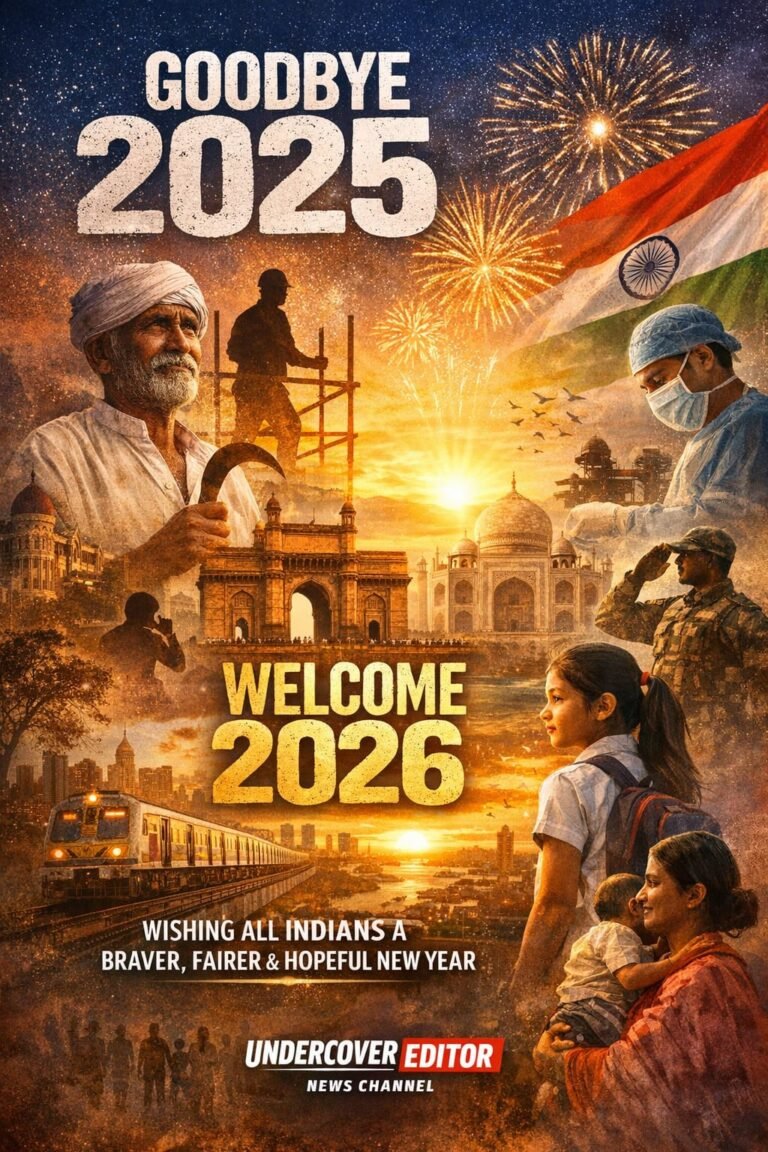
From the Last Night of 2025 to the First Dawn of 2026: A Message to India Mumbai | Undercover Editor News Channel As the final hours of 2025 quietly slip into history, India stands at a powerful pause — not just between two calendar years, but between memories lived and dreams yet to arrive. This year was not easy. It tested our patience, our unity, our resilience. It questioned our faith — in systems, in leadership, sometimes even in ourselves. Yet, India endured. From crowded streets to silent hospital corridors, from election battlegrounds to family dining tables, from flood-hit villages to fast-moving cities — the spirit of this nation never bowed. It adapted. It fought. It hoped. 2025 reminded us that progress is not always loud. Sometimes, survival itself is victory. We witnessed loss, but we also witnessed courage. We saw injustice, but we also saw voices rise. We felt uncertainty, but we also felt solidarity — strangers helping strangers, citizens questioning power, and common people refusing to be invisible. As journalists, we did not just report stories this year — we carried truths that mattered, we stood where silence was expected, and we asked questions where comfort was preferred. At Undercover Editor News Channel, 2025 strengthened our belief that journalism is not about headlines — it is about heartbeat. It is about standing with the unheard, the unseen, and the overlooked. Now, as 2026 approaches, it does not knock loudly. It arrives softly — with promise. A promise that tomorrow can be fairer. A promise that truth can travel faster than fear. A promise that India’s strength lies not in division, but in dignity. To every farmer who woke before sunrise, to every worker who travelled miles for survival, to every student carrying dreams heavier than textbooks, to every mother holding hope together with sacrifice, to every citizen who still believes this nation can be better — 2026 belongs to you. May this new year bring healing where there was hurt, clarity where there was confusion, and courage where there was fear. May power listen more. May justice move faster. May humanity come before headlines. From all of us at Undercover Editor News Channel, we don’t just wish you a Happy New Year — we wish you a braver, fairer, and more truthful 2026. Because the future of India is not written by dates — it is written by people. Jai Hind. Welcome, 2026.
Tech Leap in Mumbai: Andheri Man Undergoes Cancer Surgery Performed Remotely from 8,000 km Away

Tech Leap in Mumbai: Andheri Man Undergoes Cancer Surgery Performed Remotely from 8,000 km Away

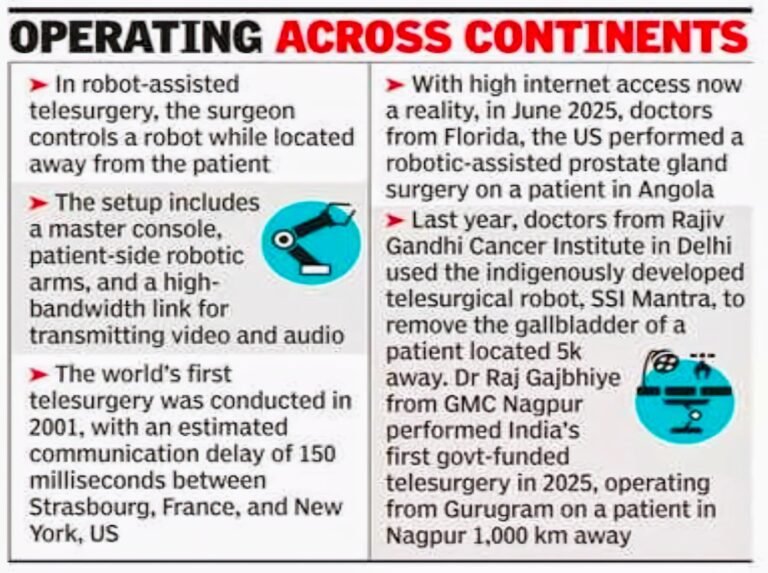
Tech Leap in Mumbai: Andheri Man Undergoes Cancer Surgery Performed Remotely from 8,000 km Away Mumbai | Undercover Editor News Channel Mumbai: In a breakthrough that highlights India’s rapidly evolving medical and digital capabilities, a 64-year-old resident of Andheri underwent prostate cancer surgery last week—performed not by a surgeon standing inside the operating theatre, but by a specialist sitting nearly 8,000 kilometres away in Shanghai. The patient, identified as S Rahul (name changed), was operated on through a cutting-edge telerobotic surgical system, marking a major milestone in India’s healthcare journey. The procedure was remotely conducted by renowned onco-urologist Dr T B Yuvaraja, who controlled robotic arms via a high-speed, secure internet connection while the patient lay in an operating room at Kokilaben Ambani Hospital, Andheri. “I was seated at a console in my consulting room in Shanghai and operating on the patient in Mumbai in real time,” Dr Yuvaraja explained. “The robotic system accurately translated my movements to the surgical arms in the operating theatre.” A Near-Total Cure with a Global Touch The surgery, which offers a near-total probability of cure, was completed successfully, and Rahul was discharged on the third day after the procedure, highlighting both the precision and safety of the technology. This historic operation came just a day after another telerobotic surgery was conducted by doctors from HN Reliance Foundation Hospital, Girgaon, who performed a remote robotic procedure at a community medical centre in Jamnagar, Gujarat. Together, the back-to-back surgeries underscore how tele-enabled robotics is reshaping access to specialised healthcare across India. Bridging the Urban–Rural Healthcare Divide For decades, advanced surgical care remained limited to major metropolitan hospitals, forcing patients from smaller towns to travel long distances. According to Dr Tarang Gianchandani of HN Reliance Foundation Hospital, telerobotic surgery is changing that reality. “This technology is reimagining how complex surgical care is delivered—powered by indigenous innovation, advanced robotics, and secure digital infrastructure,” she said. Global estimates suggest that nearly five billion people lack access to safe and affordable surgical care, making the expansion of such technology a potential game-changer. Made-in-India Innovation at the Core India entered the field of telerobotic surgery only last year, and so far fewer than 200 such procedures have been performed nationwide. However, momentum is building. SS Innovations International Inc, which developed India’s first indigenous surgical robotic system—SSII Mantra—recently announced the completion of 100 robotic telesurgeries. The newer generation of robotic systems also integrates artificial intelligence, enhancing precision and assisting surgeons during complex procedures. Cost, Safety and the Road Ahead While the use of robotic arms can add ₹1–2 lakh to the cost of surgery, doctors believe overall expenses may reduce for patients and families by eliminating travel, accommodation, and extended hospital stays. “If I operate from Mumbai on a patient in Indore, the patient and family don’t need to travel. In many cases, the total cost comes down,” Dr Yuvaraja noted. Despite its promise, challenges remain—including costs, legal frameworks, and cybersecurity concerns—but medical experts agree that telerobotic surgery represents the future of healthcare delivery. A Glimpse of Tomorrow’s Medicine Rahul’s surgery stands as more than just a medical success—it is a glimpse into a future where distance no longer limits access to world-class healthcare, and where technology connects patients to life-saving expertise across continents.

Recent News

Undercover Editor

From BMC updates, local area developments, railway station news, and crime reports to the latest in politics, sports, Bollywood, lifestyle, travel, and education, we bring you news that’s relevant, reliable, and real-time


Undercover Editor © 2025 – Designed by iCreato