Author: Mahesh Rathod

Contrary to popular belief, Lorem Ipsum is not simply random text. It has roots in a piece of classical Latin literature from 45 BC, making it over 2000 years old. Richard McClintock, a Latin professor

Rs 7 Lakh Gold Theft on Mumbai–Pune Expressway Halt: CCTV Exposes Shocking Inside Job

Rs 7 Lakh Gold Theft on Mumbai–Pune Expressway Halt: CCTV Exposes Shocking Inside Job

Rs 7 Lakh Gold Theft on Mumbai–Pune Expressway Halt: CCTV Exposes Shocking Inside Job Pune | Undercover Editor News Channel, February 17, 2026 A routine food break on the Mumbai–Pune Expressway turned into a nightmare for a Thane-based couple after gold jewellery worth nearly ₹7 lakh was stolen from their cab during a halt at a popular highway food stop. What later emerged from CCTV footage has raised serious concerns about traveller safety, cab accountability, and policing on India’s busiest expressway. The Incident On February 7, Poonam Ahuja (37) and her husband Mandeep Singh Khurana (37) were returning to Mumbai after attending a wedding in Pune. Around 4:15 pm, they stopped at Grand Ocean Cube, a well-known pit stop for travellers. Believing their belongings were safe inside the locked vehicle, the couple stepped out for refreshments for about an hour. It was only after reaching home that Poonam realised her gold bangle and ring were missing from her bag. CCTV Reveals the Truth Suspecting foul play, the couple contacted the cab driver, who denied any involvement. With no immediate FIR registered, they returned to the food mall and sought help from the administration. CCTV footage reviewed by the mall authorities showed a disturbing sequence: the cab driver was seen entering the rear seat of the parked vehicle—where the couple’s bags were kept—and spending several minutes inside while the passengers were away. The complaint was subsequently recorded at Khopoli Police Station, though no FIR was registered at that stage. Unexpected Recovery Frustrated by the slow police response, the couple approached local leaders of the Maharashtra Navnirman Sena (MNS) in Thane. After reviewing the CCTV footage, swift action followed. By the same evening, the cab driver was summoned, and the stolen gold bangle was recovered. The following day, the gold ring—already sold to a jeweller in Pune—was traced and retrieved, though it had been crudely cut to facilitate resale. “What was meant to be a short hunger break became a harsh lesson. The theft happened in minutes, but the impact stayed with us,” Poonam said. Food Mall Responds The management of Grand Ocean Cube stated that the premises are fully covered by CCTV cameras and that footage was promptly shared once the incident was reported. The mall also operates a lost-and-found cell, as incidents of misplaced valuables are common due to heavy footfall. However, the owner later confirmed that this was the second theft reported at the location in the last three months, raising questions about traveller vigilance and enforcement mechanisms. Police Advisory for Travellers Police officials have issued a fresh advisory urging commuters to exercise caution: Inspector Sachin Hire of Khopoli police warned that thefts are rising not just in buses, but increasingly in private cabs on the expressway. Bigger Questions Remain While the recovery brought relief, the incident highlights gaps in immediate FIR registration, surveillance accountability, and passenger safety enforcement on highways used by thousands daily. As expressway travel grows, so does the need for greater awareness, stricter monitoring, and faster police action—because sometimes, even a brief stop can come at a heavy cost.
PM Modi Skips Bangladesh Swearing-In Due to Prior Macron Meet; Lok Sabha Speaker to Represent India

PM Modi Skips Bangladesh Swearing-In Due to Prior Macron Meet; Lok Sabha Speaker to Represent India

PM Modi Skips Bangladesh Swearing-In Due to Prior Macron Meet; Lok Sabha Speaker to Represent India Undercover Editor News Channel, February 16, 2026 New Delhi: Prime Minister Narendra Modi will not attend the swearing-in ceremony of Bangladesh’s newly elected government led by Tarique Rahman, as the event coincides with his pre-scheduled bilateral meeting with French President Emmanuel Macron in Mumbai. Instead, Om Birla, the Speaker of the Lok Sabha, will represent India at the oath-taking ceremony in Dhaka on February 17. He will be accompanied by Foreign Secretary Vikram Misri, official sources confirmed. The Bangladesh Nationalist Party (BNP) had formally invited Prime Minister Modi to attend the ceremony, along with leaders from several countries, including Pakistan Prime Minister Shehbaz Sharif. However, government sources clarified that Modi’s engagement with President Macron had been scheduled weeks in advance, making the visit to Dhaka unfeasible. In a statement, India’s Ministry of External Affairs said Om Birla’s presence at the ceremony highlights the “deep and enduring friendship” between India and Bangladesh and reaffirms India’s commitment to democratic values in the region. The MEA welcomed Bangladesh’s transition to an elected government under Tarique Rahman, stating that the mandate reflected the will of the Bangladeshi people. Prime Minister Modi was among the first global leaders to congratulate Rahman after the BNP secured an absolute majority in the elections. In a post on X, Modi said the verdict reflected the trust reposed by the people of Bangladesh in Rahman’s leadership. Later, Modi also became the first foreign leader to personally speak with Rahman, offering India’s cooperation in supporting Bangladesh’s development and aspirations. Responding positively, the BNP said Bangladesh remains committed to democratic values, inclusivity, and progressive development. The party expressed its intention to engage constructively with India to strengthen bilateral ties, emphasizing mutual respect, regional stability, and shared prosperity. The developments underline India’s intent to maintain strong diplomatic engagement with Bangladesh, even as Prime Minister Modi balances multiple high-level international commitments.
Political Clash in Pune After Shivaji–Tipu Comparison; 9 Injured in Stone Pelting

Political Clash in Pune After Shivaji–Tipu Comparison; 9 Injured in Stone Pelting

Political Clash in Pune After Shivaji–Tipu Comparison; 9 Injured in Stone Pelting Harshwardhan Sapkal Pune | New Delhi At least nine people, including police personnel and journalists, were injured on Sunday after clashes broke out between workers of the Bharatiya Janata Party (BJP) and the Indian National Congress in Pune, following controversial remarks by Maharashtra Congress chief Harshwardhan Sapkal comparing Chhatrapati Shivaji Maharaj with Tipu Sultan. The violence erupted near the Congress Bhavan, where BJP workers had gathered to protest Sapkal’s comments. What began as sloganeering soon escalated into stone pelting from both sides, forcing police to intervene and deploy heavy security to prevent further escalation. Joint Commissioner of Police Ranjan Kumar Sharma confirmed that three Congress workers, two BJP workers, two police personnel, and two journalists sustained injuries. “Workers from both parties climbed onto walls and engaged in stone pelting. Cases are being registered against members of both sides,” Sharma said. What Sparked the Row The confrontation followed Sapkal’s remarks in which he praised the bravery of Chhatrapati Shivaji Maharaj and stated that Tipu Sultan, inspired by similar ideals of resistance, fought against British rule. Sapkal said that in terms of valour and opposition to colonial forces, Tipu Sultan should be viewed on par with Shivaji Maharaj. The comments triggered strong backlash from BJP leaders and Hindu groups, who accused the Congress of equating a revered Maratha king with a controversial historical figure, calling the comparison unacceptable. Political Fallout Intensifies BJP Pune city unit president Dheeraj Ghate filed a complaint against Sapkal at Parvati police station, alleging that the remarks hurt Hindu sentiments. Police confirmed that an FIR has been registered. Meanwhile, Pune city Congress chief Arvind Shinde submitted a written complaint against BJP leaders, including the city mayor, accusing them of provoking violence. Maharashtra Congress vice-president Mohan Joshi alleged that BJP workers initiated the stone pelting, claiming that Congress supporters were injured during the protest. Deputy Commissioner of Police Krishikesh Rawale said police acted swiftly to bring the situation under control and prevent further violence. Wider Political Context The controversy comes amid heightened political sensitivity around historical narratives in Maharashtra. A day earlier, a separate dispute had erupted in Malegaon over the display of Tipu Sultan’s portrait in a municipal office, drawing protests from Shiv Sena corporators and Hindu organisations. Adding to the political exchange, Congress leader Sachin Sawant accused the BJP of “double standards,” alleging that BJP leaders had earlier supported references to Tipu Sultan in civic resolutions and public spaces. He claimed the BJP was now using the issue to polarise voters ahead of upcoming political battles. Situation Under Control, Tensions Remain While the immediate situation in Pune has been brought under control, the incident underscores rising political tensions and the volatility surrounding historical figures in contemporary politics. Authorities have increased police presence in sensitive areas as investigations continue.
The Anger Beneath Mumbai’s Endless Construction

The Anger Beneath Mumbai’s Endless Construction

The Anger Beneath Mumbai’s Endless Construction Mumbai: At 8.30 am on a weekday, traffic at Andheri’s Gokhale Bridge barely moves. Dust settles thick on windshields, delivery riders rub stinging eyes at traffic signals, and office-goers step off broken footpaths straight into speeding vehicles. Overhead, unfinished streetlights hang with exposed cables — a daily reminder that in Mumbai, construction never truly ends. Across the city, from the dense lanes of Dharavi to the crowded suburbs of Andheri and Borivali, Mumbaikars are running out of patience. Roads are dug up repeatedly, footpaths vanish under debris, and barricades appear overnight. What was once seen as the price of development is now widely viewed as a symbol of civic failure. Mumbai’s identity as India’s financial capital increasingly competes with another reputation — a city perpetually under repair. Growth Without Planning Mumbai’s infrastructure crisis did not emerge overnight. Rapid expansion after Independence, particularly from the 1960s onward, pushed the city far beyond what its colonial-era road network was designed to handle. As industries grew and suburbs expanded, planning failed to keep pace with population growth and rising vehicle ownership. Successive governments promised solutions — flyovers, sea links, coastal roads and Metro corridors — each billed as transformational. Yet for ordinary citizens, daily life remained dominated by potholes, diversions and dust-filled commutes. One of the most common complaints is the repeated digging of the same roads. A stretch repaired after monsoon is reopened months later for pipelines, cables or drainage, only to be resurfaced again — and then dug up once more. Urban planners have long warned that fragmented governance lies at the heart of the problem. Multiple agencies work in silos, with little coordination or accountability. Civic Bodies Under Scrutiny The Brihanmumbai Municipal Corporation, one of India’s richest municipal bodies, has frequently faced criticism for poor coordination between departments and private utilities. Large-scale road concretisation projects, intended to eliminate potholes, have instead narrowed roads for months and raised concerns over heat retention and waterlogging. Environmental experts warn that replacing permeable surfaces with concrete has worsened flooding and intensified the city’s heat island effect. Air pollution adds another layer of concern. Construction dust is now one of Mumbai’s biggest contributors to poor air quality, even as enforcement against violators remains inconsistent. Courts Step In, Repeatedly The Bombay High Court has repeatedly intervened, pulling up civic authorities over unsafe roads, potholes and shoddy workmanship. Judges have demanded accountability from contractors and warned that public safety cannot be treated as a seasonal concern. On illegal hawking and encroachments, the court’s frustration has been equally visible. Despite clear orders to free footpaths and regulate vending zones, enforcement on the ground remains patchy — often influenced by local politics. Who Really Benefits? Critics argue that Mumbai’s infrastructure boom has become an industry in itself. Allegations of contractor-politician nexus, inflated contracts and weak monitoring have followed major projects for decades. Urban experts point out that large infrastructure projects often fuel real-estate speculation, raising land prices and benefiting developers far more than commuters. Meanwhile, basic services like buses, footpaths and drainage struggle for funding and attention. Citizens increasingly ask a simple question: if taxes are rising and projects are endless, why does daily life keep getting harder? Redevelopment and Its Cost Redevelopment has reshaped Mumbai’s skyline, replacing aging buildings with high-rise towers. While many structures genuinely need rebuilding, the boom has brought dust pollution, noise and safety risks. Rules on dust control exist, but compliance varies widely. Studies have shown that construction and road dust account for a majority of particulate pollution in the city, worsening health outcomes for residents. A City at a Breaking Point For auto drivers navigating broken roads, pedestrians squeezed off footpaths, and families breathing polluted air, the anger is deeply personal. Rising fuel costs, vehicle damage and lost time translate into real financial stress. Sociologists warn that Mumbai’s famous resilience should not be mistaken for acceptance. As trust erodes, frustration grows louder. Mumbai undeniably needs infrastructure upgrades — safer buildings, better transit and modern utilities. But experts agree that without coordination, transparency and strict enforcement, construction will remain chaos rather than progress. Until then, as dusk settles over half-finished flyovers and dust-covered streets, Mumbaikars wait at yet another barricade — wondering when development will finally begin to serve the people it was meant for.
Mumbai Metro Tragedy: One Dead, Three Injured as Concrete Slab Collapses in Mulund West

Mumbai Metro Tragedy: One Dead, Three Injured as Concrete Slab Collapses in Mulund West

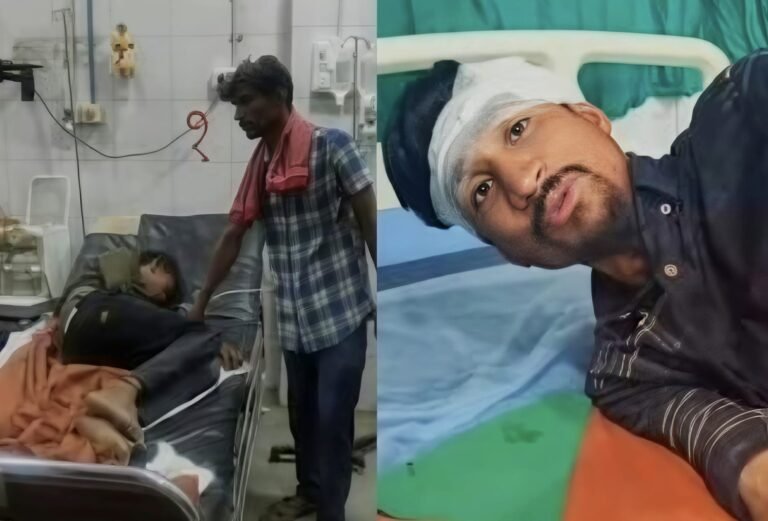
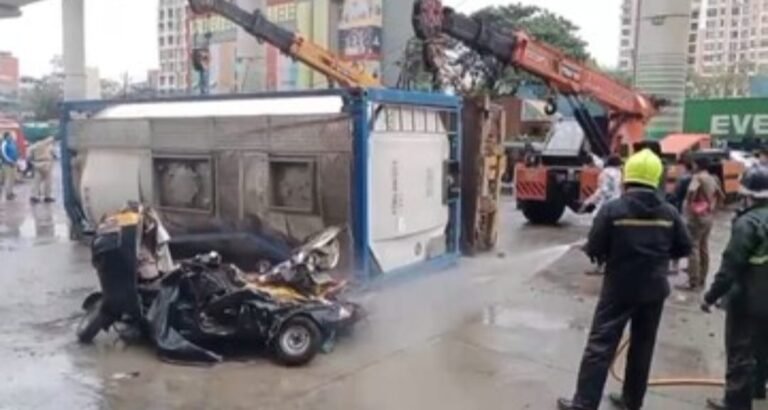
Mumbai Metro Tragedy: One Dead, Three Injured as Concrete Slab Collapses in Mulund West Mumbai | Undercover Editor News Channel, February 14, 2026 Mumbai: In a tragic incident that raised serious safety concerns over ongoing infrastructure projects, one person lost his life and three others were injured after a massive concrete slab from the under-construction Mumbai Metro Line 4 collapsed onto moving vehicles on LBS Marg in Mulund West on Saturday afternoon. The accident occurred around 12:20 pm near the Johnson & Johnson and Oberoi premises, a busy stretch of road with heavy traffic. According to officials, the slab fell from a height and crashed onto cars and an autorickshaw passing beneath, triggering panic and chaos at the site. Eyewitness videos circulating on social media showed terrifying visuals of a crushed car and a mangled autorickshaw, with rescue personnel pulling out victims trapped under the debris. Fire brigade teams, police, metro officials, ward staff and 108 ambulance services rushed to the spot and launched immediate rescue operations. The deceased has been identified as Ramdhan Yadav, who was declared brought dead at the hospital. Among the injured, Rajkumar Yadav (45) is reported to be in critical condition, while Mahendra Pratap Yadav (52) and Deepa Ruhiya (40) are undergoing treatment and are said to be stable. Authorities cordoned off the affected area, leading to temporary traffic disruption on the busy LBS Road. The injured were shifted to a nearby private hospital for urgent medical care. In an official statement, the Mumbai Metropolitan Region Development Authority said the incident took place near Pier P196 of the Metro Line 4 construction work, close to the Mulund Fire Station. A portion of a parapet segment reportedly fell from height and struck a passing autorickshaw. The metro project team, along with the Brihanmumbai Municipal Corporation and disaster management authorities, is currently securing the site and conducting relief operations. The exact cause of the slab collapse is yet to be determined. Officials have stated that a detailed inquiry will be conducted to ascertain responsibility and ensure accountability, as questions mount over construction safety and oversight on one of Mumbai’s key metro corridors. The incident has once again highlighted the urgent need for strict safety audits and monitoring at large-scale infrastructure project sites to prevent such fatal accidents in the future.
Mumbai: Level-1 Fire Erupts in Goregaon High-Rise, Residents Safely Evacuated; No Injuries Reported

Mumbai: Level-1 Fire Erupts in Goregaon High-Rise, Residents Safely Evacuated; No Injuries Reported

Mumbai: Level-1 Fire Erupts in Goregaon High-Rise, Residents Safely Evacuated; No Injuries Reported Mumbai | Undercover Editor News Channel, February 13, 2026 Mumbai: Panic briefly gripped residents of a high-rise residential tower in Goregaon East on Thursday morning after a fire broke out in a flat on the ninth floor of a 45-storey building. Swift action by emergency services ensured that the blaze was brought under control without any loss of life or injuries. According to the Mumbai Fire Brigade, the incident occurred at DB Wood Building on Krushna Vatika Road in the Gokul Dham area. The fire was reported by a citizen at around 9.11 am, following which fire officials rushed to the spot. It was declared a Level-1 fire at 9.25 am. Fire officials said the blaze originated in a bedroom and was largely confined to electric wiring, installations, kitchen items and other household materials. Firefighting operations were immediately launched using the building’s inbuilt fire safety systems. As a precautionary measure, residents were evacuated and moved to designated refuge areas and the terrace. A large emergency response team was deployed, including senior fire officers, firefighters, rescue vehicles, a turntable ladder, a hydraulic platform, and ambulances. Personnel from the local police, electricity distribution company, and the Brihanmumbai Municipal Corporation were also present at the site to assist in operations. The fire was successfully extinguished by 10.17 am, and cooling operations were carried out to prevent any flare-ups. Officials confirmed that no injuries were reported and all residents were safe. The exact cause of the fire is under investigation. Separate Incident: Fire Reported at Naval Dockyard in South Mumbai In a separate incident later in the night, a massive fire broke out at waste stockyards inside the Naval Dockyard near the Gateway of India in south Mumbai. Preliminary reports indicate that the blaze started around 10.15 pm within the dockyard premises. A spokesperson for the Indian Navy said naval fire tenders responded promptly and brought the situation under control in a short time. Officials confirmed that there were no casualties or injuries in the incident. Senior naval officers rushed to the site, and firefighting operations were conducted entirely within the secured premises. The cause of the fire is currently being investigated. Authorities have assured that both incidents were handled efficiently and that there is no threat to public safety.
Mayor Talks Tough on Illegal Infiltrators — But Who Actually Identifies and Deports Them in Mumbai?

Mayor Talks Tough on Illegal Infiltrators — But Who Actually Identifies and Deports Them in Mumbai?

Mayor Talks Tough on Illegal Infiltrators — But Who Actually Identifies and Deports Them in Mumbai? Mumbai | Undercover Editor News Channel, February 12, 2026 Mumbai: After newly appointed Mumbai Mayor Ritu Tawde announced a crackdown on “illegal Bangladeshi hawkers and infiltrators,” public debate has intensified over who actually has the authority to identify and deport illegal foreign nationals from the city. While the Mayor’s remarks have drawn political attention, senior police officials clarify that deportation of illegal immigrants is strictly a law enforcement and central government function — not a civic one. Who Has the Authority? The identification, detention and deportation of illegal Bangladeshi nationals are handled by the Mumbai Police in coordination with the State Special Branch, the Union Ministry of Home Affairs, and the Border Security Force (BSF). Officials underline that the Mayor or the Brihanmumbai Municipal Corporation (BMC) has no legal power to determine nationality, verify passports, or deport individuals. The civic body can only act against illegal hawking, encroachments, and violations under municipal laws. “Nationality verification and deportation are governed by central laws and handled through established legal procedures,” a senior officer said. Deportation Numbers See Sharp Rise Mumbai Police data reveals that 1,061 illegal Bangladeshi nationals were deported in 2025 across 401 cases — the highest number recorded in a single year. In comparison: Police attribute the spike in 2025 to directions from the Union government asking states to accelerate deportation proceedings. How Police Identify Illegal Immigrants The identification process typically begins during routine verification drives or based on specific intelligence inputs, particularly in areas with dense informal settlements. In many cases, suspects do not possess valid physical documents. Officials say documents are often destroyed, leaving only digital traces on mobile phones. Investigators examine mobile devices for: In some cases, officers conduct video calls to individuals in Bangladesh — including family members or local representatives — to verify identity. Confirmation is made only after multiple cross-checks and verification procedures. What Happens After Confirmation? Once authorities establish that a person has entered India illegally or overstayed a visa, the deportation process begins. Police officials note that criminal cases are not registered in every instance, as court proceedings can delay deportation. If the individual has not committed additional crimes, authorities complete legal documentation and initiate removal. However, if the person is linked to other offences, separate criminal charges are filed. The Deportation Process After documentation is completed, detainees are transported — usually by train — to the Indo-Bangladesh border and handed over to the BSF. In large-scale operations, special flights have also been used. In August last year, 112 illegal Bangladeshi nationals from Mumbai and nearby areas were deported together in a coordinated operation via the Assam-Bangladesh border. What the Mayor’s Statement Means Mayor Tawde recently stated that illegal hawkers occupying footpaths were affecting pedestrian movement and civic planning. She indicated that removal of such encroachments would be a priority in discussions with the Municipal Commissioner. Police officials interpret the remarks as a civic and political position focused on encroachment removal rather than direct intervention in deportation processes. Authorities emphasize that deportation procedures follow a fixed legal framework and continue based on police investigations and central government directives — independent of political statements. This issue highlights the distinction between civic governance and national security enforcement, as Mumbai navigates concerns over illegal immigration, urban encroachments, and public order within the framework of law.
Rohit Shetty Residence Firing: Mumbai Police Invoke MCOCA Against Accused; Main Conspirator Still Absconding

Rohit Shetty Residence Firing: Mumbai Police Invoke MCOCA Against Accused; Main Conspirator Still Absconding

Rohit Shetty Residence Firing: Mumbai Police Invoke MCOCA Against Accused; Main Conspirator Still Absconding Mumbai | Undercover Editor News Channel, February 12, 2026 Mumbai: In a major development in the firing incident outside filmmaker Rohit Shetty’s residence earlier this month, Mumbai Police have invoked the stringent Maharashtra Control of Organised Crime Act (MCOCA) against the accused. The move signals investigators’ belief that the attack may be linked to organised criminal activity. Gunshots were fired at Shetty’s nine-storey residential building in Juhu at around 12:45 am on February 1, 2026. According to officials, at least five rounds were discharged, with one bullet striking the glass of a gym located on the first floor of the building. No injuries were reported in the incident. Five Arrested, Produced Before Special Court The Anti-Extortion Cell of the Mumbai Crime Branch has so far arrested five individuals in connection with the case — identified as Aditya Gayaki (19), Siddharth Yenpure (20), Samarth Pomaji (18), Swapnil Sakat (23), and Asaram Fasale. After their police custody ended on Wednesday, the accused were produced before a special MCOCA court. Officials confirmed that certain accused have prior involvement in serious offences, prompting the invocation of the organised crime law. “MCOCA sections have been added considering the nature of the offence and the background of some of the accused,” an officer said. Alleged Gang Link Under Probe Investigators have named Shubham Lonkar as the alleged main conspirator behind the attack. Lonkar, who is currently absconding, is believed to have ordered the firing and is reportedly linked to the Lawrence Bishnoi gang. Police sources indicate that Lonkar is also wanted in connection with other high-profile cases, including the murder of NCP leader Baba Siddique and the firing incident outside actor Salman Khan’s Bandra residence. Authorities are actively searching for Lonkar and examining whether the firing at Shetty’s residence was part of a broader pattern of intimidation or extortion attempts targeting prominent public figures. Broader Security Concerns In a related development, actor Ranveer Singh has reportedly received a threat message via WhatsApp from unidentified persons. Investigators suspect possible links to organised criminal elements, though verification is ongoing. The Rohit Shetty firing case has once again brought focus to the activities of organised crime syndicates and their alleged attempts to target high-profile personalities in Mumbai. Police officials have assured that strict legal action will be taken and that all angles — including conspiracy, gang involvement, and extortion motives — are being thoroughly examined. The investigation remains ongoing.
Ghaziabad Tragedy: Forensic Data Reveals Sisters Spent Nearly 20 Hours a Day on Phones, Deeply Immersed in Online Fantasy World

Ghaziabad Tragedy: Forensic Data Reveals Sisters Spent Nearly 20 Hours a Day on Phones, Deeply Immersed in Online Fantasy World

Ghaziabad Tragedy: Forensic Data Reveals Sisters Spent Nearly 20 Hours a Day on Phones, Deeply Immersed in Online Fantasy World Ghaziabad: In a deeply disturbing development in the deaths of three minor sisters in Bharat City, police investigations have revealed that the girls were spending almost 18 to 20 hours daily on their mobile phones, consuming online content and playing games. The three sisters, aged 16, 14 and 12, were found lying next to each other on February 4 on the society premises, directly below the ninth-floor window of their apartment. They were rushed to hospital but were declared dead on arrival. What Forensic Data Revealed Police have recovered incremental digital data from a mobile phone that was sold by their father, Chetan Kumar, to an electronics shop in Shalimar Garden about 15 days before the incident for ₹15,000. The device was sent for forensic examination to retrieve deleted information and trace the sisters’ digital activity. According to investigators: Police officials stated that a report has been sent to the government recommending a ban on the five horror games cited in the investigation. Growing Isolation and Virtual Identity Investigators also found that the sisters had stopped attending school after the Covid pandemic and had gradually withdrawn from social interaction. With few, if any, friends, they reportedly became increasingly dependent on each other and on their phones. In 2025, the sisters had launched a YouTube channel focused on K-dramas and cartoon characters, which had gained over 2,000 followers. However, the channel was deleted approximately 10 days before the incident, reportedly after their father objected to what he considered an escalating obsession with Korean culture. A private tutor who briefly taught the girls told police that they introduced themselves using Korean names — Maria, Aliza and Cindy — and claimed they had been adopted from Korea and China. The tutor further stated that the sisters were academically weak and struggled even with basic mathematical calculations. Investigation Ongoing Police are now attempting to recover another phone that was sold by the father three months prior to the incident. Investigators are also examining the sisters’ social media interactions to determine whether they were in contact with anyone outside the family. Officials have stressed that the investigation is ongoing and that conclusions will only be drawn after the final forensic report is completed. The tragedy has raised broader concerns about excessive digital exposure, online isolation, and the impact of prolonged unsupervised screen time on young minds.  
Ritu Tawde to Take Charge as Mumbai’s 8th Woman Mayor

Ritu Tawde to Take Charge as Mumbai’s 8th Woman Mayor

Ritu Tawde to Take Charge as Mumbai’s 8th Woman Mayor Mumbai | Undercover Editor News Channel, February 10, 2026 Mumbai: BJP corporator Ritu Tawde is poised to assume office as Mumbai’s next mayor after being elected unopposed in the Brihanmumbai Municipal Corporation (BMC), marking a historic shift in the city’s civic power structure. Her formal election, scheduled for Wednesday at noon, will make her Mumbai’s eighth woman mayor and bring an end to the Shiv Sena’s uninterrupted 25-year control of the mayoral post. Tawde’s elevation also marks the Bharatiya Janata Party’s return to the mayor’s office after more than 40 years—the last BJP mayor in Mumbai being Prabhakar Pai, who served during 1982–83. The development reflects the growing dominance of the Mahayuti alliance in the country’s richest civic body. The unopposed victory followed the decision of the Uddhav Thackeray-led Shiv Sena (UBT) not to field a candidate against Tawde. The move reportedly came after internal deliberations at party chief Uddhav Thackeray’s residence, acknowledging the numerical strength of the ruling alliance in the 227-member corporation. Former mayor and Sena (UBT) leader Kishori Pednekar said the decision was taken while respecting Marathi identity and the prevailing political arithmetic in the BMC. Alliance Power Consolidation Under the Mahayuti arrangement, the deputy mayor’s post will go to Sanjay Ghadi of the Eknath Shinde-led Shiv Sena. Ghadi, a corporator from Ward No. 5, will serve a 15-month tenure, after which the position will be rotated to give opportunities to other corporators within the alliance. The mayor’s term will be for two and a half years. Ritu Tawde, 53, filed her nomination at the municipal secretary’s office in the presence of senior Mahayuti leaders, including Minister Mangal Prabhat Lodha and BJP Mumbai unit chief Ameet Satam. Speaking to reporters, Tawde struck a humble note, stating that she would function as a “sevak of Mumbai” rather than merely occupying a ceremonial post. “My priority will be the safety, development and quality of life of Mumbai’s citizens. I see this responsibility as service, not power,” she said. Civic Experience and Political Journey A two-time corporator from Ghatkopar East, Tawde was first elected in 2012 and went on to chair the BMC’s Education Committee, where she raised several issues related to infrastructure, civic amenities and public safety. Though she lost the 2017 civic elections, she made a comeback in the latest polls, securing 19,810 votes from her ward. BJP leaders have underscored the symbolic significance of her election. Ameet Satam said the Mahayuti government is committed to a corruption-free civic administration. “The BMC must be freed from corruption that flourished under previous regimes. Ritu Tawde will lead Mumbai on the path of transparent and accountable governance,” Satam said, adding that the alliance had fulfilled its campaign promise of appointing a Marathi and Hindu mayor. Political Reactions and Opposition Criticism While the ruling alliance celebrated the smooth and uncontested outcome, opposition voices raised objections. The NCP (Sharad Pawar faction) criticised the BJP’s choice, pointing out that Tawde was previously associated with the Congress. NCP (SP) spokesperson Clyde Crasto said the decision had demoralised long-time BJP corporators. “By selecting a former Congress leader as mayor, the BJP has overlooked loyal party workers who have dedicated years of service,” he said. BMC: Symbolism and Scale Though the mayor’s post in Mumbai is largely ceremonial, it carries immense political and symbolic significance in a city where civic administration and identity politics often intersect. The BMC has been under a state-appointed administrator since March 2022 following the expiry of the previous term. With a budget of ₹74,450 crore for 2025–26—larger than the budgets of several Indian states—the BMC remains India’s most powerful municipal body. The mayor’s post was reserved for a woman from the open category following a lottery draw last month. While Tawde and Sion corporator Rajeshree Shirwadkar were considered potential candidates, the Mahayuti kept its decision confidential until the final day, ensuring an uncontested election. No opposition nominations were filed before the February 11 withdrawal deadline. A New Chapter for Mumbai Ritu Tawde’s unopposed election not only signals the BJP’s return to the mayoral office after four decades but also cements the Mahayuti alliance’s firm grip on Mumbai’s civic politics. As the city prepares for a transition after nearly three decades of Shiv Sena dominance, Tawde’s tenure is being closely watched for how effectively symbolic leadership translates into tangible civic outcomes. “I will work as a servant of Mumbai, not as its ruler,” Tawde reiterated, signalling the tone she intends to set as the city enters a new phase of municipal governance.

Recent News

Undercover Editor

From BMC updates, local area developments, railway station news, and crime reports to the latest in politics, sports, Bollywood, lifestyle, travel, and education, we bring you news that’s relevant, reliable, and real-time


Undercover Editor © 2025 – Designed by iCreato