श्रेणी: Education

Contrary to popular belief, Lorem Ipsum is not simply random text. It has roots in a piece of classical Latin literature from 45 BC, making it over 2000 years old. Richard McClintock, a Latin professor

📰 महाराष्ट्र SSC रिजल्ट 2026: कोंकण ने फिर मारी बाजी, मुंबई–पुणे का दबदबा कायम

📰 महाराष्ट्र SSC रिजल्ट 2026: कोंकण ने फिर मारी बाजी, मुंबई–पुणे का दबदबा कायम

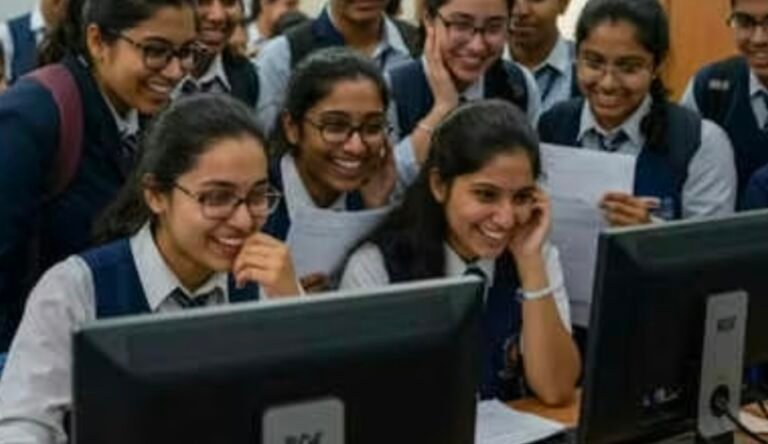
📰 महाराष्ट्र SSC रिजल्ट 2026: कोंकण ने फिर मारी बाजी, मुंबई–पुणे का दबदबा कायम महाराष्ट्र में कक्षा 10वीं (SSC) परीक्षा 2026 के नतीजे घोषित हो चुके हैं और इस बार भी राज्य के अलग-अलग डिवीजनों के प्रदर्शन में बड़ा अंतर देखने को मिला है। Maharashtra State Board of Secondary and Higher Secondary Education द्वारा आयोजित इस परीक्षा में कुल पास प्रतिशत 92.09% रहा, जो एक मजबूत और संतुलित प्रदर्शन को दर्शाता है। इस साल कुल 15,42,472 नियमित छात्र परीक्षा में शामिल हुए, जिनमें से 14,20,486 छात्र सफल घोषित किए गए। हालांकि, जब डिवीजन-वाइज परिणामों का विश्लेषण किया गया, तो राज्य में क्षेत्रीय असमानता साफ तौर पर सामने आई। 📊 कोंकण बना टॉपर, फिर कायम रखा दबदबा Konkan डिवीजन ने एक बार फिर शानदार प्रदर्शन करते हुए 97.62% पास प्रतिशत के साथ राज्य में पहला स्थान हासिल किया। कम छात्रों के बावजूद यहां की शैक्षणिक गुणवत्ता और स्कूल स्तर की स्थिरता इसे लगातार टॉप पर बनाए हुए है। 🏙️ मुंबई–पुणे और कोल्हापुर: मजबूत शहरी क्लस्टर Mumbai (94.97%), Pune (94.24%) और Kolhapur (95.47%) ने भी शानदार प्रदर्शन किया। ⚖️ मध्यम प्रदर्शन वाले डिवीजन Nashik (90.53%) और Amravati (90.50%) ने औसत से थोड़ा बेहतर प्रदर्शन किया। 📉 निचले स्तर पर नागपुर, लातूर और संभाजीनगर Nagpur (89.07%), Latur (88.42%) और Chhatrapati Sambhajinagar (88.41%) अपेक्षाकृत पीछे रहे। 🔍 मुख्य निष्कर्ष: क्षेत्रीय अंतर अभी भी बड़ा मुद्दा SSC 2026 के नतीजों से यह साफ हो गया है कि महाराष्ट्र में शिक्षा का स्तर अभी भी भौगोलिक और शहरी-ग्रामीण अंतर पर निर्भर करता है। यह आंकड़े बताते हैं कि बेहतर इंफ्रास्ट्रक्चर, संसाधन और शहरी सुविधाएं शिक्षा के परिणामों पर सीधा प्रभाव डालती हैं।
Maharashtra Restores 3km RTE Admission Rule, Deadline Extended to March 25

Maharashtra Restores 3km RTE Admission Rule, Deadline Extended to March 25

Maharashtra Restores 3km RTE Admission Rule, Deadline Extended to March 25 Mumbai: In a significant decision bringing relief to thousands of parents, the Government of Maharashtra has restored the 3-kilometre eligibility rule for admissions under the Right to Education Act (RTE) in private unaided schools. The move comes after the Bombay High Court stayed key provisions of a government resolution issued on February 12, which had reduced the permissible distance for RTE admissions from 3km to 1km. Following the court’s intervention, parents can now once again apply to schools within a 3km radius of their residence. The earlier decision had sparked concern among parents and education experts, who argued that restricting the distance to 1km significantly limited school choices, especially in urban areas where access to reputed institutions often requires travelling longer distances. Under the provisions of the RTE Act, private unaided schools are required to reserve 25% of entry-level seats for children from economically weaker and disadvantaged sections. The government reimburses the fees for these students. Families with an annual income below ₹1 lakh are eligible under the economically weaker section category . Education expert Mahendra Ganpule, former vice-president of the Maharashtra School Principals Association, welcomed the rollback. He stated that the 1km restriction had unnecessarily narrowed the scope of admissions and that parents should have the freedom to choose better schools for their children. As per the revised admission process, priority will be given based on proximity. Students residing within 1km of a school will be given first preference, followed by those living within a 1–3km radius. Applicants from beyond 3km will be considered only if seats remain vacant. Officials also revealed that around 2.24 lakh applications have already been received under the RTE quota across Maharashtra, highlighting the high demand for quality education among underprivileged sections. In a related development, the state government has extended the deadline for submitting RTE applications from March 18 to March 25, citing delays in the launch of the online application portal. The extension is expected to provide additional time for eligible parents to complete the application process. The decision is being seen as a positive step towards ensuring wider access to quality education and upholding the core objective of the RTE Act — inclusive and equitable learning opportunities for all children.
₹1.2 Crore at Stake: Serious Questions Over Sudden Cancellation of 18 PG Seats at Karjat Medical College

₹1.2 Crore at Stake: Serious Questions Over Sudden Cancellation of 18 PG Seats at Karjat Medical College

₹1.2 Crore at Stake: Serious Questions Over Sudden Cancellation of 18 PG Seats at Karjat Medical College Mumbai: Can 18 doctors independently take the same decision at the same time—especially when that decision involves walking away from nearly ₹1.2 crore each in fees? This troubling question has emerged following developments at NY Tasgaonkar Institute of Medical Science, a Karjat-based medical college that began its postgraduate (PG) medical courses for the first time this academic year. The institute received approval for 36 PG seats and was included in the Maharashtra admission counselling process only from Round 3. Records from that round show that all 18 institutional and NRI quota seats, which attract significantly higher fees, were marked as filled. However, four out of 18 subsidised state quota seats remained vacant. What followed has sparked serious concern. When the next counselling round commenced, the college informed authorities that no institutional or NRI seats were available. Yet, just days later—on February 20—the institute approached the Bombay High Court, claiming that all 18 students admitted under the institutional and NRI quotas had cancelled their admissions. On this basis, the college sought permission to fill the seats directly at the college level. In its petition, the institute stated that it had received approval too late to attract adequate student response and that 29 of the 36 seats remained vacant after Round 3. Accepting this submission, the court granted relief. However, parents’ representatives and education experts argue that a critical fact was not disclosed—that the institutional and NRI quota seats had already been shown as filled during Round 3 counselling. Sudha Shenoy, a parent representative, alleged that the court was informed only about late permission and vacant seats, without clarity on the earlier admissions. She also questioned the adequacy of the state’s legal response in the matter. As per the official admission brochure, PG medical admissions in Maharashtra are conducted exclusively online through the State CET Cell, leaving no scope for institutional-level discretion. Confirming developments, a senior CET Cell official, Dr Siddhesh Nar, stated that the college emailed the CET Cell on February 26, claiming that all 18 institutional and NRI candidates had cancelled their admissions on February 24 and 25, along with submitted cancellation forms. Following this, the matter was referred to the Directorate of Medical Education and Research (DMER) for inquiry. The DMER has since submitted its report to the CET Cell, though its findings have not been made public. Experts say the perfectly timed collective withdrawal demands deeper scrutiny. Key questions remain unanswered: Vacant PG seats filled without government oversight, experts warn, can seriously compromise the integrity of the medical admission system. Repeated attempts to contact the college for clarification received only a brief response requesting messages. Detailed questions sent thereafter received no reply. As authorities examine the DMER report, the case has once again highlighted concerns over transparency, accountability, and regulation in private medical education—an issue with far-reaching consequences for students and the healthcare system alike.
Board Exams Begin Amid Rising Heat in Mumbai; Doctors Urge Students to Take Extra Health Precautions

Board Exams Begin Amid Rising Heat in Mumbai; Doctors Urge Students to Take Extra Health Precautions

Board Exams Begin Amid Rising Heat in Mumbai; Doctors Urge Students to Take Extra Health Precautions Mumbai: As the Class 10 and Class 12 board examinations begin across Maharashtra, students in Mumbai are grappling with an additional challenge — an early and intense rise in temperatures. With summer setting in sooner than expected, doctors are raising concerns over the health risks faced by students travelling to examination centres during peak daytime heat. Medical professionals across the city have reported a noticeable increase in cases of dehydration, heat exhaustion, headaches, dizziness, vomiting, and gastrointestinal infections over the past week. Experts say long commuting hours, overcrowded public transport, exam-related stress, and inadequate food and fluid intake are significantly worsening the situation for adolescents appearing for crucial examinations. Dr Jinendra Jain, Internal Medicine Expert at Wockhardt Hospitals, warned that dehydration is emerging as a major concern during the ongoing heatwave. “During extreme heat, the body loses fluids rapidly. Many students skip meals due to exam anxiety, which further increases the risk of dehydration. This can lead to fatigue, poor concentration, dizziness and even heat exhaustion. Students must stay well hydrated and avoid stepping out on an empty stomach,” he said. Echoing similar concerns, Dr Chirag Shah, Physician and Internal Medicine Expert from Apex Group of Hospitals, said hospitals are witnessing a spike in heat-related ailments among young patients. “We are seeing more cases of viral fever, stomach infections and dehydration. Students should strictly avoid outside junk food, maintain personal hygiene and ensure adequate sleep. Parents should watch out for warning signs such as persistent headaches, nausea, muscle cramps or unusual tiredness,” he advised. Dr Shah further explained that even mild dehydration can significantly impact cognitive function. “Lack of adequate fluids affects concentration, memory and exam performance. Students should sip water regularly, even if they don’t feel thirsty,” he added. Health experts recommend that students carry water bottles to examination centres wherever permitted. Oral rehydration solutions, coconut water and homemade lemon water are advised to maintain electrolyte balance. Wearing loose, light-coloured cotton clothing and using umbrellas or caps while travelling can help reduce heat exposure. Doctors have also urged schools and examination centres to ensure proper ventilation, availability of drinking water and shaded waiting areas to protect students from extreme heat conditions. With board examinations being a critical milestone in students’ academic journeys, medical professionals stress that health must remain a top priority. Adequate hydration, balanced nutrition and sufficient rest can play a vital role in preventing heat-related illnesses and helping students remain focused and safe throughout the examination period. Citizens are advised to seek prompt medical consultation if symptoms persist or worsen.

Recent News

Undercover Editor

From BMC updates, local area developments, railway station news, and crime reports to the latest in politics, sports, Bollywood, lifestyle, travel, and education, we bring you news that’s relevant, reliable, and real-time


Undercover Editor © 2025 – Designed by iCreato