Author: Mahesh Rathod

Contrary to popular belief, Lorem Ipsum is not simply random text. It has roots in a piece of classical Latin literature from 45 BC, making it over 2000 years old. Richard McClintock, a Latin professor

Sewri High-Rise Residents to Hold Silent March Against Illegal Hawking, Noise and Parking Menace

Sewri High-Rise Residents to Hold Silent March Against Illegal Hawking, Noise and Parking Menace

Sewri High-Rise Residents to Hold Silent March Against Illegal Hawking, Noise and Parking Menace Mumbai | Undercover Editor News Channel, February 09, 2026 Mumbai: Residents of multiple high-rise residential complexes in Mumbai’s Sewri area have announced a silent protest march this weekend, voicing strong resentment over what they describe as prolonged civic neglect and unchecked illegal activities that have severely affected their quality of life. The protest is aimed at drawing attention to persistent issues such as unauthorised hawking, encroached footpaths, illegal roadside parking and chronic noise pollution—problems residents say have remained unresolved despite years of complaints to the Brihanmumbai Municipal Corporation (BMC), police authorities and elected representatives. According to residents, enforcement actions by civic and law-enforcement agencies have been sporadic and largely superficial, allowing violations to resume within days. Locals claim the situation has deteriorated to such an extent that frequent confrontations between residents and hawkers have become inevitable. Decade-Long Struggle for Civic Relief Residents of Dosti Flamingo, a large residential complex housing nearly 2,500 people across multiple towers, say they have borne the brunt of the chaos. Rajendra Ghag, secretary of the society, said that complaints have been raised consistently for nearly a decade with little lasting impact. “For the past ten years, we have been complaining. Footpaths are either non-existent or fully encroached, roads are occupied by hawkers and illegally parked vehicles, and even walking has become dangerous. On top of this, loudspeakers blare year-round from the BMC ground during sports tournaments and community events. Peaceful living has become impossible,” Ghag said. He added that the issue affects over 15,000 residents living in eight to ten high-rise buildings, including Ashoka Gardens, Celestia Spaces, Lodha Aria, Rishabh Garden, Crimpton Tower and Girnar Tower. Allegations of Political Patronage Residents have also raised concerns over the unauthorised Ram Tekdi fish market and clusters of hawkers operating near Sewri Market and along T J Road. Locals allege that these activities continue with tacit political backing. “There is a widespread belief that high-rise residents do not face civic problems. This march is meant to shatter that misconception,” Ghag said. Another resident, Minitha Saxena, stressed that temporary crackdowns are ineffective. “Hawkers are removed for a few days and then return. We don’t want cosmetic action. Either relocate them to designated zones or enforce the law consistently,” she said. Safety at Risk, Say Residents Pedestrian safety has emerged as a major concern. Saarthi Mukherjee, a local resident, said navigating the roads has become dangerous, especially for children and senior citizens. “Walking here has become impossible. Vehicles are forced to squeeze past pedestrians, and children cannot cross the road safely. We are peace-loving, tax-paying citizens who feel completely ignored,” he said. Residents claim that despite submitting multiple memorandums and meeting political representatives across party lines, civic enforcement remains inconsistent and short-lived. Silent March on February 14 The silent march is scheduled for February 14 and will be conducted in strict compliance with police guidelines. Organisers emphasised that the protest is non-political and aimed solely at restoring civic order and public safety. Ghag said residents are even willing to publicly felicitate officials from the BMC, police and RTO if firm and permanent action is taken before the protest date. “This is not about politics or confrontation. This is about basic civic discipline and the right to live with dignity. Enough is enough,” he said.
औपनिवेशिक अभिजात वर्ग से जनप्रतिनिधियों तक: मुंबई के नगरसेवकों का विकास

औपनिवेशिक अभिजात वर्ग से जनप्रतिनिधियों तक: मुंबई के नगरसेवकों का विकास

औपनिवेशिक अभिजात वर्ग से जनप्रतिनिधियों तक: मुंबई के नगरसेवकों का विकास मुंबई | अंडरकवर एडिटर न्यूज़ चैनल, 08 फरवरी 2026 मुंबई: पिछले 150 वर्षों में मुंबई के नगरसेवकों की भूमिका में अभूतपूर्व परिवर्तन देखने को मिला है। कभी एक सीमित, औपनिवेशिक व्यवस्था का हिस्सा रहे नगरसेवक आज एक पूर्णतः लोकतांत्रिक प्रणाली के अंतर्गत चुने गए जनप्रतिनिधि हैं, जो महानगर की विविध आबादी की सेवा करते हैं। इस यात्रा की शुरुआत 26 जुलाई 1875 को हुई, जब तत्कालीन बॉम्बे म्युनिसिपल कॉरपोरेशन के लिए पहले चुनाव आयोजित किए गए। उस समय केवल लगभग 1,200 नागरिकों को मतदान का अधिकार प्राप्त था, जो शहर की कुल जनसंख्या का बेहद छोटा हिस्सा था। मतदान का अधिकार केवल कर-दाताओं तक सीमित था, जिससे राजनीतिक भागीदारी अमीर और प्रभावशाली वर्ग तक ही सिमट कर रह गई। परिणामस्वरूप, उस दौर में चुने गए 64 नगरसेवक मुख्यतः संपन्न और अभिजात वर्ग से आते थे। औपनिवेशिक नींव और सीमित लोकतंत्र मुंबई नगर निगम की औपचारिक स्थापना वर्ष 1872 में बॉम्बे अधिनियम के तहत हुई थी। प्रारंभ में सभी 64 नगरसेवक ब्रिटिश सरकार या उच्च न्यायालय के न्यायाधीशों द्वारा नामित किए जाते थे। बाद में हुए सुधारों के तहत आधे नगरसेवकों को चुनाव के माध्यम से चुने जाने की अनुमति मिली, लेकिन मताधिकार अब भी “रेट पेयर्स” तक सीमित था, जो न्यूनतम वार्षिक कर का भुगतान करते थे। 1872 में मुंबई की कुल जनसंख्या लगभग 6.44 लाख थी, लेकिन इनमें से केवल 4,000 से भी कम लोग मतदान के पात्र थे — यानी महज 0.6 प्रतिशत। इसके बावजूद दादाभाई नौरोजी, फिरोजशाह मेहता और विष्णुनाथ नारायण मंडलिक जैसे प्रतिष्ठित नेताओं ने प्रारंभिक नागरिक शासन को दिशा देने में अहम भूमिका निभाई और व्यापक प्रतिनिधित्व के लिए निरंतर प्रयास किए। स्वतंत्रता के बाद सुधार और व्यापक भागीदारी मुंबई के नागरिक निकाय का वास्तविक लोकतंत्रीकरण स्वतंत्रता के बाद तेज़ी से आगे बढ़ा। वर्ष 1922 में किरायेदारों को मतदान का अधिकार दिए जाने से मतदाता आधार में उल्लेखनीय विस्तार हुआ। एक बड़ा बदलाव 1952 में आया, जब नामांकित नगरसेवकों की व्यवस्था समाप्त कर दी गई और नगर निगम को पूर्णतः निर्वाचित संस्था बना दिया गया। 1931 में ‘प्रेसीडेंट’ पद का नाम बदलकर ‘मेयर’ किया गया, जो लोकतांत्रिक सोच का प्रतीक था, हालांकि यह पद लंबे समय तक औपचारिक ही बना रहा। वर्ष 1956 में सुलोचना मोदी के मुंबई की पहली महिला मेयर चुने जाने के साथ ही समावेशी प्रतिनिधित्व की दिशा में एक महत्वपूर्ण कदम उठा। जन राजनीति का उदय और ‘नगरसेवक’ की भूमिका 1960 के दशक के उत्तरार्ध में एक और निर्णायक मोड़ आया, जब स्थानीय निकाय चुनावों को चुनाव आयोग की निगरानी में लाया गया। इसी दौर में नगर पार्षदों को ‘नगरसेवक’ कहा जाने लगा, जिसने उन्हें जनता के सेवक के रूप में स्थापित किया। इसके बाद के वर्षों में श्रमिक आंदोलनों, सामाजिक संघर्षों और मध्यवर्गीय नेतृत्व के उभार के चलते राजनीतिक जागरूकता बढ़ी। मुंबई की नगर राजनीति में अब आम नागरिकों की आकांक्षाएं अधिक स्पष्ट रूप से झलकने लगीं। 1980 के दशक तक कई राजनीतिक दलों ने बृहन्मुंबई महानगरपालिका (बीएमसी) में मजबूत उपस्थिति दर्ज करा ली। व्यापक प्रतिनिधित्व और संरचनात्मक बदलाव लोकतांत्रिक प्रतिनिधित्व को सुदृढ़ करने के लिए महिलाओं और वंचित वर्गों के लिए सीटें आरक्षित की गईं। वर्ष 1998 में ‘मेयर-इन-काउंसिल’ प्रणाली के माध्यम से निर्वाचित प्रतिनिधियों को अधिक अधिकार देने का प्रयास किया गया, हालांकि प्रशासनिक असंतुलन के कारण इसे बाद में वापस ले लिया गया। आज मुंबई के नगरसेवक नागरिक प्रशासन में महत्वपूर्ण भूमिका निभाते हैं। वे विकास कार्यों का समन्वय करते हैं, जनसमस्याओं को सदन में उठाते हैं, विभिन्न समितियों के माध्यम से नीतिगत निर्णयों में भाग लेते हैं और प्रशासन तथा नागरिकों के बीच सेतु का काम करते हैं। बदली हुई नागरिक संस्था एक छोटे से औपनिवेशिक अभिजात वर्ग द्वारा नियंत्रित संस्था से लेकर एक व्यापक जनाधारित लोकतांत्रिक निकाय तक, मुंबई के नगरसेवकों का यह विकास शहर की सामाजिक-राजनीतिक यात्रा का प्रतीक है। आज 227 निर्वाचित नगरसेवकों के साथ बीएमसी देश की सबसे बड़ी और सबसे समृद्ध नगर पालिका के रूप में खड़ी है, जो इस बात का प्रमाण है कि मुंबई का नागरिक शासन धीरे-धीरे जनता के और अधिक करीब आया है।
औपनिवेशिक अभिजात वर्ग से जनप्रतिनिधियों तक: मुंबई के नगरसेवकों का विकास

From Colonial Elites to People’s Representatives: The Evolution of Mumbai’s Corporators

From Colonial Elites to People’s Representatives: The Evolution of Mumbai’s Corporators Mumbai | Undercover Editor News Channel, February 08, 2026 Mumbai: The role of corporators in Mumbai has undergone a remarkable transformation over the last 150 years — from an elite, colonial institution dominated by a privileged few to a fully democratic system of elected representatives serving the city’s diverse population. The journey began on July 26, 1875, when the first elections to the then Bombay Municipal Corporation were held. Only about 1,200 citizens were eligible to vote, representing a mere fraction of the city’s population. Voting rights were restricted to tax-paying residents, effectively limiting political participation to wealthy elites. As a result, the 64 councillors elected at the time largely came from influential and affluent sections of society. Colonial Foundations and Limited Democracy The Municipal Corporation was formally established in 1872 under the Bombay Act. Initially, all 64 councillors were nominated by the British government or High Court judges. Later reforms allowed half of them to be elected, but suffrage remained restricted to “rate payers” who paid a minimum annual tax. In 1872, fewer than 4,000 people — just 0.6% of Mumbai’s population — were eligible to vote. Despite the limited franchise, prominent figures such as Dadabhai Naoroji, Pherozeshah Mehta and Vishwanath Narayan Mandlik played key roles in shaping early civic governance, advocating gradual reforms and greater representation. Post-Independence Reforms and Wider Participation True democratisation of Mumbai’s civic body gained momentum in the decades following Independence. In 1922, voting rights were extended to tenants, significantly expanding the electorate. A major milestone came in 1952 when the system of nominated councillors was abolished, making the Corporation fully elected. In 1931, the post of President was renamed Mayor, symbolising a shift towards democratic governance, though the position largely remained ceremonial. In 1956, Mumbai elected its first woman Mayor, Sulochana Modi, reflecting a slow but steady move toward inclusivity. Rise of Mass Politics and the ‘Nagarsevak’ The late 1960s marked another turning point when local body elections were brought under the supervision of an election commission. Municipal councillors came to be known as Nagarsevaks, reinforcing their role as servants of the people. The decades that followed saw growing political mobilisation, driven by labour movements, social activism and the emergence of middle-class leadership. Mumbai’s civic politics increasingly reflected the aspirations of ordinary citizens rather than elite interests. By the 1980s, multiple political parties had established a strong presence within the Brihanmumbai Municipal Corporation (BMC). Greater Representation and Structural Changes Further reforms strengthened democratic representation. Seats were reserved for women and marginalised communities, ensuring broader participation in civic decision-making. Attempts were also made to empower elected representatives through structural changes such as the brief introduction of the Mayor-in-Council system in 1998, although it was later withdrawn due to governance concerns. Today, Mumbai’s corporators play a crucial role in civic administration — coordinating development works, raising public issues, serving on key committees, and acting as a bridge between citizens and the municipal administration. A Transformed Civic Institution From a colonial institution controlled by a small elite to a mass-based democratic body, the evolution of Mumbai’s corporators mirrors the city’s broader political and social journey. With 227 elected representatives today, the BMC stands as India’s largest and richest municipal corporation, symbolising how civic governance in Mumbai has gradually moved closer to the people it serves.
BJP Set to Install First Mumbai Mayor as Ritu Tawde Files Nomination; Shiv Sena Names Sanjay Ghadi as Deputy Mayor Candidate

BJP Set to Install First Mumbai Mayor as Ritu Tawde Files Nomination; Shiv Sena Names Sanjay Ghadi as Deputy Mayor Candidate

BJP Set to Install First Mumbai Mayor as Ritu Tawde Files Nomination; Shiv Sena Names Sanjay Ghadi as Deputy Mayor Candidate Mumbai | Undercover Editor News Channel, February 07, 2026 The Bharatiya Janata Party (BJP) is poised to create history in Mumbai’s civic politics by installing its first-ever Mayor, bringing an end to the Shiv Sena’s 25-year-long dominance over the Brihanmumbai Municipal Corporation (BMC). BJP corporator Ritu Tawde filed her nomination for the mayoral post on Saturday, February 7, 2026, marking a major political shift in the country’s richest civic body. The BJP’s ally in the ruling Mahayuti alliance, the Eknath Shinde-led Shiv Sena, has announced Sanjay Ghadi as its candidate for the post of Deputy Mayor. Tawde and Ghadi submitted their nomination papers at the municipal secretary’s office in the presence of senior Mahayuti leaders, including Maharashtra Minister Mangal Prabhat Lodha, BJP Mumbai president Amit Satam, former MP Rahul Shewale, and other party functionaries. Shiv Sena secretary Sanjay More confirmed that Ghadi, a corporator from Ward 5, will serve as Deputy Mayor for a period of 15 months. Party leaders said the decision to split the tenure is aimed at giving leadership opportunities to multiple corporators over the five-year term. Ghadi was earlier associated with the Shiv Sena (UBT) before joining the Eknath Shinde-led faction. The mayoral and deputy mayoral elections are scheduled for February 11, which also marks the final day for withdrawal of nominations. Ritu Tawde, a two-term corporator from Ghatkopar East (Ward 132), joined the BJP in 2012 and was elected to the BMC the same year. During her first term, she chaired the Education Committee and actively raised issues related to civic infrastructure, water supply, and public safety. In her previous tenure, Tawde drew attention for raising concerns over objectionable clothing displayed on shop mannequins, a move that sparked public debate. Addressing a press conference, BJP Mumbai chief Amit Satam said the city is set to get a BJP Mayor after a gap of 44 years. He asserted that the ruling Mahayuti alliance is committed to improving governance and rooting out corruption from the BMC. “We have the support of 118 corporators, well above the required majority. Mumbai will now have a Marathi, Malvani, Konkani, and Hindu mayor,” Satam said. In the recently concluded BMC elections, the BJP emerged as the single largest party with 89 seats, while the Shiv Sena secured 29 seats. Together, the Mahayuti alliance commands a strength of 118 corporators in the 227-member House, comfortably crossing the halfway mark of 114. The Uddhav Thackeray-led Shiv Sena (UBT), which controlled the BMC since 1997, won 65 seats, while its allies—MNS and NCP (SP)—secured six and one seat respectively. Among other parties, the Congress won 24 seats, AIMIM eight, the NCP (Ajit Pawar faction) three, and the Samajwadi Party two. Two independent candidates also registered victories in the high-stakes civic polls held after a nine-year gap. The BMC has been under the charge of a state-appointed administrator since March 7, 2022, following the expiry of the previous term. With an estimated budget of ₹74,450 crore for 2025–26, the BMC remains the wealthiest civic body in the country, making the mayoral post one of the most influential positions in urban governance.
Rs 7.88 Crore Gold Heist in Mumbai’s Borivali: Two Arrested, Minor Detained; Hunt On for Absconding Accused

Rs 7.88 Crore Gold Heist in Mumbai’s Borivali: Two Arrested, Minor Detained; Hunt On for Absconding Accused

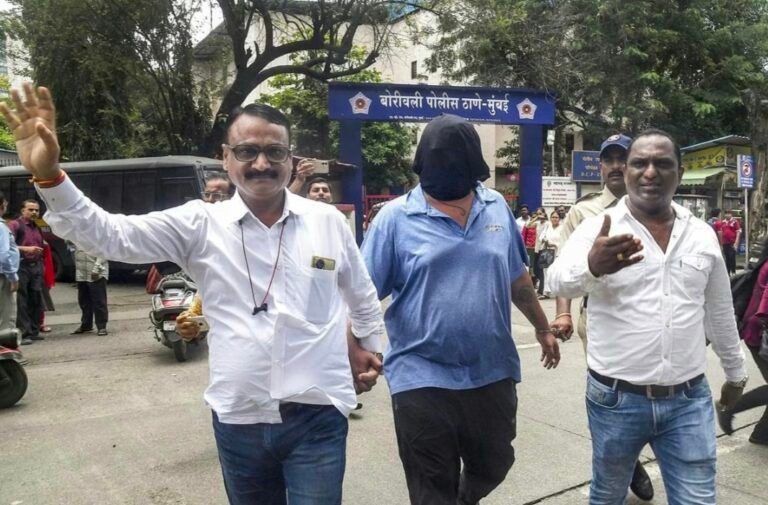
Rs 7.88 Crore Gold Heist in Mumbai’s Borivali: Two Arrested, Minor Detained; Hunt On for Absconding Accused Mumbai | Undercover Editor News Channel, February 06, 2026 Mumbai: Mumbai Police have arrested two persons and detained a minor in connection with a high-value gold theft worth ₹7.88 crore from a jewellery store in Borivali West. The theft involved nearly 5 kilograms of gold ornaments, making it one of the major jewellery heists reported in the western suburbs in recent times. According to police officials, the incident took place during the intervening night of January 13 and 14 at My Gold Point, a jewellery store located in the IC Colony area. Investigations have revealed clear insider involvement, with at least two store employees allegedly executing the theft and fleeing with the gold after closing hours. The employees, who were entrusted with the keys of the shop, reportedly emptied the jewellery display counters and escaped with the ornaments. The crime came to light the next morning when the store owner discovered the missing stock and immediately alerted the police. A special team from MHB Colony Police Station was formed, which scanned multiple CCTV cameras from the store and surrounding areas to trace the suspects’ movements. Based on technical evidence and surveillance inputs, police successfully arrested one employee and his accomplice, while a minor involved in the crime was detained and sent to an observation home. Senior officials confirmed that one kilogram of stolen gold has been recovered so far, while another employee remains absconding with approximately four kilograms of gold. Police suspect that the absconding accused received help from two to three additional accomplices, who arranged transportation to aid his escape. “We have identified all suspects involved in the case. Efforts are underway to trace the absconding accused and recover the remaining gold,” said a police official, adding that multiple teams are conducting searches across Maharashtra and nearby states. The investigation is being carried out under the supervision of DCP Sandeep Jadhav and Senior Inspector Harish Gawli. Police have assured that further arrests are likely and recovery efforts will continue until all stolen property is traced. The case has once again highlighted the risk of insider thefts in jewellery establishments, prompting calls for stricter internal security measures across the sector.
Mumbai Police Crack Down on Illegal Hawkers, Suspend On-Duty Cop for Inaction

Mumbai Police Crack Down on Illegal Hawkers, Suspend On-Duty Cop for Inaction

Mumbai Police Crack Down on Illegal Hawkers, Suspend On-Duty Cop for Inaction Mumbai | February 6, 2026 In a strong message against negligence and illegal encroachment, the Mumbai Police have intensified their crackdown on unauthorised hawkers across key public spaces in the city, going a step further by suspending an on-duty police officer for failing to take action despite clear instructions. The suspended officer, Assistant Police Inspector Narayan Siddhappa Anand of Azad Maidan police station, was posted near the busy Churchgate subway on January 27 during evening hours when illegal hawkers were operating openly. Police officials said that despite repeated directions from senior officers, Anand allegedly did not act against the unauthorised vendors, prompting an internal inquiry that led to his suspension. Senior officials said the move reflects a zero-tolerance approach, not only towards illegal hawking but also towards dereliction of duty within the force. “Strict action will be taken against anyone found compromising public convenience or violating orders,” a senior police officer stated. Visible Impact at Churchgate Following the suspension and renewed enforcement drive, the Churchgate subway area has been largely cleared of hawkers. A visit to the spot showed unobstructed footpaths and smoother pedestrian movement, a significant relief for daily commuters who had long complained of congestion and safety concerns. Police confirmed that FIRs are being registered where necessary and that regular patrols and surprise checks will continue to prevent hawkers from returning. Dadar East Sees Major Clearance Drive In another major operation, Bhoiwada police assisted the Brihanmumbai Municipal Corporation (BMC) in removing illegal hawkers from MMGS Road outside Dadar East railway station. The stretch, previously choked with vendors, has now been cleared, significantly improving access for pedestrians and commuters. Officials said police provided security during the eviction process to ensure smooth execution and prevent confrontation. Commuters Demand Sustained Action Commuters welcomed the action but urged authorities to ensure continuity. “These drives bring temporary relief, but hawkers usually return within days,” said Dilip Dave, a daily commuter to Churchgate. Others echoed similar concerns, pointing out that subways and footpaths often turn into makeshift markets, leaving little space for safe movement. Legal experts and citizen groups have also stressed the need for sustained coordination between police and civic authorities to maintain public order and pedestrian safety, especially in high-footfall areas. With BMC elections approaching, officials indicated that enforcement against encroachments would remain strict, signalling that accountability—both among hawkers and law enforcement personnel—will be a priority in the days ahead.
Punjab AAP Leader Shot Dead Outside Gurdwara in Jalandhar; Police Launch Manhunt

Punjab AAP Leader Shot Dead Outside Gurdwara in Jalandhar; Police Launch Manhunt

Punjab AAP Leader Shot Dead Outside Gurdwara in Jalandhar; Police Launch Manhunt Jalandhar | Undercover Editor News Channel Jalandhar: In a shocking incident that has raised serious security concerns, Aam Aadmi Party (AAP) leader Lucky Oberoi was shot dead in broad daylight outside a gurdwara in Punjab’s Jalandhar city on Friday. The attack took place in the crowded Model Town area, sending shockwaves across the region. According to police officials, Oberoi was sitting inside his car when two unidentified bike-borne assailants opened fire on him near a Gurdwara Sahib. At least five bullets struck him, leaving him critically injured. He was immediately rushed to a private hospital, where doctors declared him brought dead. Eyewitnesses reported panic at the scene as the firing occurred during peak daytime hours. Soon after the incident, multiple police teams reached the spot, cordoned off the area, and began a detailed investigation. CCTV footage from nearby locations is being examined to identify the attackers and trace their escape route. Senior police officials said the motive behind the killing is yet to be ascertained. Investigators are questioning witnesses and probing possible political or personal angles linked to the murder. The incident has triggered fear among local residents, prompting authorities to step up security in and around Model Town and other sensitive areas of Jalandhar. Party sources said Lucky Oberoi was a well-known local AAP leader and had close links with the party’s Cantt constituency leadership. His wife had previously contested municipal elections on an AAP ticket. Police have assured that all leads are being pursued and that those responsible will be brought to justice. Further details are expected to emerge as the investigation progresses.
India–U.S. Trade Deal: Joint Statement Likely Within Days, Legal Pact by Mid-March

India–U.S. Trade Deal: Joint Statement Likely Within Days, Legal Pact by Mid-March

India–U.S. Trade Deal: Joint Statement Likely Within Days, Legal Pact by Mid-March Union Minister Piyush Goyal. New Delhi | February 5, 2026 India and the United States are set to take a significant step forward in strengthening their bilateral economic ties, with a joint statement on the India–U.S. trade deal expected to be finalised and signed within the next four to five days, Commerce and Industry Minister Piyush Goyal said on Thursday. Addressing the media amid ongoing discussions around the framework of the agreement, Goyal clarified that the proposed deal represents the first tranche of a broader Bilateral Trade Agreement (BTA) between the two countries. He added that this initial phase would pave the way for deeper trade cooperation in the coming months. According to the Minister, once the joint statement is signed, the United States is expected to issue an executive order reducing tariffs on Indian goods to 18 per cent. This marks a significant reduction from the current tariff regime, under which Indian exports face a 25 per cent reciprocal tariff, along with an additional 25 per cent levy linked to India’s purchase of Russian crude oil. Earlier this week, Prime Minister Narendra Modi had announced that “Made in India” products would soon benefit from reduced tariffs in the U.S., following a telephonic conversation with U.S. President Donald Trump. The announcement was seen as a major boost for Indian exporters, particularly in manufacturing and labour-intensive sectors. Goyal further stated that the joint statement would be followed by a detailed legal agreement, which is expected to be completed and signed by mid-March. “The joint statement will outline the broad contours of the agreement, after which an exhaustive legal document will be prepared,” he said, adding that the first tranche does not include any direct investment commitments. Commerce Secretary Rajesh Agrawal echoed this timeline, expressing confidence that the legal agreement would be signed by mid-March. “Once the joint statement is issued, it will be converted into a legally binding agreement. We are hopeful of completing that process within the stipulated time,” he said. Officials indicated that the agreement is aimed at providing immediate tariff relief while laying the foundation for a comprehensive trade pact that could address market access, regulatory cooperation, and long-term economic engagement between the two strategic partners. The India–U.S. trade deal is being closely watched by industry stakeholders on both sides, as it is expected to unlock new opportunities for exports, improve competitiveness, and reinforce the growing economic partnership between New Delhi and Washington.
Top 5 Real Estate Hotspots in Mumbai Metropolitan Region (MMR) in 2026

Top 5 Real Estate Hotspots in Mumbai Metropolitan Region (MMR) in 2026

Top 5 Real Estate Hotspots in Mumbai Metropolitan Region (MMR) in 2026 Mumbai | Undercover Editor News Channel,February 04, 2026 The Mumbai Metropolitan Region (MMR) continues to rank among India’s most dynamic and resilient real estate markets in 2026. Despite economic uncertainties and rising construction costs, residential demand across the region has remained steady, driven by large-scale infrastructure upgrades, expanding employment corridors, and a growing preference for planned urban living. With improving connectivity and relatively affordable housing options, both homebuyers and investors are increasingly looking beyond Mumbai’s traditional city limits. Stretching across Mumbai, Thane, Navi Mumbai and Panvel, the MMR offers a diverse mix of residential choices, making it one of the most attractive property markets in the country. Based on market trends and infrastructure-led growth prospects, here are the top five real estate hotspots in the Mumbai Metropolitan Region in 2026: Thane Once considered a distant suburb, Thane has firmly established itself as a self-sufficient urban hub. The region boasts strong social infrastructure, reputed educational institutions, healthcare facilities, retail centres, and recreational spaces. Improved connectivity via the Eastern Express Highway, suburban rail network, and upcoming metro lines has significantly enhanced its appeal. Thane continues to attract both end-users and long-term investors due to its balanced lifestyle offerings and steady appreciation potential. Navi Mumbai As one of India’s best-planned urban regions, Navi Mumbai remains a preferred destination for those seeking quality living and open spaces. Areas such as Vashi, Belapur and Kharghar have witnessed consistent residential demand. The upcoming Navi Mumbai International Airport has further strengthened the city’s investment outlook, positioning it as a major growth centre for the coming decade. With robust infrastructure and future-ready planning, Navi Mumbai stands out as a strong long-term real estate destination. Kanjurmarg Located in Mumbai’s central suburbs, Kanjurmarg has emerged as a promising residential hotspot. Its proximity to key employment hubs like Powai and easy access to the Eastern Express Highway make it especially attractive to working professionals. Compared to nearby developed localities, Kanjurmarg still offers relatively competitive pricing, while ongoing residential developments are steadily enhancing its market value. Panvel Panvel is fast emerging as one of MMR’s most significant growth corridors. Improved road and rail connectivity, coupled with its strategic location near major economic zones, has brought Panvel closer to Mumbai’s commercial centres. The upcoming international airport has further boosted investor confidence. With lower entry prices compared to other MMR locations, Panvel is particularly popular among first-time homebuyers and investors looking for long-term gains. Goregaon Goregaon continues to be a key residential market within Mumbai due to its strategic location, strong transport connectivity, and well-developed civic infrastructure. With access to both the Western Express Highway and suburban rail services, Goregaon offers convenience for daily commuters. The area’s mix of residential, commercial and recreational spaces ensures sustained demand from both homebuyers and investors. Outlook for 2026 The Mumbai Metropolitan Region’s real estate market in 2026 is being shaped by infrastructure expansion, improved connectivity, and evolving lifestyle preferences. With multiple growth corridors gaining momentum, MMR remains a strong and diverse property market, offering opportunities across budget segments and investment horizons.
BMC’s Nominated Corporators: Selection Process, Eligibility and Role Explained

BMC’s Nominated Corporators: Selection Process, Eligibility and Role Explained

BMC’s Nominated Corporators: Selection Process, Eligibility and Role Explained Mumbai | Undercover Editor News Channel, February 03, 2026 Mumbai’s civic governance is set to see the induction of 10 nominated corporators into the Brihanmumbai Municipal Corporation (BMC), in addition to the 227 elected members, following the election of the city’s Mayor. These nominated members play a distinct advisory role in the civic body, bringing experience and subject expertise into municipal decision-making. Who are nominated corporators? Nominated corporators are senior party members or domain experts appointed by political parties based on their performance in the BMC elections. Unlike elected corporators, they do not contest polls but are inducted to strengthen the quality of debate and policymaking within the civic council. The provision for nominated corporators was first introduced in 1994, through an amendment to the Mumbai Municipal Corporation (MMC) Act. Increase in number Until recently, Maharashtra civic bodies were allowed a maximum of five nominated corporators. However, in 2023, the State Urban Development Department increased this number to 10, expanding expert participation in large municipal corporations like the BMC. Party-wise distribution For the upcoming BMC term: The allocation is done proportionately based on the number of seats won by each party in the municipal elections. A party must win at least five seats to qualify for a nominated corporator, and generally, one nomination is granted for every 20 elected corporators. Eligibility criteria Since nominated corporators are not elected, they must meet strict eligibility norms laid down by the state government. Eligible individuals include: The objective is to utilise their technical knowledge and administrative experience to improve governance. Powers and limitations Nominated corporators: However, they do not have voting rights, which limits their participation in key statutory committees such as the Standing Committee or Improvements Committee, where policies are approved through voting. Development funds If a nominated corporator wishes to carry out development work in a ward, they must obtain a No Objection Certificate (NOC) from the elected corporator of that ward. Why nominated corporators matter Former nominated corporators say their role is crucial in scrutinising policies, identifying gaps, and offering corrective suggestions before decisions are finalised. Their experience often helps improve governance outcomes, even though they do not influence final voting. As Mumbai’s civic administration enters a new term, nominated corporators are expected to act as knowledge contributors and policy watchdogs, ensuring informed decision-making in India’s richest municipal corporation.

Recent News

Undercover Editor

From BMC updates, local area developments, railway station news, and crime reports to the latest in politics, sports, Bollywood, lifestyle, travel, and education, we bring you news that’s relevant, reliable, and real-time


Undercover Editor © 2025 – Designed by iCreato