Author: Mahesh Rathod

Contrary to popular belief, Lorem Ipsum is not simply random text. It has roots in a piece of classical Latin literature from 45 BC, making it over 2000 years old. Richard McClintock, a Latin professor

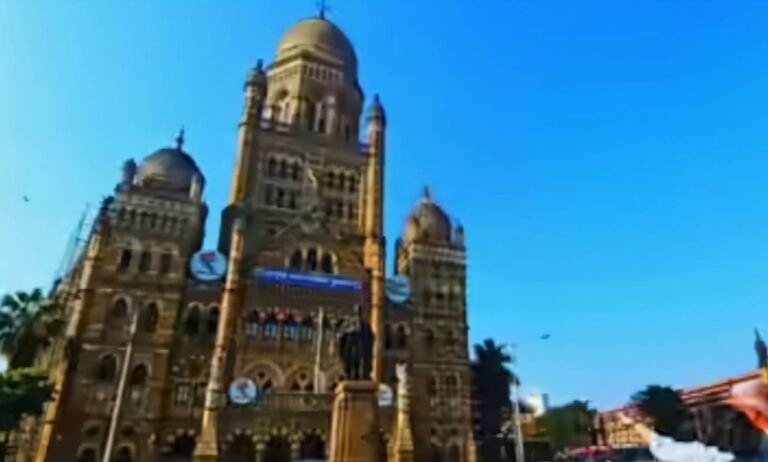
BMC Mayoral Race: General Category Woman to Lead India’s Richest Civic Body

BMC Mayoral Race: General Category Woman to Lead India’s Richest Civic Body

BMC Mayoral Race: General Category Woman to Lead India’s Richest Civic Body Mumbai | Undercover Editor News Channel, January 22, 2026 In a significant development ahead of the Brihanmumbai Municipal Corporation (BMC) elections, the post of Mumbai Mayor has been reserved for a woman from the General category, following a reservation lottery conducted by the Maharashtra Urban Development Department on Thursday. The BMC, India’s richest civic body, will thus see a woman mayor from the unreserved category for the upcoming term. The lottery was conducted in the presence of Minister of State for Urban Development Madhuri Misal and attended by representatives from major political parties, including BJP’s Rajesh Shirwadkar, Shiv Sena (UBT) corporator Kishori Pednekar, MLA Manoj Jamsutkar, and NCP leader Anand Paranjape. Reservation Breakdown Across 29 Municipal Corporations Out of the 29 municipal corporations in Maharashtra, mayoral posts have been reserved as follows: With the implementation of the 60% women’s reservation, 15 mayoral posts are reserved for women, while 14 remain in the General category. MMR Mayoral Reservations Announced In the Mumbai Metropolitan Region (MMR), mayoral reservations are as follows: UBT Alleges Rule Violations, Calls Lottery ‘Rigged’ Shiv Sena (UBT) corporator and outgoing Mayor Kishori Pednekar strongly objected to the reservation outcome, alleging that the lottery was conducted in violation of established rules and was “pre-decided.” “For BMC, the mayoral post has been kept in the General category for two consecutive terms. There has never been an OBC woman mayor in Mumbai. This is a grave injustice to OBCs and STs,” Pednekar said. She alleged that a new rule — requiring at least three ST corporators to claim an ST reservation — was introduced deliberately, as only Shiv Sena (UBT) currently has ST corporators in the BMC. “This rule was neither communicated to political parties nor applied transparently. The lottery was manipulated to suit the ruling party,” she claimed. ST Representation Controversy Pednekar further pointed out that in the current BMC House, only the Uddhav Thackeray-led Shiv Sena (UBT) has elected corporators from ST-reserved wards. Ahead of the civic elections, Ward No. 53 and Ward No. 121 were reserved for ST candidates, and both seats were won by UBT nominees. “If there was a genuine rotation policy, BMC should have been reserved for OBC women or ST women. Instead, the reservation was structured to ensure that BJP, which does not have ST women corporators in BMC, faced no disadvantage,” Pednekar alleged. History of Reserved Category Mayors in Mumbai Mumbai has previously seen mayors from different reserved categories: The latest reservation has reignited political debate over fairness, rotation, and representation in the civic governance of Mumbai, with opposition parties warning that the issue could escalate politically and legally in the coming days.
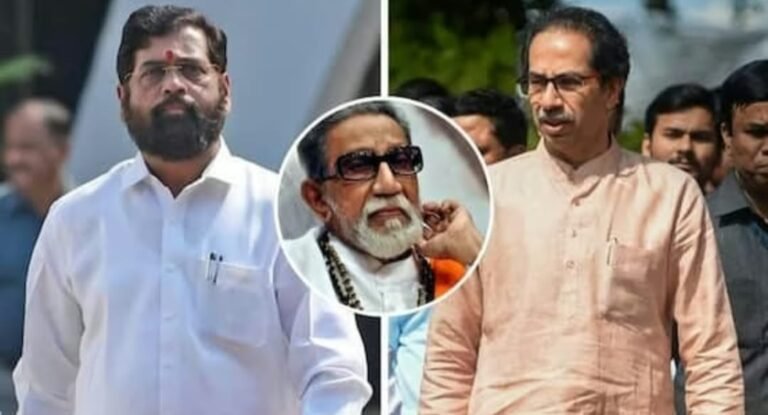
Shiv Sena Party and Symbol Dispute Reaches Crucial Stage; Supreme Court to Hear Final Arguments on Balasaheb Thackeray Jayanti

Shiv Sena Party and Symbol Dispute Reaches Crucial Stage; Supreme Court to Hear Final Arguments on Balasaheb Thackeray Jayanti

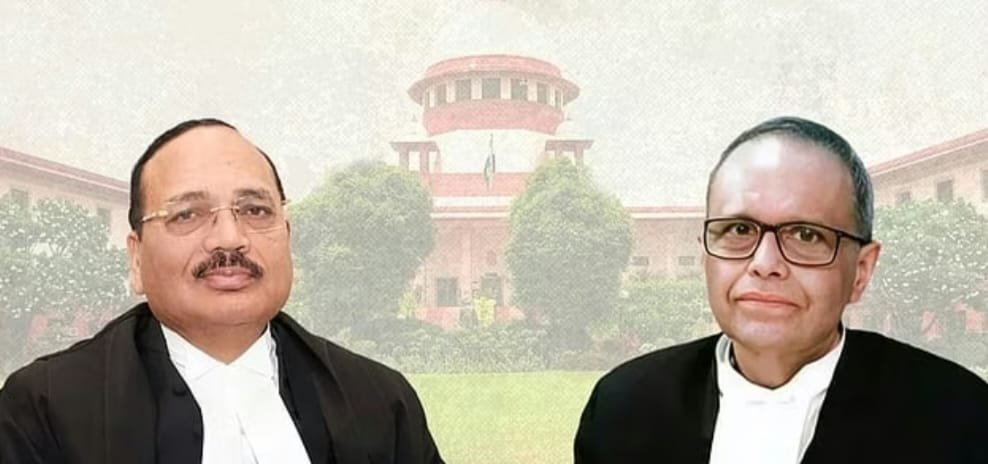
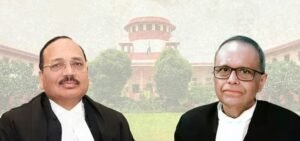
Shiv Sena Party and Symbol Dispute Reaches Crucial Stage; Supreme Court to Hear Final Arguments on Balasaheb Thackeray Jayanti New Delhi/Mumbai: The long-running legal battle over the Shiv Sena party name and its iconic ‘bow and arrow’ symbol has entered a decisive phase, with the Supreme Court scheduling final arguments for January 23, coinciding with the birth anniversary of Shiv Sena founder Balasaheb Thackeray. The matter, which has remained at the centre of Maharashtra’s political turbulence for nearly two-and-a-half years, will be heard by a Constitution Bench headed by Chief Justice Suryakant, along with Justice Joymalya Bagchi. The hearing, originally listed for January 21, could not take place due to time constraints arising from another case and was consequently deferred. The upcoming hearing has drawn nationwide attention, as it is seen not merely as a legal dispute but as a decisive moment for the political identity, legacy, and future course of the Shiv Sena. A Battle Beyond Law The dispute goes far beyond ownership of a party symbol. At stake is the ideological legacy of Balasaheb Thackeray and the question of who represents the “real Shiv Sena.” The verdict is expected to have far-reaching implications for Maharashtra’s political equations, alliances, and future elections. The Supreme Court had earlier observed in November 2025 that the matter had been pending for an unusually long period, underscoring the urgency of a final resolution. Roots of the Crisis: June 2022 Political Upheaval The controversy traces back to June 2022, when Eknath Shinde, along with more than 40 Shiv Sena MLAs, revolted against party leadership and aligned with the Bharatiya Janata Party (BJP). This rebellion led to the collapse of the Uddhav Thackeray-led Maha Vikas Aghadi government and dramatically reshaped Maharashtra’s political landscape. Shinde’s faction argued that the alliance with the Congress and the Nationalist Congress Party had diluted Shiv Sena’s core ideology, prompting the split. However, the rebellion raised fundamental questions about party authority, leadership legitimacy, and symbol ownership. Election Commission’s Decision In February 2023, the Election Commission of India recognised the Eknath Shinde faction as the ‘real Shiv Sena’ and allotted it the traditional ‘bow and arrow’ symbol, largely on the basis of numerical strength in the legislature. Following this decision, the Shinde-led Shiv Sena contested the 2024 Lok Sabha and Maharashtra Assembly elections under the party’s original name and symbol, dealing a major political blow to the Uddhav Thackeray faction. Uddhav Thackeray’s Challenge in Supreme Court Challenging the Election Commission’s ruling, Uddhav Thackeray approached the Supreme Court, arguing that the Commission erred by relying solely on legislative majority while issues related to the disqualification of rebel MLAs were still pending. The Thackeray faction contended that it retained control over the party’s organisational structure and internal leadership, and that the Commission ignored this crucial aspect while delivering its verdict. The Supreme Court, however, earlier declined to stay the Election Commission’s order, allowing the Shinde faction to continue using the Shiv Sena name and symbol. Consequently, the Thackeray-led faction was compelled to operate under the name Shiv Sena (UBT) with the ‘torch’ symbol. A Fight for Legacy and Identity Political observers note that this case is not just about electoral symbols but about Balasaheb Thackeray’s ideological inheritance. For Eknath Shinde, retaining the bow and arrow symbol represents legal and moral validation of his political breakaway. For Uddhav Thackeray, reclaiming it is essential to restoring Shiv Sena’s original identity, emotional connect, and credibility among its core supporters. As the Supreme Court prepares to hear final arguments on January 23, the verdict is expected to mark a turning point in Maharashtra politics—potentially redefining party legitimacy, voter perception, and the balance of power in the state.
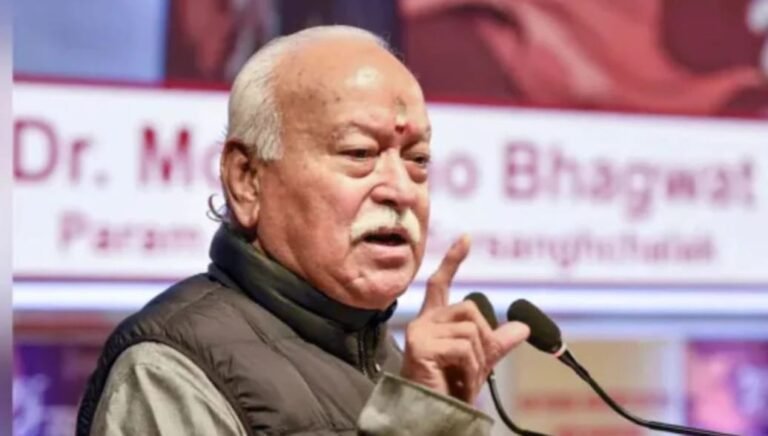
RSS Centenary: Mohan Bhagwat to Address ‘New Horizons’ Lecture Series in Mumbai on Feb 7–8

RSS Centenary: Mohan Bhagwat to Address ‘New Horizons’ Lecture Series in Mumbai on Feb 7–8

RSS Centenary: Mohan Bhagwat to Address ‘New Horizons’ Lecture Series in Mumbai on Feb 7–8 Mumbai | Undercover Editor News Channel, January 22, 2026 As part of the Rashtriya Swayamsevak Sangh’s (RSS) centenary year celebrations, RSS Chief Dr Mohan Bhagwat will deliver a special lecture and participate in an interactive session in Mumbai on February 7 and 8, 2026, according to an official RSS statement issued on Wednesday. The two-day programme, titled ‘New Horizons’, will be held at the Nehru Centre in Worli and is expected to witness the participation of eminent personalities from across diverse fields, including industry, cinema, arts, science, medicine, law, sports, education, media, and social service. Dr Bhagwat will deliver the main lecture on February 7, followed by an interactive question-and-answer session with invitees on February 8. The event marks the final leg of a four-city lecture series, which has already been conducted in Delhi, Bengaluru, and Kolkata. Speaking about the programme, Arjun Chandekar, Sanghchalak of Kokan Prant, said that the response from prominent members of society has been overwhelming. He noted that participation of what the RSS refers to as ‘Sajjan Shakti’—respected individuals from civil society—has grown significantly over the years, reflecting wider engagement with Sangh activities. The RSS centenary year, which began on Vijayadashami 2025 and will conclude on Vijayadashami 2026, places special emphasis on ‘Panch Parivartan’—a five-point vision focusing on family values, social harmony, civic responsibility, self-awareness, and environmental protection. As part of the centenary celebrations, the RSS has planned a series of outreach programmes across the country, including gruh sampark initiatives, intellectual gatherings, Hindu sammelans, youth conventions, and social engagement events, aimed at connecting with different sections of society. The Mumbai programme is expected to serve as a significant platform for dialogue and reflection, highlighting the RSS’s vision for societal development as it marks 100 years of its journey
CISF’s ‘Vande Mataram’ Coastal Cyclothon to Roll Out on January 28, Reach Mumbai on February 11

CISF’s ‘Vande Mataram’ Coastal Cyclothon to Roll Out on January 28, Reach Mumbai on February 11

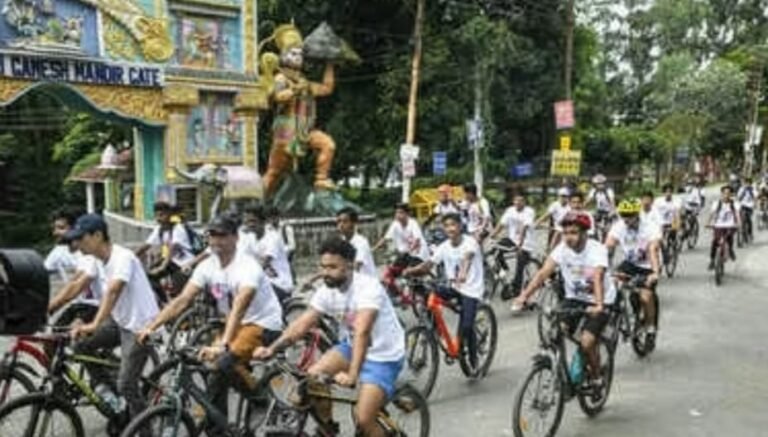
CISF’s ‘Vande Mataram’ Coastal Cyclothon to Roll Out on January 28, Reach Mumbai on February 11 Mumbai | Undercover Editor News Channel, January 20, 2026 Mumbai: The Central Industrial Security Force (CISF) is set to launch the ‘Vande Mataram Coastal Cyclothon 2026’ on January 28, a landmark 25-day, 6,553-kilometre cycling expedition covering India’s entire mainland coastline. The initiative aims to strengthen coastal security awareness, promote national unity, and deepen community participation, particularly among coastal populations. As part of the nationwide journey, the cyclists will enter the Mumbai region on the night of February 10. On February 11, the team will ride from Vasai to the iconic Gateway of India, marking a significant stop in one of the country’s most strategically important coastal cities. Two-Coast Journey, One National Message The cyclothon will begin simultaneously from Lakhpat Fort in Kachchh, Gujarat, on the western coast, and Bakkhali in West Bengal, on the eastern coast. Both teams will travel southward along their respective coastlines and converge at Kochi on February 22, symbolising unity across India’s maritime boundaries. According to Padmakar Ranipse, Additional Director General (South), CISF, the journey is designed not just as a sporting challenge, but as a people-centric outreach programme aimed at strengthening trust between citizens and security forces. Strong Focus on Women Participation In a significant highlight, the 2026 edition will feature 130 CISF cyclists, including 65 women — nearly 50 per cent of the contingent. This marks a dramatic increase from last year, when women made up just 10 per cent of participants. Mamta Rahul, Deputy Inspector General (Western Zone), CISF, said the rising participation of women reflects the force’s commitment to gender inclusion, especially notable as women currently constitute only around 10 per cent of the total CISF workforce. Community Outreach and Coastal Vigilance Beyond endurance cycling, the cyclothon places strong emphasis on grassroots engagement. During overnight halts in coastal villages, teams will conduct: The initiative also seeks to highlight India’s maritime heritage and acknowledge the crucial role played by coastal communities, especially fishermen, in safeguarding the nation’s shoreline. Open to Public Participation The cyclothon is open to civilian cyclists, who can register via the official CISF website and join the expedition for any stretch of the journey. Interested cyclists from Mumbai will have an opportunity to participate during the Vasai-to-Gateway leg on February 11. Honouring Service and Sacrifice Carrying the spirit of ‘Vande Mataram’, the cyclothon honours the sacrifices of freedom fighters, martyrs, and security personnel, while reinforcing the idea that coastal security is a shared national responsibility. All participating cyclists have undergone over a month of rigorous training, covering endurance building, nutrition, long-distance riding safety, and bicycle maintenance, under the guidance of professional trainers. With fitness, patriotism, and public engagement at its core, the CISF Coastal Cyclothon 2026 is poised to become a powerful symbol of vigilance, unity, and national pride along India’s vast coastline.

Despite Marathi Identity Push, Migrant Representation Remains Strong in Mumbai’s New BMC House

Despite Marathi Identity Push, Migrant Representation Remains Strong in Mumbai’s New BMC House

Despite Marathi Identity Push, Migrant Representation Remains Strong in Mumbai’s New BMC House Mumbai | Undercover Editor News Channel, January 19, 2026 Mumbai: The Brihanmumbai Municipal Corporation (BMC) elections once again witnessed an intense debate around Marathi identity, with regional pride forming a central theme of the campaign. Speeches by both factions of the Shiv Sena and the Maharashtra Navnirman Sena repeatedly emphasised linguistic identity, while other parties adopted a more inclusive approach in a city shaped by migration and diversity. However, the final results tell a more complex story. Despite the strong identity pitch, migrant representation in Mumbai’s civic body has not only held firm but has increased marginally. Of the 227 corporators elected to the BMC in 2026, 78 are of non-Marathi origin — accounting for over one-third of the House. This is slightly higher than the 2017 elections, when 76 non-Marathi corporators were elected. Marginal rise despite sharper identity campaign The numbers indicate that heightened emphasis on Marathi pride during the campaign did not translate into a significant decline in migrant representation. In fact, the non-Marathi share of corporators has risen from 33 per cent in 2017 to 34.4 per cent in 2026, underscoring the continued political relevance of Mumbai’s migrant population. Party-wise data highlights contrasting political strategies. The Bharatiya Janata Party (BJP), which emerged as the single largest party in the new civic House, has the highest number of non-Marathi corporators. Of its 89 elected representatives, 38 — or nearly 43 per cent — are non-Marathi, reflecting the party’s strong foothold in linguistically mixed suburban constituencies. In contrast, both factions of the Shiv Sena continue to draw predominantly from Marathi-speaking voters. The Uddhav Thackeray-led Shiv Sena (UBT) has seven non-Marathi corporators among its 65 winners, while the Eknath Shinde-led Shiv Sena has five non-Marathi corporators out of 29. These figures underline the Sena’s enduring emphasis on Marathi identity in civic politics. Congress, AIMIM rely heavily on migrant voters The Indian National Congress presents a markedly different picture. Of its 24 corporators, 16 are non-Marathi, highlighting its reliance on migrant and minority-dominated pockets of the city. A similar trend is visible in the All India Majlis-e-Ittehadul Muslimeen (AIMIM), where seven of its eight elected corporators are non-Marathi. The Nationalist Congress Party (NCP), which secured three seats, elected only Marathi-speaking corporators, reflecting its limited but regionally rooted presence in the city. A long shift in Mumbai’s civic power balance Historically, non-Marathi communities once dominated civic politics in Mumbai. In the decades following Independence, Gujaratis, Parsis, Marwaris, Muslims, Christians and South Indians played a prominent role in the Bombay Municipal Corporation. Though non-Marathis formed around 58 per cent of Mumbai’s population in the 1960s, they accounted for nearly 45 per cent of corporators by the mid-1970s. Between Independence and 1968, as many as 15 of the city’s 21 mayors were non-Marathi. This balance began to change with the rise of the Shiv Sena in the late 1960s. By mobilising Marathi-speaking voters through strong local networks, the party reshaped Mumbai’s civic politics. Over the decades, non-Marathi representation steadily declined, touching a low of 28.2 per cent in the 2012 BMC elections. Migration trends reshape electoral realities Census data shows that while Marathi remains the most widely spoken language in Mumbai, Hindi-speaking residents have grown at a much faster pace since the 1970s. Urdu-speaking populations have also increased steadily, while Gujarati speakers have seen slower growth. The political impact of this demographic shift became evident after 2014. In the 2017 BMC elections, non-Marathi representation rose sharply to 33 per cent. The 2026 results, with 78 non-Marathi corporators, reinforce that trend and reflect the growing electoral confidence of migrant communities. BJP’s pro-migrant positioning Analysts note that the Bharatiya Janata Party has benefited from projecting itself as a party comfortable with Mumbai’s migrant character. With the BJP in power at both the Centre and the state, it has positioned itself as inclusive, while also promoting a larger number of non-Marathi leaders in the city than in the past. Earlier, Maharashtra Chief Minister Devendra Fadnavis said the BJP does not feel pressured on the issue of Marathi identity. Emphasising development over emotive politics, he maintained that the party prefers to “bat on the front foot” by focusing on governance rather than linguistic divisions. A city shaped by diversity The latest BMC results underline a key political reality: despite periodic surges in identity-based campaigning, Mumbai’s civic politics continues to reflect the city’s multicultural and migrant-driven character. As the new House takes shape, the steady presence of non-Marathi corporators signals that Mumbai’s diverse electorate remains a decisive force in determining the city’s future.
Aamir Khan Joins Thousands of Runners at Tata Mumbai Marathon 2026, Calls City’s Spirit “Truly Amazing”

Aamir Khan Joins Thousands of Runners at Tata Mumbai Marathon 2026, Calls City’s Spirit “Truly Amazing”

Aamir Khan Joins Thousands of Runners at Tata Mumbai Marathon 2026, Calls City’s Spirit “Truly Amazing” Mumbai | Undercover Editor News Channel, January 18, 2026 Mumbai: Bollywood superstar Aamir Khan participated in the Tata Mumbai Marathon 2026 for the first time on Sunday, joining tens of thousands of runners on the streets of the city and praising Mumbai’s unmatched energy and spirit. The actor was seen running alongside participants at the 21st edition of the Tata Mumbai Marathon (TMM), one of India’s largest and most celebrated sporting events. Interacting with the media, Aamir described the experience as deeply inspiring and said the enthusiasm of the runners and spectators left a lasting impression on him. “This is my first time participating, and the kind of enthusiasm we witnessed today makes me feel we should be part of this marathon every year. Mumbai and this marathon have a truly amazing spirit,” Aamir said. The 2026 edition of the marathon witnessed massive participation, with over 69,000 individuals taking part, including more than 65,000 on-ground runners and around 3,700 virtual participants. This year, the event earned the prestigious World Athletics Gold Label Race status, further cementing its place on the global marathon calendar. Participants competed for a total prize purse of USD 389,524, drawing elite runners from India and abroad. Aamir Khan was accompanied by his former wife, filmmaker Kiran Rao, and his daughter Ira Khan, who joined him in soaking in the vibrant atmosphere of the city and cheering on fellow runners. Their presence added to the celebratory mood of the event, which brought together people from diverse backgrounds in a shared display of fitness and unity. Over the past two decades, the Tata Mumbai Marathon has evolved into a powerful symbol of community spirit, promoting health, endurance and inclusivity. The annual event has played a key role in nurturing a running culture across India, while also highlighting Mumbai’s resilience and collective strength. On the professional front, Aamir Khan was last seen in Sitaare Zameen Par, where he portrayed a basketball coach mentoring a group of neurodivergent children. The film, also starring Genelia Deshmukh and directed by Prasanna, was released in theatres on June 20 and received widespread attention for its sensitive and uplifting narrative.  
Maharashtra Civic Polls: Crorepati Corporators Set to Shape Mumbai’s New Power Centre

Maharashtra Civic Polls: Crorepati Corporators Set to Shape Mumbai’s New Power Centre

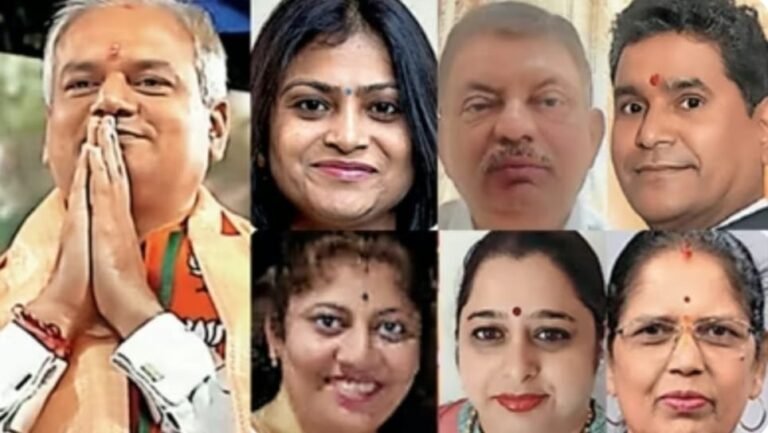
Maharashtra Civic Polls: Crorepati Corporators Set to Shape Mumbai’s New Power Centre Mumbai | Undercover Editor News Channel, January 17, 2026 Mumbai: The Brihanmumbai Municipal Corporation (BMC), Asia’s richest civic body, is set to witness a new power dynamic as several crorepati corporators enter the House following the Maharashtra civic elections. The results not only mark a political shift in Mumbai’s governance but also highlight the growing influence of wealthy candidates across party lines in local body politics. Among the richest newly elected corporators are Makarand Suresh Narvekar of the BJP, who declared assets worth ₹124 crore, followed by Harshita Ashwin Narvekar (BJP) with ₹63.6 crore. Meenal Sanjay Turde of the Shiv Sena reported assets of ₹56 crore, while Tulip Brian Miranda (Congress) declared ₹51 crore. Other high-net-worth winners include Anita Nandkumar Vaity (BJP) with ₹29 crore, Yashodhar Phanse (Shiv Sena–UBT) with ₹25.9 crore, and Bhaskar Rama Shetty (Shiv Sena) with ₹25.4 crore. The presence of these affluent corporators is expected to play a significant role in policy discussions, budget decisions, and infrastructure planning in the coming term of the BMC. End of Thackeray Era at the BMC The elections have also brought an end to the Thackeray family’s nearly three-decade control over the BMC. The Mahayuti alliance, led by the BJP and Eknath Shinde-led Shiv Sena, managed to cross the majority mark in the 227-member House, though by a narrow margin. The BJP emerged as the single largest party with 89 seats, while Shinde’s Shiv Sena won 29, giving the alliance a combined tally just above the halfway mark. This arithmetic means the BJP will depend on its ally’s support for key decisions in the civic body. Opposition Holds Ground in Marathi Heartland The Uddhav Thackeray–Raj Thackeray alliance secured 71 seats, with Shiv Sena (UBT) winning 65 and the MNS 6 seats. While the combine managed to retain significant influence in Mumbai’s Marathi-dominated areas, it failed to replicate this performance in nearby urban centres such as Thane and Navi Mumbai. The Congress, contesting independently without its traditional Maha Vikas Aghadi partners, saw its tally fall to 24 seats, down from 31 in the previous election. Meanwhile, AIMIM recorded a notable rise, increasing its presence from 2 to 8 seats, particularly in minority-dominated wards. Vote Share and Political Messaging In terms of vote share, the BJP led with 21.6%, followed by Shiv Sena (UBT) at 13.2%, Shinde’s Shiv Sena at 5%, and Congress at 4.4%. Political analysts attribute the Mahayuti’s success to the pitch of a “triple-engine government”—with power at the Centre, state, and civic body—along with a campaign focused on development and governance efficiency. BJP MLA and Assembly Speaker Rahul Narwekar has indicated that the next mayor will be from the BJP. However, Deputy Chief Minister Eknath Shinde struck a conciliatory note, stating, “More than power or the mayor’s post, our priority is to bring visible change to the lives of Mumbaikars.” As Mumbai prepares for a new civic term, the combination of political realignment and the rise of wealthy corporators is expected to significantly influence the city’s administrative and developmental trajectory.
BMC Election Results: Mahayuti Ends Thackeray Era, Claims Mumbai’s Civic Crown After 28 Years

BMC Election Results: Mahayuti Ends Thackeray Era, Claims Mumbai’s Civic Crown After 28 Years

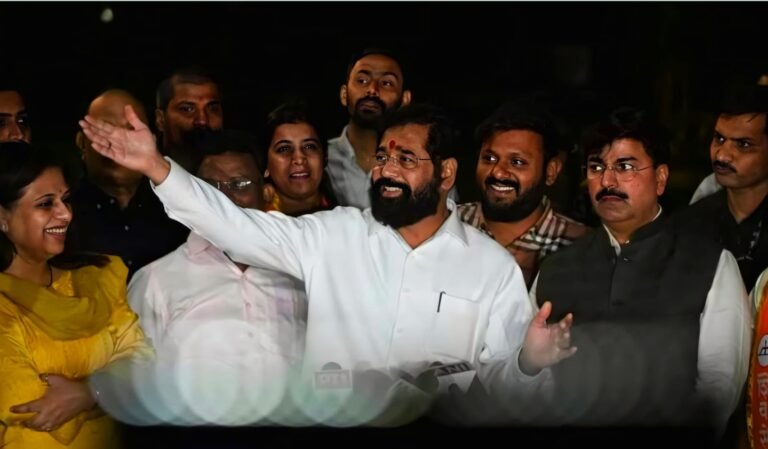
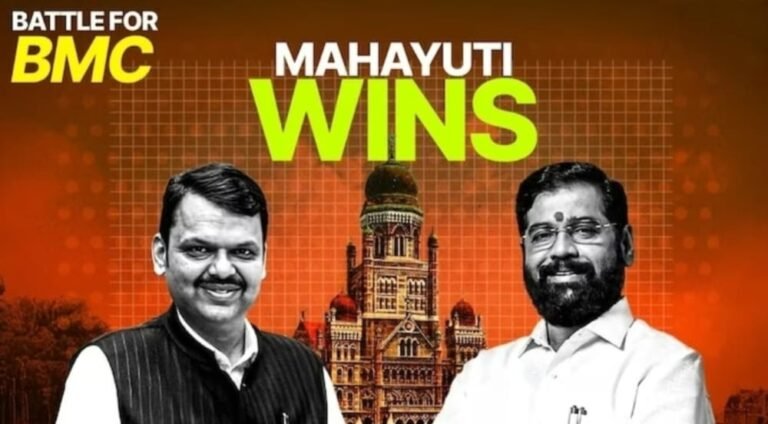
BMC Election Results: Mahayuti Ends Thackeray Era, Claims Mumbai’s Civic Crown After 28 Years Mumbai | Undercover Editor News Channel, January 16, 2026 Mumbai: The BJP-led Mahayuti has scripted history in Mumbai by wresting control of the Brihanmumbai Municipal Corporation (BMC), bringing an end to the Thackeray family’s nearly three-decade-long dominance over Asia’s richest civic body. The results mark a decisive political shift in the country’s financial capital and reaffirm the BJP’s growing grip over Maharashtra’s urban electorate. Under the leadership of Chief Minister Devendra Fadnavis, the Bharatiya Janata Party has delivered its strongest-ever performance in the BMC, surpassing its previous best of 82 seats achieved in 2017. The BJP has so far won or is leading in 88 of the total 227 wards. Its ally, the Shiv Sena led by Deputy Chief Minister Eknath Shinde, is ahead in 28 wards, taking the Mahayuti alliance comfortably past the majority mark of 114 seats. With this victory, Mumbai is set to get a BJP–Shiv Sena (Shinde faction) mayor after a long gap, signaling a decisive end to the political stronghold the undivided Shiv Sena had maintained since 1985, barring a brief interruption in the early 1990s. The outcome has firmly established Devendra Fadnavis as the central figure of the Mahayuti’s success. Party leaders and workers have credited his strategic leadership, campaign planning, and governance pitch for the alliance’s emphatic showing in the civic polls. At the same time, the results underline the challenges faced by Eknath Shinde in consolidating the traditional Shiv Sena voter base in Mumbai. Despite most of the corporators elected on the Shiv Sena ticket in 2017 backing Shinde after the party split, his faction has managed to secure just over 30 seats, falling short of expectations in what was once the party’s core bastion. Reacting to the results, Deputy Chief Minister Eknath Shinde termed the verdict a mandate for “development” and a rejection of “corruption.” Speaking to India Today, he said the BMC outcome reflected public approval of the Mahayuti government’s performance over the last three-and-a-half years. When asked about which party would get the mayor’s post, Shinde avoided specifics, stating that the mayor would be from the Mahayuti alliance. On the opposition side, Uddhav Thackeray’s Shiv Sena (UBT) is leading or has won around 72 seats—down from the 84 seats the undivided party secured in 2017. While the numbers reflect a significant setback, the results also suggest that the Thackeray brand continues to retain a substantial support base in Mumbai, despite losing the party symbol and a section of its organisational machinery. Senior BJP leader and Maharashtra minister Nitesh Rane described the outcome as a clear endorsement of the alliance’s ideological campaign. Reacting to the early trends, he said the verdict showed public support for the BJP–Shiv Sena’s Hindutva narrative, adding that those who speak for Hindu interests would continue to rule Maharashtra. As counting concludes, the BMC verdict is being seen as a political turning point—not just for Mumbai, but for Maharashtra’s broader power dynamics—setting the tone for future electoral battles in the state.
BMC Exit Polls Signal Clear Majority for BJP+, Major Setback for Thackeray Brothers

BMC Exit Polls Signal Clear Majority for BJP+, Major Setback for Thackeray Brothers

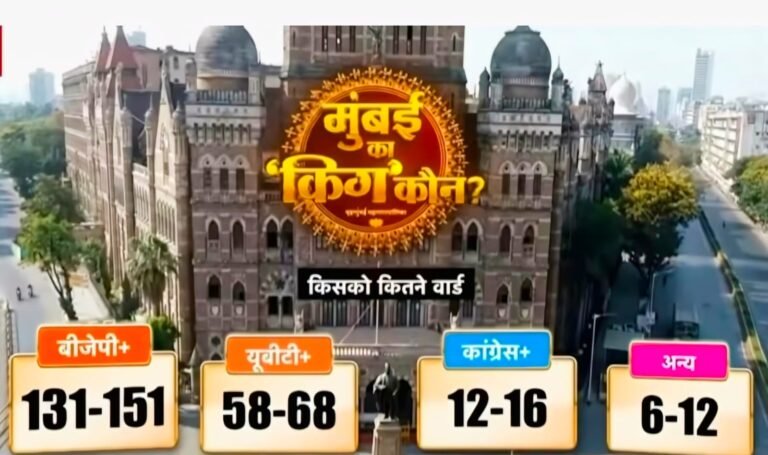
BMC Exit Polls Signal Clear Majority for BJP+, Major Setback for Thackeray Brothers Mumbai | Undercover Editor News Channel, January 15, 2026 Mumbai: Polling for Maharashtra’s 29 municipal corporations, including the high-profile Brihanmumbai Municipal Corporation (BMC), concluded peacefully on Thursday evening. As voting ended, exit polls released by Axis My India have stirred political buzz across Mumbai, suggesting a decisive advantage for the BJP-led Mahayuti alliance and a significant setback for the Thackeray brothers’ joint political experiment. According to the exit poll projections, the BJP+ alliance — comprising the Bharatiya Janata Party and the Eknath Shinde-led Shiv Sena — is poised to secure a comfortable majority in the 227-member BMC. The majority mark stands at 114 seats, and BJP+ is projected to cross this threshold with ease. The final verdict, however, will be known only after counting begins on Friday, January 16. Seat Share Projections As per Axis My India’s estimates, the BJP-led alliance is expected to win between 131 and 151 seats, placing it well above the majority mark. In contrast, the alliance of Shiv Sena (UBT) led by Uddhav Thackeray and the Maharashtra Navnirman Sena (MNS) headed by Raj Thackeray is projected to secure 58 to 68 seats. The Congress, which entered into a last-minute alliance with Prakash Ambedkar’s Vanchit Bahujan Aghadi (VBA), is likely to be restricted to 12 to 16 seats, indicating a limited impact in the civic battle. With nearly 1,700 candidates contesting across all wards, the exit poll numbers suggest a strong possibility of a power shift in India’s richest municipal body. Vote Share Estimates The exit poll indicates that BJP+ has emerged as the single-largest force in terms of vote share, with an estimated 42% of the total votes. The Thackeray brothers’ alliance is projected to receive 32%, while Congress+ and other parties are estimated to have garnered around 13% each. Community-wise Voting Trends A closer look at caste and community-wise trends reveals a mixed picture: These trends indicate that while the Thackeray-led alliance retains strong support among Marathi voters, BJP+ has built a broader cross-community coalition. Class and Profession-Based Trends Exit polls also highlight BJP+’s edge across multiple occupational groups: The Congress alliance remained a distant third across most categories. Women and Youth Back BJP+ Gender-wise trends show BJP+ leading among both women and men voters: The data suggests that BJP+ has emerged as the preferred choice among women and young voters in this election. Thackeray Stronghold Under Threat The BMC has traditionally been a Shiv Sena bastion since 1985, barring a brief exception in the early 1990s. Even in the tightly contested 2017 elections, the undivided Shiv Sena managed to retain the mayor’s post despite a strong BJP challenge. However, this time, exit polls indicate that even the rare political unity between Uddhav Thackeray and Raj Thackeray after nearly two decades may not be enough to retain control over Mumbai’s civic body. Disclaimer: Exit polls are indicative and not final results. Actual outcomes may differ and will be confirmed after the official counting of votes on January 16.
Maharashtra Votes Tomorrow: All You Need to Know About Civic Polls in Mumbai, Pune, Nagpur and 26 Other Cities

Maharashtra Votes Tomorrow: All You Need to Know About Civic Polls in Mumbai, Pune, Nagpur and 26 Other Cities

Maharashtra Votes Tomorrow: All You Need to Know About Civic Polls in Mumbai, Pune, Nagpur and 26 Other Cities Mumbai | Undercover Editor News Channel, January 14, 2026 Maharashtra is set for a major political showdown as voters across 29 municipal corporations, including key urban centers like Mumbai, Pune and Nagpur, head to the polls on January 15. With election campaigning ending on Tuesday evening, the stage is now set for a high-stakes civic battle that could significantly reshape the political landscape of the state. At the heart of the contest lies the crucial Brihanmumbai Municipal Corporation (BMC) election, long considered the crown jewel of urban local governance in India. The polls are being closely watched as a test of strength between the ruling Mahayuti alliance—led by the BJP along with Chief Minister Devendra Fadnavis and Deputy CM Eknath Shinde—and the opposition led by Shiv Sena (UBT), for whom the election is being seen as a battle for political survival. Single-Phase Voting on January 15 According to the State Election Commission, voting for all 29 municipal corporations will be held in a single phase on Wednesday, January 15, 2026. Polling will begin at 7:30 am and continue until 5:30 pm. To ensure maximum voter participation, the Commission has declared January 15 a public holiday in all municipal corporation areas where polling is scheduled. Counting on January 16 The counting of votes will take place on January 16, 2026, with early trends expected to emerge from 8:00 am onwards. Final results are likely to be declared later in the day. Voters and political observers can track the results live on the State Election Commission’s official website, while major news platforms and television channels will also provide real-time updates. High Stakes in Mumbai’s BMC Polls The BMC elections will decide the fate of 227 corporator seats, with 114 seats required for a simple majority. The outcome will determine whether the traditional saffron dominance continues in Mumbai or whether opposition forces manage to alter the balance of power. The contest in Mumbai is primarily between the BJP-Shiv Sena (Shinde faction) alliance and the Shiv Sena (UBT), with the Maharashtra Navnirman Sena (MNS) also emerging as a potential factor in select pockets. The Congress and NCP are expected to retain influence in specific regions across the state. Voter Information: What You Need to Know Voters can verify their names on the electoral roll through the official website mahasecvoterlist.in or by using the Voter Helpline App. For voting, the following photo identity documents will be accepted: Civic Polls Across 29 Cities Apart from Mumbai, civic elections are being held in major cities including Pune, Thane, Nagpur, Navi Mumbai, Kalyan-Dombivli, Pimpri-Chinchwad, Nashik, Chhatrapati Sambhajinagar, Solapur, Vasai-Virar, Mira-Bhayandar, Kolhapur, Amravati, Akola, Panvel, Ahmednagar, Jalna, and several others, making this one of the largest coordinated civic exercises in the state’s history. A Crucial Political Test With urban governance, local leadership, and future political equations at stake, the Maharashtra civic polls are being viewed as more than just municipal elections. The results are expected to set the tone for upcoming state-level political battles and offer clear signals about shifting voter sentiments in urban Maharashtra. All eyes will now be on January 15, as Maharashtra’s cities step out to vote and decide who will control their civic bodies for the next term.

Recent News

Undercover Editor

From BMC updates, local area developments, railway station news, and crime reports to the latest in politics, sports, Bollywood, lifestyle, travel, and education, we bring you news that’s relevant, reliable, and real-time


Undercover Editor © 2025 – Designed by iCreato