Author: Mahesh Rathod

Contrary to popular belief, Lorem Ipsum is not simply random text. It has roots in a piece of classical Latin literature from 45 BC, making it over 2000 years old. Richard McClintock, a Latin professor

Mumbai Tea Café Owner Duped of ₹34.6 Lakh in Social Media Investment Scam

Mumbai Tea Café Owner Duped of ₹34.6 Lakh in Social Media Investment Scam

Mumbai Tea Café Owner Duped of ₹34.6 Lakh in Social Media Investment Scam Mumbai: In yet another case of online financial fraud, a tea café owner from Ghatkopar in Mumbai has allegedly been cheated of ₹34.6 lakh after falling victim to a fraudulent investment scheme operating through social media. According to police sources, the 45-year-old café owner was approached through a social media investment group that claimed to offer lucrative returns through online share trading. The fraudsters reportedly convinced him that he could earn substantial profits by investing money in stock market trading through their platform. Trusting the claims made by the group, the victim gradually transferred funds between December 24, 2025 and March 11, 2026, sending a total of ₹34.6 lakh to multiple bank accounts and payment links provided by the accused. Initially, the fraudsters allegedly showed the victim fake profit figures on a trading dashboard to gain his confidence and encourage further investment. However, the scam came to light when the café owner attempted to withdraw a portion of the supposed profits. Police said the withdrawal request failed, and the fraudsters then allegedly demanded additional deposits, claiming that the money was required as “processing charges” or “tax clearance” to release the funds. Suspecting foul play after repeated demands for more money and being unable to access his investment, the victim realised he had been cheated and approached the police to file a complaint. Officials said the case has been registered under relevant sections related to cyber fraud and cheating, and an investigation is currently underway to trace the individuals behind the fake investment group. Cyber crime experts have once again warned citizens to remain cautious while joining online investment groups on social media platforms, as many such schemes promise unrealistic returns and are often used by fraudsters to trap unsuspecting victims. Authorities have advised investors to verify trading platforms through official regulatory bodies before transferring money and to avoid sharing financial details with unknown individuals online.
Beacon Row in Mumbai: BMC Removes Red-Blue Lights from Mayor Ritu Tawde’s Official Car

Beacon Row in Mumbai: BMC Removes Red-Blue Lights from Mayor Ritu Tawde’s Official Car

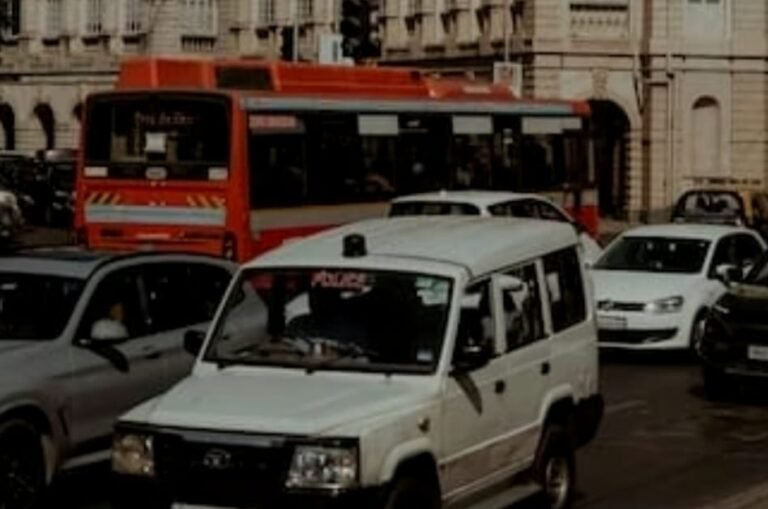
Beacon Row in Mumbai: BMC Removes Red-Blue Lights from Mayor Ritu Tawde’s Official Car Mumbai: A controversy erupted in Mumbai after red and blue flashing beacon lights were spotted on the official vehicle of Mumbai Mayor Ritu Tawde, prompting the Brihanmumbai Municipal Corporation (BMC) to remove them on Saturday. The issue gained attention after a social media post on the platform X questioned whether the mayor’s vehicle had permission to use police-style beacon lights. The post included photographs showing the flashing red and blue lights mounted on the front of the mayor’s official car. The controversy intensified when RTI activist Anil Galgali formally raised the matter with the mayor through a written complaint. In his letter, Galgali pointed out that the use of such lights on government vehicles had been restricted under central government rules and urged immediate action. According to civic officials, similar flashing lights had been installed not only on the mayor’s vehicle but also on the escort vehicle that accompanied it. The escort vehicle, reportedly carrying the mayor’s personal assistants and protocol officer, was also fitted with police-style lights. Responding to the controversy, Mayor Ritu Tawde clarified that she had no interest in using a red beacon vehicle and described the issue as an administrative oversight. She stated that the responsibility lay with the administration that provided the vehicle. “As mayor, I have no interest in a red beacon car. This is an administrative mistake. The administration should have checked what is permissible before assigning the vehicle,” Tawde said while responding to the criticism. Following the controversy, officials from the BMC confirmed that the beacon lights had been removed from all concerned vehicles, including those assigned to the mayor, deputy mayor, and the leader of the house. The issue also triggered political reactions. Former Mumbai mayor and Leader of Opposition Kishori Pednekar criticised the development, stating that it went against the central government’s move to eliminate VIP culture in the country. Pednekar referred to the decision taken by Prime Minister Narendra Modi in 2017 to abolish the use of red beacon lights on most government vehicles. The rule restricted such lights only to authorised emergency services such as police, ambulances and fire brigades. Political leader Milind Narvekar also raised questions on social media, asking what exactly was happening around the newly elected mayor. It is worth noting that the Central Government’s ban on red beacon lights, implemented on May 1, 2017, ended the long-standing VIP culture associated with flashing lights on official vehicles. Following that decision, the red beacon had previously been removed from the mayor’s car during the tenure of former mayor Vishwanath Mahadeshwar. With the latest action by the civic body, the BMC has now clarified that the use of such beacon lights on the mayor’s official vehicle was not authorised, and steps have been taken to ensure compliance with existing rules.
Mumbai Marine Engineer Killed in Tanker Attack Near Iraq’s Basra Port

Mumbai Marine Engineer Killed in Tanker Attack Near Iraq’s Basra Port

Mumbai Marine Engineer Killed in Tanker Attack Near Iraq’s Basra Port Mumbai: A tragic maritime incident has claimed the life of a Mumbai-based marine engineer after an oil tanker came under attack near the southern Iraqi port city of Basra. The deceased, Deonandan Prasad Singh (54), was serving as an Additional Chief Engineer aboard the Marshall Islands-flagged oil tanker MT Safesea Vishnu when the vessel was reportedly targeted near Khor Al Zubair Port earlier this week. The incident was confirmed by the Ministry of Ports, Shipping and Waterways, which stated that one Indian crew member had died following the attack. Officials said Singh suffered severe injuries during the incident and later succumbed to them, despite rescue efforts. According to maritime authorities, Singh was a resident of Kandivli and had more than 25 years of experience in marine engineering. Over the course of his career, he had served on multiple vessels and was regarded as a highly experienced professional in the maritime sector. Officials from the Directorate General of Shipping said the attack occurred when the tanker was operating near Khor Al Zubair Port. Following the incident, crew members were forced to abandon the vessel and enter the water in an attempt to save themselves. Rescue teams later evacuated the crew. The Iraqi Coast Guard successfully rescued all 28 crew members, including 16 Indians and 12 Filipinos, and transported them safely to Basra port. Family members revealed that Singh had not been sailing regularly for several years and had shifted to a shore-based desk job. However, he reportedly returned to sea recently after being asked to join the vessel as part of contractual obligations. According to relatives, Singh had boarded the ship in Iraq just days before tensions escalated in the region. Tragically, he lost his life less than two weeks after rejoining active sea duty. Singh originally hailed from Rani Bamia village in Bhagalpur district of Bihar, though he had been residing in Mumbai with his family. He is survived by his son and daughter, while his son, who lives in the United States, is reportedly travelling to India following the news of his father’s death. Family members also alleged that the tanker may have been targeted by a suicide vessel during regional hostilities, although authorities have not officially confirmed the exact cause of the attack. Officials said maritime agencies and international authorities have been informed, and an investigation into the circumstances surrounding the attack is currently underway. The tragic incident has once again highlighted the risks faced by Indian seafarers working on international shipping routes, particularly in regions affected by geopolitical tensions.
Mumbai Faces Possible Pav & Bread Shortage as LPG Supply Crisis Hits City Bakeries

Mumbai Faces Possible Pav & Bread Shortage as LPG Supply Crisis Hits City Bakeries

Mumbai Faces Possible Pav & Bread Shortage as LPG Supply Crisis Hits City Bakeries Mumbai | Undercover Editor News Channel, March 13, 2026 Mumbai: The city could soon face a shortage of pav and bread within the next three to four days, as hundreds of bakeries struggle with irregular fuel supply following disruptions in LPG availability. According to industry representatives, nearly 70% of Mumbai’s bakery production could be affected if the situation continues. Several bakery owners have warned that the shortage may impact daily food consumption across the city, where pav and bread are staple items for many households and street-food vendors. As per estimates shared by the India Bakers Association, Mumbai has around 800 bakeries, out of which approximately 350 major bakeries have switched to gas-based ovens in recent months. These bakeries together produce a large share of the city’s bakery products. Bakers say many establishments invested heavily in new equipment after directives from the Brihanmumbai Municipal Corporation to move away from traditional wood-fired ovens, which were considered environmentally polluting. Each bakery reportedly spent around ₹7 lakh to install gas-based ovens and related infrastructure. However, the shift has made them heavily dependent on fuel supplies. Khodada Irani, president of the India Bakers Association, explained that around 80% of these 350 bakeries operate on commercial LPG cylinders, while only 20% use commercial piped natural gas (PNG). He added that PNG supply has also been restricted as a precautionary measure, further complicating the situation. “The remaining 450 bakeries, most of which are located in suburban areas, continue to operate traditional wood-fired ovens. However, they collectively supply only about 30% of Mumbai’s bakery demand,” Irani said. Bakery owners say the fuel shortage has already started affecting production. Asif Farooqui, associated with Azmi Bakery and Tawakkal Bakery, said many bakeries had recently complied with civic directives to shift to gas-based ovens. “Bakeries require continuous and high-volume fuel supply. Due to the irregular availability of LPG and restrictions on PNG, the production of essential items like pav and bread is getting affected,” he said. Several bakers have now requested civic authorities to allow them to temporarily use their old wood-fired ovens, many of which remain functional. However, according to industry representatives, such requests may require formal legal approval. With demand for bakery products remaining high across the city, especially from eateries, street vendors and households, bakers have urged authorities to address the fuel supply issue urgently. Industry leaders warn that if fuel availability is not restored quickly, Mumbai could begin experiencing shortages of pav and bread within the next few days, affecting both consumers and the city’s large food service sector
Mumbai Cracks Down on Fake Birth Certificate Racket; 119 Cancelled, FIRs to Be Filed Against 116

Mumbai Cracks Down on Fake Birth Certificate Racket; 119 Cancelled, FIRs to Be Filed Against 116

Mumbai Cracks Down on Fake Birth Certificate Racket; 119 Cancelled, FIRs to Be Filed Against 116 Mumbai: In a major crackdown on an alleged fake birth certificate racket, the Brihanmumbai Municipal Corporation (BMC) has withdrawn 119 birth certificates that were suspected to have been fraudulently issued in the city. Authorities have also directed officials to register FIRs against 116 individuals linked to the remaining cases. The development was announced by Ritu Tawde, Mayor of Mumbai, after a high-level review meeting held at the BMC headquarters with senior civic officials. The meeting was convened nearly a month after concerns were raised regarding birth certificates allegedly issued illegally to Bangladeshi nationals. According to the mayor, the civic administration examined 237 suspicious cases during the review. Out of these, 119 certificates have already been removed from the municipal records and recovered from the families to whom they had been issued. However, authorities faced resistance in several cases. Officials said 29 individuals refused to return their certificates despite repeated requests, prompting instructions to file criminal complaints against them. In addition, 87 individuals could not be traced, and FIRs will also be filed in those cases. In total, 116 people may face legal action as part of the investigation. The meeting was also attended by former BJP MP Kirit Somaiya, who has been actively raising the issue and demanding strict action against those responsible for the alleged irregularities. Mayor Tawde further stated that the civic administration is examining ways to remove individuals from official records if their documents are proven to be fraudulent. She also said there has been a demand to set up a Special Investigation Team (SIT) to conduct a deeper probe into the matter. During the review meeting, officials also presented data regarding birth certificate corrections made during 2025. According to civic records, 19,859 applications for corrections or modifications were received by the Medical Officer of Health during the year. Authorities noted that the highest number of such applications came from the M-East (Mankhurd–Govandi), E (Byculla), and L (Kurla) wards, which has raised suspicion among officials. The mayor said a detailed verification of all 19,859 certificates has been ordered, and the administration has sought three months to complete the process. Speaking on the matter, Somaiya highlighted that 2,698 correction applications were submitted in the Kurla ward alone, which is unusually high compared to several other wards that recorded fewer than 1,000 such requests. Similarly, 2,207 applications were submitted in the Byculla ward last year. Meanwhile, police have also taken action in a related development. Officials from Powai Police recently arrested five Bangladeshi women and detained a seven-year-old girl from Pune for allegedly living in India illegally after crossing the border through West Bengal. Authorities stated that the arrests were made after investigators traced links during earlier operations in which members of a family were detained from Powai and Navi Mumbai earlier this year. Officials say the investigation into the alleged birth certificate scam is ongoing, and further scrutiny of documents and civic records is expected to reveal whether additional fraudulent cases exist across the city.
Mumbai EOW Arrests Kolhapur Developer in ₹55 Crore Versova Redevelopment Fraud

Mumbai EOW Arrests Kolhapur Developer in ₹55 Crore Versova Redevelopment Fraud

Mumbai EOW Arrests Kolhapur Developer in ₹55 Crore Versova Redevelopment Fraud Mumbai: In a major action against real estate fraud, the Economic Offences Wing (EOW) of the Mumbai Police has arrested a Kolhapur-based developer in connection with an alleged ₹55-crore redevelopment scam in Versova. The arrested accused has been identified as Amrut Uttam Mahendrakar (34), a resident of Ichalkaranji in Kolhapur district. Investigators say he played a key role in preparing forged documents and facilitating the illegal sale and mortgage of flats that were originally allotted to members of a housing society. According to police officials, the case involves the redevelopment of an old residential building located in Versova in the Andheri area. The project allegedly became the centre of a large financial fraud in which society members were cheated of nearly ₹55 crore. The case was registered at the Versova Police Station based on a complaint filed by Meena Singh Thilon (71), a member of the Zakaria Aghadi Nagar No.3 Co-operative Housing Society. According to the complaint, the society had appointed Midcity Heights Partnership Firm in 2015 to redevelop its building. The developer had assured the 13 residents, who collectively owned 14 flats, that they would receive newly constructed homes within a specified timeframe. However, during the course of the project, society members allegedly discovered that several flats allotted to them under the Permanent Alternate Accommodation Agreement (PAAA) had been mortgaged to financial institutions and sold to third parties without their consent. Police investigations revealed that the main accused Amarjit Shukla, owner of Mid City Heights, along with his associates, allegedly created forged agreements for sale and used fake documentation to obtain large bank loans. Shukla had been arrested by the EOW in August last year. Officials suspect that the accused used fake sale agreements, forged signatures of the Joint Deputy Registrar, and counterfeit stamps to carry out the fraudulent transactions. Investigators believe that multiple flats were pledged to banks and sold to different buyers simultaneously, allowing the accused to secure loans worth crores of rupees. With the arrest of Mahendrakar, police say they are now probing the wider network involved in the alleged scam, including the possibility of additional accomplices who may have helped in preparing forged legal documents and facilitating financial transactions. Authorities are continuing their investigation to trace the money trail and identify other individuals involved in the fraud. Officials have also indicated that further arrests could be made as the probe progresses.
Maharashtra Assembly Passes Stamp (Amendment) Bill 2026 to Speed Up Property Case Resolutions

Maharashtra Assembly Passes Stamp (Amendment) Bill 2026 to Speed Up Property Case Resolutions

Maharashtra Assembly Passes Stamp (Amendment) Bill 2026 to Speed Up Property Case Resolutions Mumbai | Undercover Editor News Channel, March 10, 2026 Mumbai: In a move aimed at improving administrative efficiency and reducing delays in property-related matters, the Maharashtra Legislative Assembly on Monday unanimously passed the Maharashtra Stamp (Amendment) Bill, 2026. The legislation is expected to significantly speed up the disposal of long-pending stamp duty cases across the state. The Bill was approved after a detailed clause-by-clause discussion in the Assembly. The amendment focuses on revising Section 52(A) of the Maharashtra Stamp Act, which deals with adjudication powers within the stamp duty administration. The key reform under the amendment is the decentralisation of financial powers, allowing officials at district and regional levels to handle higher-value cases that previously had to be referred to senior authorities. Speaking in the Assembly, Chandrashekhar Bawankule, Revenue Minister of Maharashtra, said that the existing provisions had created a backlog of cases because many matters could only be handled by the Inspector General of Registration. According to the minister, this often forced citizens to travel repeatedly to Mumbai for hearings and administrative procedures, leading to delays, inconvenience, and mental stress due to repeated adjournments. “With the enhanced powers now delegated to district-level authorities, officials will be able to resolve higher-value cases locally. This reform will promote transparency, reduce delays, and help clear the backlog of pending cases in a time-bound manner,” Bawankule stated. Officials believe the amendment will also accelerate property-related transactions by enabling quicker resolution of stamp duty disputes and technical issues closer to where property deals take place. The revised financial limits under the amendment allow: Along with the Maharashtra Stamp (Amendment) Bill, 2026, the Assembly also introduced the Maharashtra Land Revenue Code (Amendment) Bill, 2026, which aims to strengthen the functioning of the state’s revenue administration. Government officials said the reforms are designed to improve the efficiency of the Revenue and Stamp Duty Department, while also providing relief to property buyers, sellers, and other stakeholders involved in real estate transactions across Maharashtra. The government expects that with decentralised decision-making and increased financial authority at local levels, long-pending cases will be resolved faster, ultimately making the property registration system more transparent and citizen-friendly.
Maharashtra’s ‘Aai’ Tourism Policy Empowers Women Entrepreneurs; ₹72 Crore Loans Sanctioned to Over 900 Beneficiaries

Maharashtra’s ‘Aai’ Tourism Policy Empowers Women Entrepreneurs; ₹72 Crore Loans Sanctioned to Over 900 Beneficiaries

Maharashtra’s ‘Aai’ Tourism Policy Empowers Women Entrepreneurs; ₹72 Crore Loans Sanctioned to Over 900 Beneficiaries Mumbai: Maharashtra’s initiative to promote women-led tourism businesses is gaining strong momentum, as more than 900 women entrepreneurs have secured loans worth ₹72.49 crore under the state’s ‘Aai’ tourism policy. The scheme, introduced by the Government of Maharashtra, aims to increase women’s participation in the tourism sector by encouraging them to start and manage businesses ranging from homestays and agro-tourism projects to cafés and travel services. Officials confirmed that the policy has received an overwhelming response across the state, with over 4,200 applications submitted so far. Out of these, 3,292 letters of intent have already been issued, indicating strong interest among women looking to establish tourism-related ventures. The policy offers interest-free loans of up to ₹15 lakh to women entrepreneurs along with an interest reimbursement facility for up to seven years. So far, the state government has released ₹1.67 crore towards interest reimbursement for beneficiaries. According to officials, the scheme has received the highest response from the Konkan, Pune, Chhatrapati Sambhaji Nagar, and Nashik regions, which are already known for attracting large numbers of tourists and offer strong potential for small-scale tourism enterprises. The ‘Aai’ tourism policy is built around five key pillars. These include promoting women’s entrepreneurship in tourism, creating women-friendly tourism infrastructure, enhancing safety for women travellers, offering special services and concessions for women tourists, and expanding tourism growth across the state. Under the scheme, up to 10 women-led tourism enterprises in each taluka can receive financial assistance. The interest subsidy — capped at 12 percent and up to ₹4.5 lakh — is transferred directly to the beneficiary’s Aadhaar-linked bank account for a maximum of seven years or until the loan is fully repaid. To qualify for the benefits, the tourism venture must be owned and operated by a woman and registered with the state Directorate of Tourism. For tour and travel agencies, at least 50 percent of the workforce must be women. Beyond financial assistance, the policy also focuses on improving safety and inclusivity for women travellers. Women working in tourism businesses — including tour guides, drivers, and tour operators — will be covered under government insurance schemes, with the state paying the premium for the first five years. Women tourists will also benefit from special incentives. The Maharashtra Tourism Development Corporation will offer 20 percent discounts on selected tourism circuits. Additionally, women will receive 50 percent discounts on online bookings at MTDC resorts on 23 specific days each year, including 1–8 March to mark International Women’s Day. The policy also introduces special travel packages exclusively for women, including women-only city tours, adventure trips, trekking expeditions, and travel packages designed for senior women citizens and women with disabilities. To support women’s self-help groups, the initiative will also provide stalls at MTDC properties where they can sell handicrafts, local artwork, and food products. Additional facilities such as childcare services for travellers with young children and rooms located closer to lifts for elderly or differently-abled women are also part of the plan. Speaking about the initiative, Maharashtra’s Tourism Minister Shambhuraj Desai said the policy goes beyond financial incentives. He stated that women in tourism are now stepping forward not only as participants but also as entrepreneurs creating new employment opportunities, which will strengthen both rural and urban tourism economies. Principal Secretary (Tourism) Sanjay Khandare added that the scheme is helping bring financial empowerment to women while encouraging more women to travel and participate in tourism activities. Tourism Director B. N. Patil noted that the initiative is expected to accelerate growth in the sector by expanding women-led enterprises across the tourism value chain. Officials believe the ‘Aai’ tourism policy could significantly reshape the state’s tourism ecosystem by bringing more women into leadership roles — from managing homestays in scenic rural destinations to running travel services in urban hubs — while also making Maharashtra a safer and more welcoming destination for women travellers.
₹262 Crore Recovered! Massive Crackdown on Ticketless Travel Across Mumbai Local Trains

₹262 Crore Recovered! Massive Crackdown on Ticketless Travel Across Mumbai Local Trains

₹262 Crore Recovered! Massive Crackdown on Ticketless Travel Across Mumbai Local Trains Mumbai | Undercover Editor News Channel, March 08, 2026 Mumbai: Railway authorities have recovered nearly ₹262 crore in penalties from ticketless and irregular passengers across Mumbai’s suburban railway network during the current financial year, following a series of intensified enforcement drives. The large amount has been collected through systematic ticket-checking operations conducted by officials from both Central Railway and Western Railway across the busy local train network in Mumbai. Railway officials confirmed that a portion of these fines came from passengers travelling in air-conditioned (AC) local trains without valid tickets. Over the past year, authorities recovered approximately ₹7 crore in penalties from commuters who entered AC coaches using general-class tickets. Surprise inspection drives were carried out on AC suburban services to curb such violations. In the Mumbai division of Central Railway, more than 16.16 lakh cases of irregular travel were detected during the 2025–26 financial year across suburban, mail, and express trains. These violations resulted in penalties amounting to ₹71.31 crore. According to Central Railway’s chief spokesperson Swapnil Nila, the figures represent a 2 percent increase in cases and a 4 percent rise in revenue compared to the previous year. Monthly enforcement data also highlights the scale of violations. In February alone, Central Railway detected nearly 1.65 lakh cases of irregular travel and collected fines totaling ₹8.58 crore. A significantly higher number of violations was recorded by Western Railway during the same period. Between April 2025 and February 2026, nearly 30 lakh cases of ticketless or irregular travel were detected across its services. These included offences such as travelling without valid tickets and carrying unbooked luggage. Penalties exceeding ₹191 crore were recovered during this period. Western Railway’s chief spokesperson Vineet Abhishek stated that the enforcement figures show a 42 percent increase compared with the same period last year. Further inspections in February 2026 alone led to the detection of nearly three lakh violations across Western Railway routes, generating penalties of about ₹18.5 crore, which officials described as more than 10 percent higher than the previous year. Data released by Central Railway shows that the highest number of violations occurred in second-class compartments, where approximately 11.68 lakh cases were recorded, resulting in fines totaling ₹58.6 crore. Meanwhile, first-class coaches accounted for around 1.46 lakh violations, generating ₹4.66 crore in penalties. AC suburban trains recorded 1.1 lakh cases, leading to fines of ₹3.51 crore. Additional penalties were also imposed for other violations. Authorities recovered ₹2.98 crore from over 50,000 cases involving fare differences in mail and express trains. Another ₹1.56 crore was collected from nearly 1.4 lakh cases related to unbooked luggage between April 2025 and February 2026. Railway officials have stated that ticket-checking drives will continue across Mumbai’s suburban network in the coming months. Authorities believe that sustained enforcement will help reduce ticketless travel and encourage commuters to follow railway ticketing rules more strictly. With millions of passengers relying on Mumbai’s suburban trains every day, railway officials say strict enforcement remains crucial to maintaining discipline and ensuring fair revenue collection for the railway system.
Maharashtra Cabinet Clears Anti-Conversion Bill: Marriages Through Force or Deceit to Be Declared Invalid

Maharashtra Cabinet Clears Anti-Conversion Bill: Marriages Through Force or Deceit to Be Declared Invalid

Maharashtra Cabinet Clears Anti-Conversion Bill: Marriages Through Force or Deceit to Be Declared Invalid Mumbai | Undercover Editor News Channel, March 07, 2026 Mumbai: The government of Maharashtra has approved a draft anti-conversion bill that proposes strict legal measures against religious conversions carried out through force, deception, or inducement. According to government sources, the proposed law will also declare marriages invalid if they are found to have taken place through such methods of conversion. The draft legislation, titled the Maharashtra Freedom of Religion Act 2026, received approval from the state cabinet on Thursday and is expected to be introduced during the ongoing legislative session. Under the provisions of the proposed law, if a marriage is suspected to have been conducted through coercion, fraud, or inducement to change religion, it could be declared null and void. In such cases, any blood relative of the alleged victim would have the right to file a complaint with the district magistrate. Officials said that the district magistrate would conduct a preliminary inquiry into the matter. If evidence suggests that the conversion or marriage involved coercion or fraudulent practices, the case will be referred to the local police, who would then register a First Information Report (FIR) and initiate further legal action. The proposed law is expected to include stringent penalties. Sources indicated that those found guilty of participating in forced or deceitful religious conversion could face imprisonment of up to seven years along with financial penalties. The provisions would apply not only to individuals directly involved in the conversion but also to anyone who assisted in carrying out the act. While drafting the legislation, a government-appointed panel examined Article 25 of the Constitution of India, which guarantees freedom of religion. The panel also reviewed several judgments delivered by the Supreme Court of India concerning protection against conversions carried out through coercion, inducement, or fraudulent means. Additionally, the panel studied similar anti-conversion laws implemented in other states before finalising the draft for Maharashtra. The issue of interfaith marriages has been a politically sensitive topic in recent years. Leaders from the Bharatiya Janata Party have frequently raised concerns about what they describe as “love jihad,” alleging that some marriages involve conversion through deceit. Critics, however, argue that adult individuals should retain the freedom to choose their partners and religion without interference. Government sources clarified that the intention of the proposed legislation is to prevent forced or fraudulent religious conversions while safeguarding the constitutional right to freedom of religion. The bill is expected to be debated in the state legislature in the coming days. If passed, it will become one of the most comprehensive legal frameworks in Maharashtra aimed at regulating religious conversions and protecting individuals from coercive practices.

Recent News

Undercover Editor

From BMC updates, local area developments, railway station news, and crime reports to the latest in politics, sports, Bollywood, lifestyle, travel, and education, we bring you news that’s relevant, reliable, and real-time


Undercover Editor © 2025 – Designed by iCreato